Ammar Sabilarrohman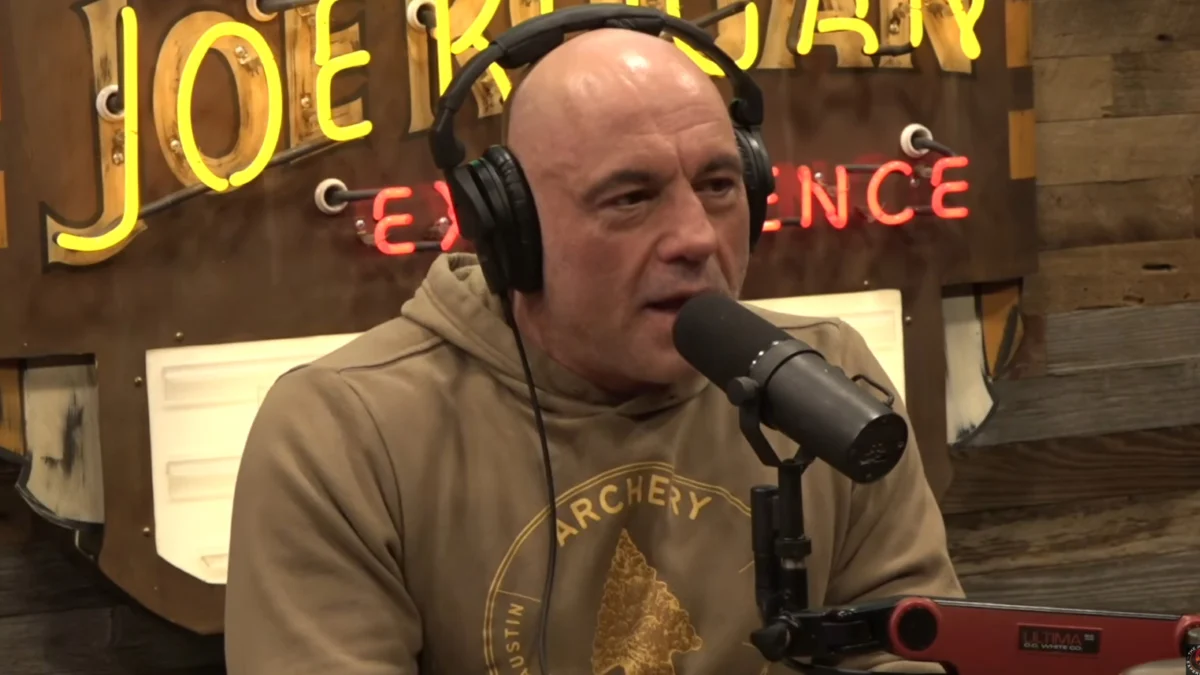
In a recent, explosive revelation, podcast titan Joe Rogan has claimed that the corridors of American political power have been working behind the scenes to silence his voice. During episode 2515 of The Joe Rogan Experience (JRE), the 58-year-old commentator asserted that multiple United States presidents—both sitting and former—exerted significant pressure on Spotify, utilizing personal influence, political action committees (PACs), and considerable financial resources in an attempt to force the streaming giant to terminate his lucrative contract.
This claim adds a new, darker layer to the years-long tension between Rogan, the mainstream media, and political institutions. It positions the world’s most popular podcaster not merely as an entertainer or interviewer, but as a central figure in an ongoing ideological war regarding free speech, digital platforms, and the boundaries of political accountability.
The Evolution of a Media Empire
Since its inception in 2009, The Joe Rogan Experience has undergone an unprecedented transformation. What began as a raw, informal conversation series with friends and acquaintances blossomed into a cultural juggernaut. Over the last fifteen years, Rogan has moved from the fringes of the internet to the center of the global cultural conversation. His format—often spanning three to four hours of unedited, long-form discussion—allows for a level of depth that traditional cable news, constrained by advertising segments and teleprompter-driven brevity, simply cannot replicate.
In May 2020, this influence was codified when Rogan signed a multi-year, exclusive licensing deal with Spotify, reportedly worth over $200 million. This move marked a seismic shift in the media landscape, signaling that the future of broadcasting was migrating away from legacy networks and toward decentralized, creator-led platforms. However, this transition also brought Rogan into the direct crosshairs of corporate and political interests that viewed his platform as a potential threat to the established consensus.
A Chronology of Controversy and Pressure
The friction between Rogan and the political establishment did not materialize overnight; it was a slow-building storm that reached a fever pitch in early 2022.
2020–2021: The Initial Resistance
As the COVID-19 pandemic took hold, Rogan’s skepticism regarding certain public health narratives, coupled with his willingness to host guests who challenged mainstream scientific consensus, drew sharp criticism. Political commentators and public health officials began labeling his content as "misinformation," prompting the first calls for Spotify to exercise editorial control.
January 2022: The Artist Boycott
The situation escalated dramatically in early 2022 when a coalition of musicians, led by Neil Young and Joni Mitchell, issued an ultimatum to Spotify: remove The Joe Rogan Experience or lose their catalogs. The threat forced the platform into a precarious position, caught between its commitment to free expression and its relationship with the music industry. During this period, dozens of older episodes were quietly purged from the archives, and Spotify introduced advisory warnings for episodes discussing sensitive health topics.
2024: The Revelation of Political Intervention
The latest claims from Rogan suggest that the pressure was never limited to disgruntled musicians or public health critics. By revealing that high-ranking political figures—including U.S. presidents—were actively petitioning Spotify, Rogan has shifted the narrative from a social media controversy to a potential constitutional and political crisis.
Inside the Allegations: PACs and Presidential Pressure
Rogan’s account of the pressure campaign is specific, though he has stopped short of naming the individual presidents involved. He described a coordinated effort to dismantle his reach by targeting his livelihood.
"They tried to crush my sponsors. They organized campaigns. There was PACs involved," Rogan stated during his recent broadcast. He noted that the intensity of these efforts was sustained and expensive, suggesting that the goal was not just to issue a statement of disapproval, but to systematically deplatform him.
Rogan credited his survival to two key factors: the global nature of his audience and the corporate structure of Spotify. "Thank God I was on Spotify. And thank God Spotify is not an American company," he noted. By being the number one podcast in roughly 90 countries, rather than a domestic-only media entity, Rogan was able to leverage his global footprint to insulate himself from purely American political pressure.
The Corporate Stance: Daniel Ek and the Limits of Censorship
Throughout the multi-year ordeal, Spotify’s leadership has been forced to navigate the competing interests of its shareholders, its creators, and the political establishment. CEO Daniel Ek has consistently walked a fine line, publicly acknowledging that he finds some of Rogan’s content "offensive" while simultaneously defending the platform’s role as a host rather than an arbiter of truth.
In an internal memo to staff during the height of the 2022 controversy, Ek stated, "There are many things that Joe Rogan says that I strongly disagree with and find very offensive." However, he doubled down on his support for the partnership, arguing that "canceling" voices would not solve the underlying disagreements. Ek’s position has been that Spotify’s "bold ambitions" require a platform that hosts a diverse range of viewpoints, even those that spark intense public outrage. This corporate stance has been the primary wall protecting Rogan from being successfully silenced.
Implications for Free Speech and Modern Media
The allegation that U.S. presidents—individuals charged with upholding the First Amendment—would utilize the power of the state or associated political committees to silence a private citizen’s speech has profound implications for American democracy.
The Weaponization of "Misinformation"
The term "misinformation" has become a powerful, yet increasingly controversial, tool in political discourse. Critics argue that it is being used to categorize dissent as a public health or national security threat, justifying government intervention in private speech. If, as Rogan claims, presidents were personally involved in lobbying a private company to ban a specific voice, it raises critical questions about the separation of government power and digital infrastructure.
The Power of Independent Media
Rogan’s resilience serves as a case study for the changing power dynamics in media. Before the advent of podcasting, an individual could be effectively "erased" from the public square if television networks and major newspapers coordinated to deplatform them. Today, the direct relationship between a creator and their audience provides a degree of immunity that legacy media cannot match. Rogan’s success proves that when an audience is large and loyal enough, it becomes increasingly difficult for political actors to dictate what can and cannot be heard.
Future Regulatory Risks
While Rogan has survived this attempt, the precedent set by these efforts remains concerning. If PACs and political figures can successfully pressure private companies to remove content they dislike, it invites a future where the internet is not a neutral public square, but a reflection of the current administration’s preferences. The "Spotify model"—a platform that resists government intervention—may face increasing pressure as lawmakers look for new ways to regulate digital content under the guise of safety and security.
Conclusion
The claims made by Joe Rogan are not just about a podcast; they are a window into the high-stakes battle for control over the modern information ecosystem. By bringing the alleged involvement of U.S. presidents into the light, Rogan has invited a necessary conversation about the limits of political power and the sanctity of independent media.
Whether these efforts to "crush" his podcast were motivated by genuine concern for public discourse or by a desire to eliminate a powerful, uncontrollable voice remains a point of intense debate. What is clear, however, is that the era of the individual creator as a political force is here to stay, and the struggle between those who wish to regulate that power and those who wish to exercise it will likely define the next decade of media history. As the dust settles on these latest revelations, the public is left to grapple with a sobering reality: the digital world is a front line, and the stakes for free speech have never been higher.

 Layla Zulfa
 Laily UPN