

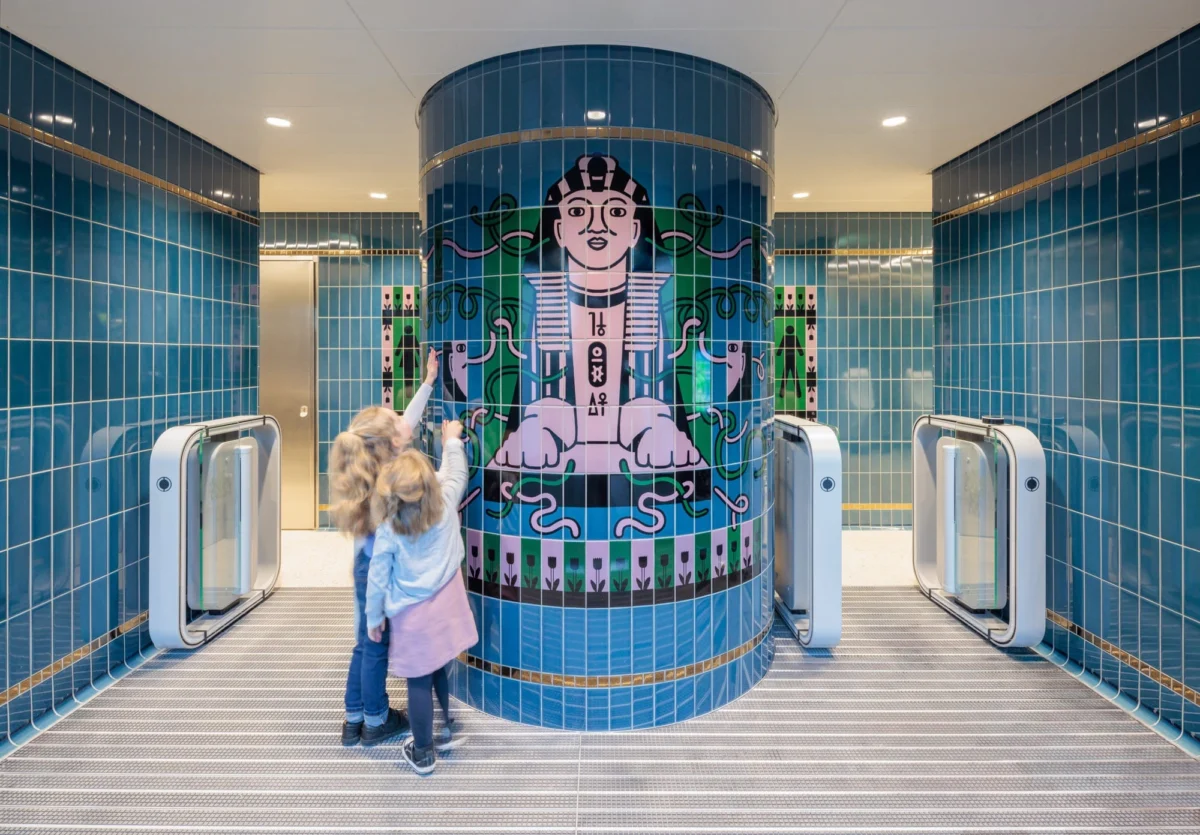
The City of Westminster, the beating heart of London, serves as a global magnet for culture, politics, and commerce. Each year, roughly 25 million tourists descend upon its historic streets, navigating a labyrinth of landmarks that define the British capital. When these millions are added to the constant stream of local residents and professionals transiting through the city, the infrastructure strain is immense. Central to this transit ecosystem is the London Underground—the "Tube"—a feat of Victorian engineering that remains the lifeline of the city.
Recognizing that the user experience of this subterranean network hinges as much on essential services as it does on train frequency, a major revitalization project is currently underway. Eight key stations are receiving comprehensive restroom upgrades, a project spearheaded by the renowned Hugh Broughton Architects. This initiative is not merely a utilitarian repair job; it is a profound architectural statement that marries Victorian tradition with modern inclusivity, safety, and civic pride.
The Victorian Legacy: A Foundation of Tiles
To understand the significance of this redesign, one must look back to the mid-to-late 1800s, when the world’s first underground railway network was born. The Victorians approached subterranean travel with a distinct aesthetic sensibility, incorporating grand arched vaults and intricate tile work that transformed what could have been dismal tunnels into spaces of civic importance.

This aesthetic legacy persists today. Baker Street station, which opened in 1863 as part of the Metropolitan Line, serves as a quintessential example. The station features iconic silhouettes of Sherlock Holmes, a nod to the detective’s fictional residence on the adjacent street. This blending of transit utility with local cultural iconography has become a hallmark of the London Underground. From the deep red, glazed terracotta facades introduced by architect Leslie Green in the early 20th century to the ornate relief tiles found at Bethnal Green, the Tube is effectively a living museum.
In recent years, this commitment to tile-based artistry has continued to evolve. Designers such as Jeffrey Miller have experimented with repurposing industrial waste into Art Nouveau-style ceramics, proving that the medium of tile remains as relevant today as it was 150 years ago. The new restroom initiative by Hugh Broughton Architects draws directly from this deep well of history, treating the humble washroom as a canvas for storytelling.
Chronology of the Transformation
The rollout of these upgraded facilities is a phased, high-stakes endeavor that prioritizes high-traffic zones within Westminster. The project aims to replace aging, often neglected facilities with modern, accessible, and vibrant spaces that defy the common stigma associated with public toilets.

- February 2025: The project achieved its first major milestone with the unveiling of the redesigned facilities at Victoria Street. The successful reception of this site set the tone for the quality and design language of the subsequent installations.
- Spring 2025: Following the success at Victoria, the Parliament Street station facilities were completed, providing a much-needed upgrade for those navigating the seat of British government.
- Current Phase: As of the latest updates, the focus has shifted to the bustling transit hubs of Piccadilly Circus and Green Park. These stations serve as critical entry points for tourists and commuters alike, and their transformation marks a significant expansion of the project’s reach.
- Upcoming Developments: The next wave of installations will focus on the high-footfall areas of Carnaby Street and Westminster Bridge. These locations are expected to feature unique design motifs that reflect their specific neighborhoods, continuing the firm’s commitment to site-specific architecture.
Supporting Data: The Practicality of Good Design
While the aesthetic appeal of the tiles is immediately striking, the driving force behind this project is rooted in hard data regarding public health and urban safety. Research conducted by local councils has identified a "clear demand" for accessible public restrooms, particularly in areas where tourism density is highest.
Maintenance costs and concerns regarding antisocial behavior have long been the primary barriers to providing high-quality public facilities. By investing in durable, high-quality materials and thoughtful layouts, Hugh Broughton Architects is addressing these challenges head-on. The use of robust, easy-to-clean ceramic surfaces, combined with smart lighting and open-plan designs, creates a safer environment that discourages misuse while fostering a sense of ownership among the public.
Furthermore, the design philosophy emphasizes inclusivity. By integrating accessibility features—such as wider entrances, sensory-conscious lighting, and gender-neutral configurations—the project ensures that these spaces serve the widest possible demographic, from elderly travelers to families with young children.

Official Responses and Design Philosophy
The architects behind the project have been vocal about the intent behind the redesign. In an official statement, the team noted: "To address this issue, the council is creating a series of inclusive facilities that demonstrate high-quality design and enshrine as much civic pride as the Victorians displayed when they first started looking at a proper sanitation system for the general public in the 19th century."
This sentiment is echoed by the creative partnership with artist and illustrator James Lambert. Lambert’s contribution to the project is central to its identity. By interpreting the distinct character of each location through historical motifs, he has turned the restrooms into points of interest rather than hidden utility rooms.
For instance, the tiles at various locations feature playful, artistic references to the city’s heritage. Visitors might encounter patterns featuring the King’s Guards in their iconic bearskin helmets or geometric tributes to the monumental sphinxes that flank Cleopatra’s Needle on the Victoria Embankment. This level of detail serves a dual purpose: it creates a sense of "place" for the traveler and reinforces the idea that the Underground is not just a transit network, but a fundamental part of London’s historical fabric.

Implications: A New Standard for Urban Infrastructure
The implications of the Westminster restroom project extend far beyond the city limits of London. By elevating the standard of public sanitation facilities, the project provides a blueprint for other major metropolitan areas struggling with the "maintenance versus accessibility" dilemma.
1. Urban Resilience
By prioritizing high-quality materials, the project reduces long-term maintenance costs. While the initial capital expenditure for bespoke tiling and modern architectural design is higher than standard off-the-shelf solutions, the longevity of these materials ensures that they remain functional and aesthetically pleasing for decades. This is a move away from the "disposable" urban infrastructure that plagued the late 20th century.
2. Civic Pride and Safety
There is a direct correlation between the quality of the public realm and the behavior of those who use it. When spaces are designed with care, beauty, and respect for history, the public is statistically more likely to treat those spaces with care. This "broken windows" theory, applied to sanitation, suggests that high-quality design is an active tool for crime prevention and social cohesion.

3. Cultural Preservation
The integration of local iconography—like the sphinxes of the Embankment or the Sherlock Holmes motifs at Baker Street—ensures that the city’s history is woven into the very fabric of daily life. For the millions of tourists who pass through these stations, these small, artistic details provide a meaningful connection to the city that goes beyond the typical sightseeing experience.
Conclusion: The Future of the Underground
As the London Underground continues to evolve, the work of Hugh Broughton Architects serves as a reminder that infrastructure is not just about moving people from point A to point B—it is about the quality of the journey. By revitalizing the essential services within the station, the city is signaling a renewed commitment to the comfort and dignity of its citizens and visitors.
The project is ongoing, and those interested in witnessing the transformation can follow the latest developments via the firm’s official Instagram account. Whether you are a daily commuter or a traveler visiting for the first time, the next time you find yourself in the heart of Westminster, take a moment to look at the walls. You may find that the most mundane of tasks—finding a restroom—has been transformed into a brief, colorful encounter with the history and artistry of London.

Through this project, London is not just cleaning its stations; it is reclaiming its role as a leader in civic design, proving that even the most subterranean of spaces can be elevated to the level of art.











No comments yet. Be the first to join the conversation!