

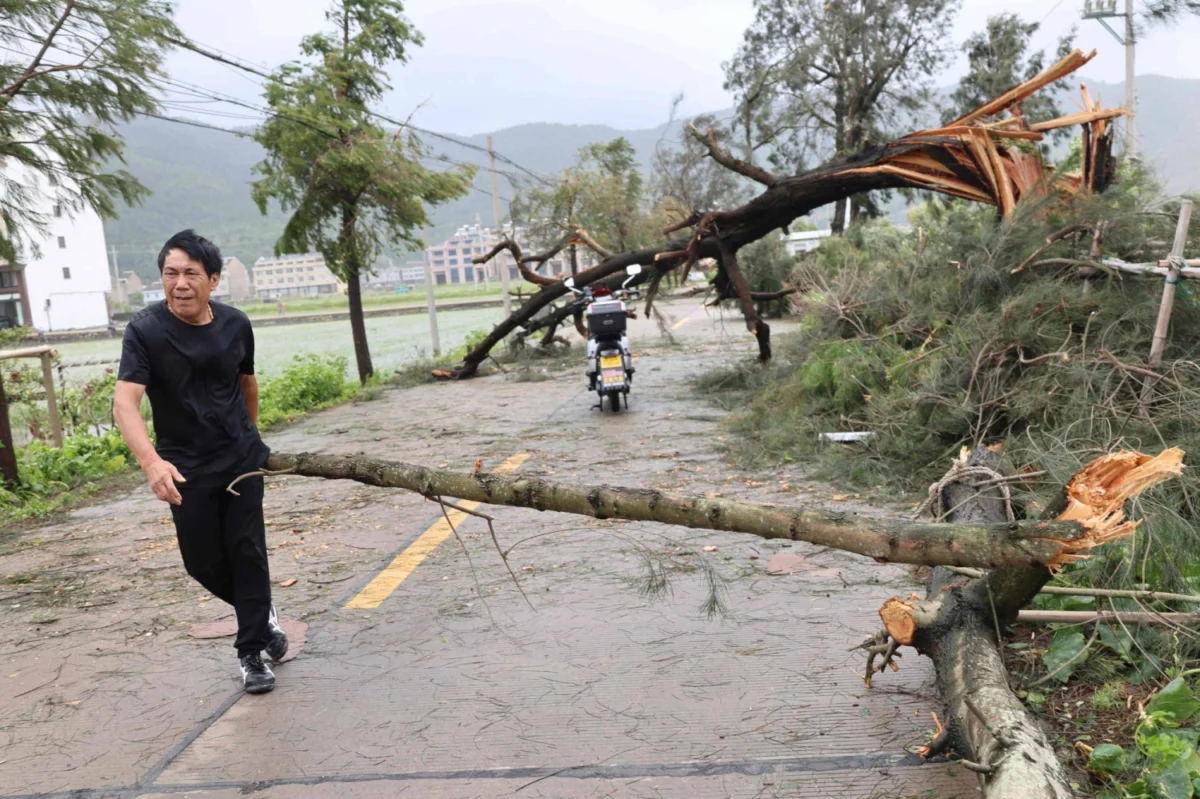
HONG KONG — Intense, record-breaking rainfall has triggered catastrophic flooding across northern China’s Hebei and Liaoning provinces this week, transforming urban thoroughfares into aquatic channels and forcing a massive mobilization of emergency services. As the remnants of Typhoon Bavi swept through the region, the combination of saturated infrastructure and relentless precipitation has brought daily life in major counties like Kuancheng to a virtual standstill.
While authorities work to mitigate the damage, the imagery emerging from the disaster zones—ranging from submerged vehicles to residents navigating neighborhood streets via paddleboards and wakeboards—has underscored the escalating volatility of climate-related events in East Asia.
The Scope of the Crisis: A Chronology of the Deluge
The onset of the crisis began over the weekend as the atmospheric pressure systems associated with Typhoon Bavi collided with localized monsoon moisture.
Friday, July 11: Initial warnings were issued by meteorological bureaus in Hebei, as radar indicated the potential for "extreme precipitation events." Residents were urged to clear gutters and secure outdoor property, though few anticipated the volume of water that would follow.
Saturday, July 12: The rainfall intensified significantly overnight. By Saturday morning, drainage systems in low-lying counties, particularly those adjacent to the Luan River, reached maximum capacity. Local reports began circulating on social media of flash flooding occurring in rural and suburban zones.
Sunday, July 13: The situation reached a critical inflection point. In Kuancheng, water levels on major thoroughfares soared past the two-meter mark. This surge resulted in the entrapment of vehicles and the inundation of ground-floor residences. Social media platforms, including Weibo and WeChat, were flooded with user-generated content showing residents attempting to traverse flooded streets using makeshift watercraft, highlighting both the severity of the infrastructure failure and the resilience—or desperation—of the local population.
Monday, July 14: As of the latest updates, water levels have begun a slow, agonizing recession in some districts, but the aftermath of mud, debris, and structural damage has left local governments struggling to restore power and essential services.
Supporting Data: Infrastructure Under Siege
The flooding in Kuancheng, a county with a population of approximately 240,000, serves as a focal point for the broader regional crisis. Situated strategically on the banks of the Luan River, the county’s vulnerability is exacerbated by its geographical profile.
- Hydrological Stress: Official media reports confirmed that water levels in several urban sectors exceeded 2 meters. For context, this depth is sufficient to completely submerge standard passenger vehicles and compromise the structural integrity of first-story residential units.
- Economic Impact: While a final dollar amount for the damages has yet to be calculated, the destruction of municipal roads, public utility networks, and private transport assets suggests a significant economic burden for the provincial government.
- Meteorological Context: Typhoon Bavi, which originated in the western Pacific, carried a high moisture content. When these systems stall over land—as seen in Hebei and Liaoning—they create a "stationary front" effect, dumping months’ worth of rainfall in a matter of hours.
Official Responses and Emergency Protocols
The response from provincial and national authorities has been one of high-alert coordination. The Ministry of Emergency Management in China deployed disaster relief teams to Liaoning and Hebei late Sunday to assist in search-and-rescue operations.
The Role of Local Governance
Local officials in Kuancheng have been tasked with the arduous job of draining submerged neighborhoods while simultaneously conducting safety inspections on public infrastructure. According to local media, authorities have prioritized the evacuation of elderly and vulnerable residents from areas where the Luan River continues to pose a threat of overflow.
Disaster Mitigation Strategies
The government has utilized a multi-pronged approach to the crisis:

- Hydraulic Management: Engineers are managing sluice gates and drainage channels to divert excess water away from densely populated residential zones.
- Public Communication: Utilizing local broadcasts and emergency alert systems, officials have advised residents to avoid travel and remain on higher floors of their homes.
- Utility Restoration: State-owned power companies have initiated rapid-response repair teams, though these efforts are currently hampered by the high water levels and the risk of electrical hazards.
The Climate Context: Why Northern China?
Climate scientists have noted that the shifting patterns of East Asian typhoons are becoming increasingly difficult to predict. Historically, northern provinces were less prone to the extreme, tropical-style deluge seen in southern China. However, rising sea temperatures in the Pacific have provided more fuel for typhoons to retain intensity as they move into higher latitudes.
"What we are seeing," says one regional meteorologist, "is a change in the ‘track and duration’ of these storms. They are no longer simply passing through; they are stalling, dumping their full payload of moisture, and moving on only after the damage is done."
The events in Hebei and Liaoning suggest that the "sponge city" initiatives—an urban planning project in China designed to help cities absorb excess rainwater—are being tested to their absolute limits. The current crisis has reignited the debate over whether existing urban infrastructure is robust enough to handle the "new normal" of climate-driven weather volatility.
Implications: The Road to Recovery
The aftermath of Typhoon Bavi will present a significant challenge for the local administration in the coming months.
1. Structural Repairs and Long-Term Urban Planning
Beyond the immediate need for sandbags and pumps, the government will face pressure to re-evaluate its flood-defense strategy. The inundation of roads that serve as vital economic arteries for the region will require extensive reconstruction. Urban planners will likely be tasked with redesigning drainage systems to handle higher volumes of water, a process that is both costly and logistically difficult in older, established towns.
2. Public Health Risks
As the waters recede, a secondary crisis often emerges: public health. Stagnant floodwater acts as a vector for waterborne diseases and mold. The provincial health departments have already begun issuing warnings regarding water purification and hygiene, as the contamination of local wells and water supplies is a significant risk in rural areas.
3. Economic Resilience
For a population of 240,000 in a county like Kuancheng, the loss of personal vehicles and the damage to storefronts will hit small business owners and low-income families hardest. The central government’s response in terms of financial subsidies and insurance payouts will be a critical indicator of how the nation plans to support regional recovery in the face of frequent environmental disasters.
Conclusion: A Lesson in Vulnerability
The scenes of residents paddle-boarding through the streets of Hebei offer a jarring juxtaposition: the human spirit’s attempt at humor and normalcy against a backdrop of serious, life-altering environmental damage.
As the recovery efforts continue, the story of Typhoon Bavi in northern China serves as a stark reminder of the limitations of modern infrastructure when faced with the raw power of nature. The integration of advanced weather forecasting, robust urban planning, and rapid-response emergency management is no longer a luxury—it is an absolute necessity for the stability of the region.
The coming days will show the extent of the total damage, but the lesson is already clear: the regional landscape of northern China is changing, and the response to this crisis will set the precedent for how the nation handles the increasingly wet and unpredictable future of the 21st century.
Reporting by our regional desk; additional data provided by provincial meteorological agencies.











