

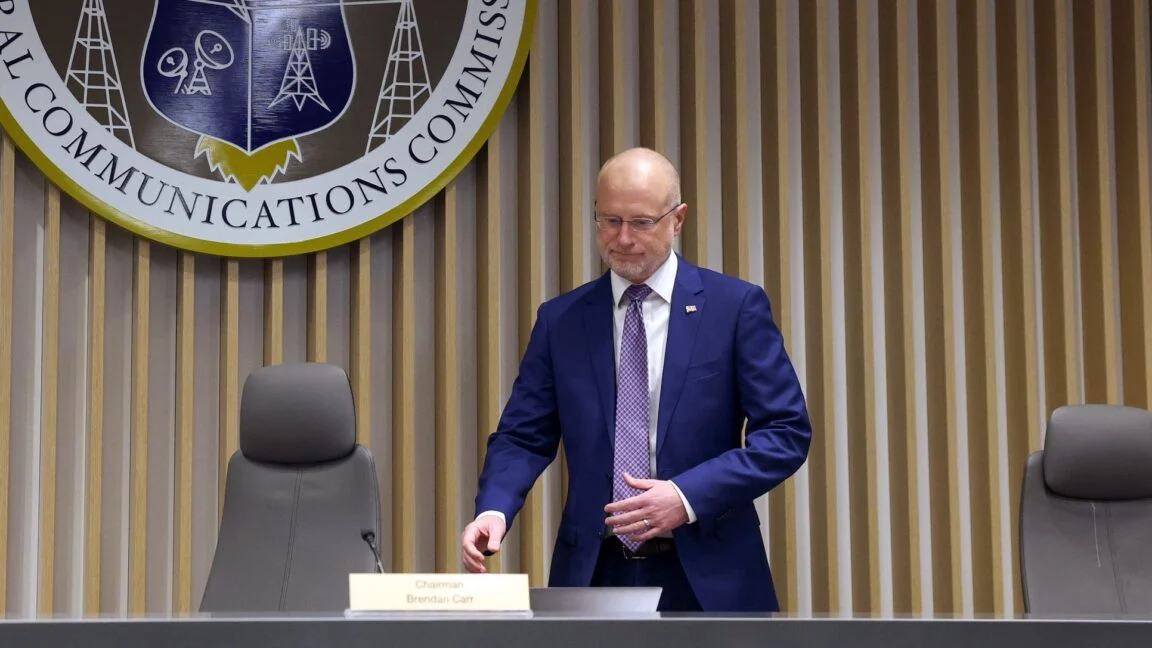
A high-stakes legal confrontation is brewing in the U.S. District Court for the District of Columbia, where plaintiffs are challenging the Federal Communications Commission (FCC) over its handling of Freedom of Information Act (FOIA) requests. At the heart of the dispute is whether FCC Commissioner Brendan Carr has been utilizing encrypted messaging applications—specifically Signal—to conduct official government business, potentially bypassing federal record-keeping requirements.
The plaintiffs, seeking transparency regarding the Commission’s interactions with the Department of Government Efficiency (DOGE) and figures like Elon Musk, argue that the FCC has engaged in a systematic effort to obstruct the discovery process. In a scathing court filing, the plaintiffs alleged that the agency “has sought to delay the production of responsive documents and obfuscate the existence of responsive records.” They further contended that the FCC has “made it clear that it will not undertake a good faith effort to produce responsive documents,” necessitating judicial intervention to compel discovery.
The Signal Controversy: A Digital Paper Trail?
The crux of the controversy centers on the use of Signal, an encrypted messaging platform known for its auto-delete features and privacy protections. While the FCC maintains that its official policy prohibits the installation of third-party messaging apps on agency-issued devices, evidence presented in court filings suggests a disconnect between policy and practice.
According to the plaintiffs, investigations into Carr’s communications have revealed that a phone number associated with the Commissioner is linked to an active Signal account under the username “Brendan Carr.” The number in question was previously disclosed in a separate FOIA release involving a November 2024 email exchange with a Fox News producer.
Plaintiffs argue that the mere existence of this account, combined with the nature of Carr’s high-profile portfolio, warrants deeper scrutiny. “What we do know is that a phone is being used for government business and that it has a Signal account in Carr’s name,” the filing noted. “Based on information and belief, Carr regularly conducts government business through text and Signal messages, communicating with journalists, industry professionals, and individuals who work for regulated entities, such as Musk and SpaceX.”
Chronology of a Mounting Dispute
The timeline of this litigation reveals a pattern of increasing frustration between the plaintiffs and the agency:
- Initial FOIA Requests: The plaintiffs submitted broad requests seeking records of communications between the FCC and DOGE officials, as well as documentation regarding Commissioner Carr’s travel to Starlink facilities.
- The FCC’s June 3 Filing: In a court-mandated response, the FCC asserted that Commissioner Carr did not possess contact information for DOGE personnel. Furthermore, the agency reaffirmed its stance on device security, stating, “It is agency policy not to download additional messaging applications on FCC phones (e.g., Signal, WhatsApp).”
- The Rebuttal: Plaintiffs swiftly countered the FCC’s June 3 assertions. They argued that the agency’s narrow interpretation of “DOGE personnel” was a diversionary tactic. They posited that while Carr may not have had direct contact with lower-level staff, he likely maintained a direct line of communication with Elon Musk and other high-ranking leaders within the efficiency group.
- Broadening the Scope: The litigation has since expanded to include allegations that the FCC limited its search criteria to internal email domains (FCC, DOGE, GSA), effectively ignoring the potential for off-channel communications that occur outside of traditional, server-backed email chains.
The "DOGE" Connection and Regulatory Oversight
The intersection of the FCC and the Department of Government Efficiency (DOGE) is a focal point of the plaintiffs’ inquiry. Given the influence of Elon Musk—the CEO of SpaceX and Starlink—over both private industry and public policy, the plaintiffs argue that the potential for conflicts of interest is profound.
The court filing highlights that in previous legal actions involving DOGE, it was established that personnel associated with the initiative “routinely conducted business on their personal phones using text messages, especially the Signal app.” By applying this context to the FCC’s interactions, the plaintiffs argue that the agency’s claim of having no responsive records regarding these interactions is statistically and operationally implausible.
Furthermore, the absence of travel documentation regarding Commissioner Carr’s visits to Starlink facilities has raised eyebrows. If the Commissioner is visiting private facilities regulated by the FCC, standard government protocol would typically require travel logs, mission statements, and expense reporting. The lack of such records suggests either a procedural failure within the FCC’s record-keeping department or a deliberate attempt to shield these meetings from public view.
Challenging the FCC’s "Good Faith" Effort
A primary goal of the plaintiffs’ current legal strategy is to shift the burden of production through the discovery process. They argue that the agency’s current approach to FOIA is a "black box" that allows officials to dictate what the public is allowed to see.
“Discovery is required and will speed the document production process by helping the Plaintiffs identify responsive documents,” the filing stated. By forcing the agency to disclose the parameters of its search and the specific devices used by its officials, the plaintiffs hope to dismantle the opacity currently surrounding the Commissioner’s office.
The plaintiffs emphasize that the dispute is not merely about a messaging app; it is about the fundamental accountability of a federal regulatory body. If a high-ranking official can circumvent the Federal Records Act by using encrypted messaging, the entire FOIA process is rendered moot.
Implications for Transparency and Federal Policy
The resolution of this case could set a significant precedent for how federal agencies manage communications in the age of encrypted messaging. As technology evolves, the line between personal privacy and official government record-keeping has become increasingly blurred.
- Enforcement of Federal Records Act: If the court finds that the FCC failed to capture or preserve official business conducted via Signal, it could trigger a wider review of federal communication policies.
- Increased Scrutiny on "Off-Channel" Comms: This case serves as a warning to other agencies that relying on personal devices for government business will face aggressive litigation from watchdog groups.
- The "Musk Factor": The involvement of SpaceX and Starlink adds a layer of commercial sensitivity. The public interest in how an FCC Commissioner interacts with the entity he regulates is paramount to ensuring fair market competition.
Official Responses and Next Steps
As of the date of this publication, the Federal Communications Commission has not issued a detailed public statement regarding the specific allegations of obfuscation or the evidence concerning the Commissioner’s Signal account. When contacted for comment, the FCC did not provide an immediate response.
The case remains active in the U.S. District Court. The plaintiffs are expected to push for an evidentiary hearing to determine the scope of the FCC’s internal search and to compel the production of logs or metadata that might clarify whether the Commissioner’s Signal account was indeed used for official, policy-influencing communications.
As this story continues to develop, it highlights a broader tension in American governance: the struggle to balance the efficiency of modern, mobile communication with the rigid, essential requirements of public transparency. Whether the FCC’s internal culture is one of legitimate security protocols or a calculated effort to evade oversight remains the central question that the federal judiciary will now be forced to answer.











