

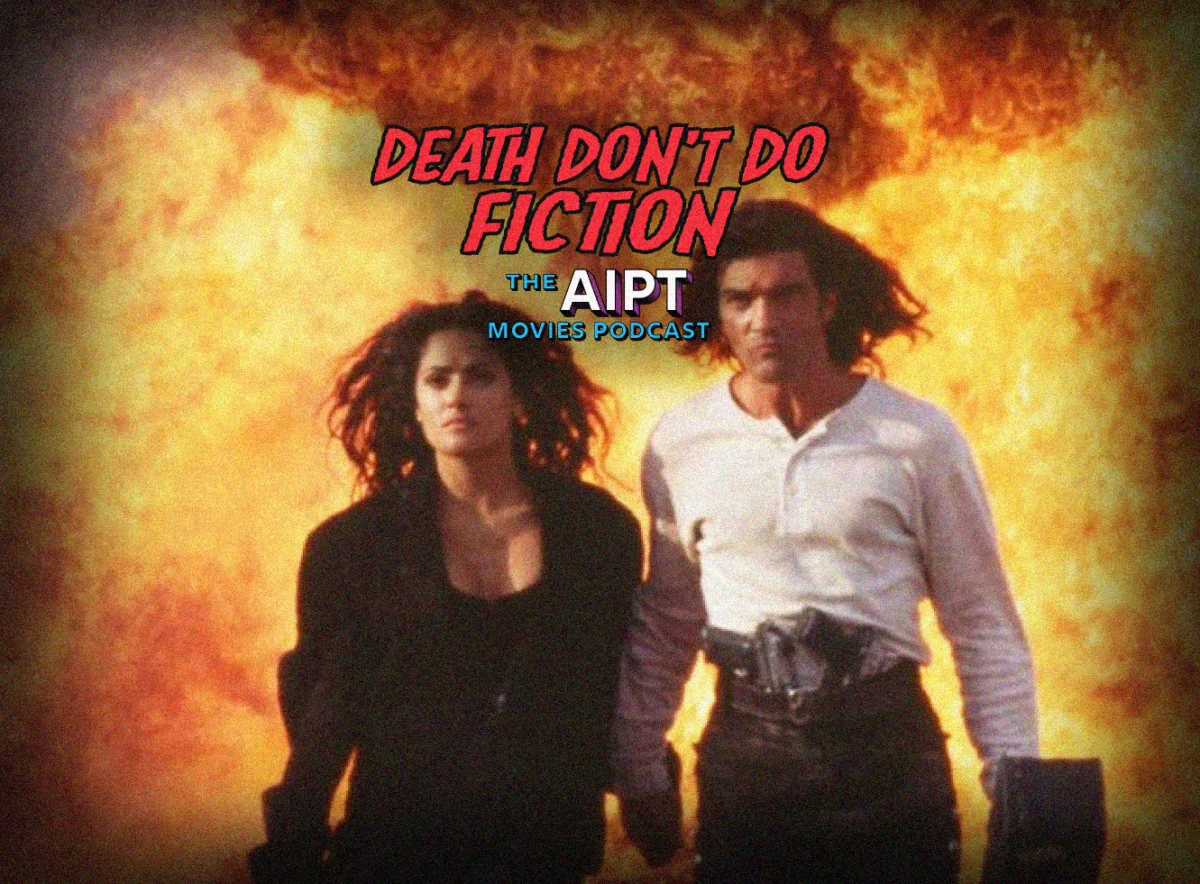
Introduction: The “Mayhem” Series Returns
The cinematic landscape of the 1990s was defined by a specific brand of hyper-kinetic, stylized violence that pushed the boundaries of the action genre. Among the vanguard of this movement was filmmaker Robert Rodriguez, whose sophomore effort in the Mexico Trilogy, 1995’s Desperado, remains a cornerstone of cult action cinema.
This week, the Death Don’t Do Fiction podcast—the flagship movie review program from AIPT—kicked off its highly anticipated “Mayhem” series. Hosts Alex Harris and Tim Gardiner, joined by special guest Tony Sedani, dedicated their 124th episode to dissecting the operatic, guitar-case-toting revenge saga. The episode serves as a comprehensive analysis of why Desperado remains not just an entertaining relic of the 90s, but a masterclass in visual storytelling and low-budget ingenuity.
The Core Narrative: Anatomy of an Action Classic
At its heart, Desperado is a story of an artist forced to swap his instrument of choice—the guitar—for the tools of death. Antonio Banderas stars as the titular Mariachi, a man haunted by the murder of his lover and the destruction of his hand, seeking vengeance against the drug lord Bucho.
During the podcast discussion, Harris, Gardiner, and Sedani broke down the film’s unique DNA. They identified several signature elements that elevate the film above its contemporaries:

- The Iconic Opening: The film is credited with one of the most memorable "walking away from an explosion" shots in cinematic history, setting an immediate tone of cool, detached lethality.
- The "Rodriguez" Aesthetic: The hosts highlighted the film’s reliance on "action yoga," unconventional camera angles, and the heavy use of squibs and environmental destruction to convey a sense of tactile, visceral impact.
- A Star-Studded Ensemble: The film serves as a time capsule for 90s talent. From Quentin Tarantino’s unforgettable, unsettling cameo to the presence of Cheech Marin, Steve Buscemi, and Danny Trejo (who famously uses a knife to dial a phone), the cast is a who’s-who of genre legends.
- The Music: Central to the film’s identity is the soundtrack provided by Los Lobos, which underscores the narrative tension and reinforces the "traveling musician" motif that Rodriguez leans into throughout the film.
Chronology and Production Context: From ‘El Mariachi’ to Global Stardom
To understand Desperado, one must understand its predecessor, El Mariachi (1992). The podcast panel took time to contextualize how Rodriguez leveraged the massive success and limited resources of his debut to craft a more expansive vision for the 1995 sequel.
The Evolution of the Mariachi
- 1992 (The Origin): Robert Rodriguez creates El Mariachi on a micro-budget, utilizing his own experiences and local talent in Mexico. This film became the blueprint for his career.
- 1995 (The Upgrade): With the backing of a major studio, Desperado functioned as a "remake/sequel." It allowed Rodriguez to refine his visual language—using sharper cuts, more elaborate stunts, and higher-production-value set pieces while retaining the scrappy, independent spirit of his earlier work.
- The Legacy: The film solidified Antonio Banderas as an international action icon and paved the way for Salma Hayek to reach global stardom, beginning a long-standing creative partnership between her and Rodriguez.
Supporting Data: Why ‘Desperado’ Still Matters
The Death Don’t Do Fiction team argued that Desperado is not merely an action movie, but a study in how to optimize a medium. The episode delved into the technical prowess behind the scenes.
The "Death" of the Artist
The hosts explored the film’s central theme: an artist—the musician—is forced to learn his craft in a "completely different medium: death." This transition is reflected in the weaponry, specifically the infamous guitar-case miniguns and hand cannons that appear as if by magic. This visual shorthand allows the audience to accept the film’s heightened reality, where guns appear from nowhere and shadow-based mystical powers seem to govern the law of physics.
Technical Achievements
The podcast highlighted:

- Visual Storytelling: Rodriguez’s ability to communicate character development without relying solely on dialogue.
- Practical Effects: In an era before the total dominance of CGI, Desperado utilized practical squibs and stunt work to create a sense of scale and danger that modern audiences still find compelling.
- The "Cool" Factor: The film is cited as a definitive example of "effortless cool," utilizing slow motion and sharp editing to frame Banderas as the ultimate anti-hero.
Official Perspectives: The Hosts Weigh In
The Death Don’t Do Fiction podcast, hosted by Alex Harris and Tim Gardiner, prides itself on being a platform for filmmakers to discuss the craft of cinema. By framing themselves as "industry vets," the hosts provide a unique, often humorous, and insightful perspective on the films they cover.
In this episode, Tony Sedani provided additional value by balancing the Desperado deep dive with quick, spoiler-free reviews of a wider range of cinema, including:
- Brian De Palma’s Phantom of the Paradise: A cult favorite noted for its stylistic flair.
- 2021’s Mortal Kombat: Contrasting modern action aesthetics with the 90s style found in Desperado.
- Netflix’s Apex: A modern look at survival thrillers.
- Bob Odenkirk’s Nobody (referred to in the pod as Normal): Comparing the "everyman turned action star" trope to the journey of the Mariachi.
The chemistry between the hosts is a key component of the show’s appeal. By blending deep, technical analysis with irreverent humor, they ensure that even the most well-known films feel fresh upon re-examination.
Implications for Modern Action Cinema
The discussion concluded with an analysis of how Desperado influenced the trajectory of action films. The "Mayhem" series underscores the idea that action is a language, and Rodriguez’s 1995 masterpiece is one of its most fluent expressions.

The "Mayhem" Philosophy
The series serves as a reminder that action movies do more than just provide adrenaline; they reflect the cultural anxieties and aesthetic preferences of their time. Desperado represents a bridge between the gritty, low-budget grindhouse films of the 70s and the slick, high-gloss action epics of the 2000s.
Future Perspectives
As the Death Don’t Do Fiction team continues their “Mayhem” series, they encourage listeners to engage with the films on their own terms. The implication is clear: the movies we love are not just entertainment; they are complex puzzles that reveal more about the world—and the people who make them—with every viewing.
Conclusion
For fans of Robert Rodriguez, action cinema, or the nuances of 90s filmmaking, the latest episode of Death Don’t Do Fiction is an essential listen. By revisiting Desperado, the hosts have successfully kicked off their "Mayhem" series with a bang, reminding audiences why this story of a musician-turned-assassin remains an enduring, kinetic, and utterly singular piece of cinematic history.
Whether you are interested in the technical breakdown of guitar-case weaponry, the rise of Salma Hayek, or simply want to hear a spirited debate about the best "walking away from an explosion" shots, the episode provides a wealth of information.

Listeners can find the full episode on Apple Podcasts, Spotify, or any major podcast platform. To join the conversation, followers can connect with Alex Harris and the team on social media via @AIPTmoviesPod, or reach out directly to the crew for suggestions on future "Mayhem" entries. As the podcast continues to grow, it remains a vital voice in the intersection of film criticism and fan culture.










No comments yet. Be the first to join the conversation!