In a high-stakes move to consolidate its dominance in the burgeoning retail media landscape, Walmart announced last week its intention to acquire Vibe.co, a sophisticated connected TV (CTV) advertising platform tailored for small- and mid-sized businesses (SMBs) and mid-market brands. The acquisition, valued at a reported $1.2 billion in cash, represents the retail giant’s most significant investment in advertising technology since its landmark $2.3 billion purchase of smart TV pioneer Vizio in 2024.
This acquisition is not merely a technology tuck-in; it is a calculated strike at the heart of the digital advertising duopoly. By integrating Vibe.co’s user-friendly, self-serve interface with Walmart’s vast trove of first-party deterministic purchase data, the retailer is positioning itself to become the premier destination for brands looking to bridge the gap between "brand awareness" and "hard retail outcomes."
Main Facts: The Anatomy of the Deal
The deal to acquire Vibe.co signals a shift in strategy for Walmart Connect, the retailer’s advertising arm. While Walmart has long possessed the data necessary to influence consumer behavior, it has historically lacked the frictionless, entry-level access points required to capture the long-tail market of smaller advertisers.
Vibe.co specializes in democratizing access to CTV. By offering a platform that removes the traditional complexities—such as high minimum spends and cumbersome manual insertion orders—associated with television advertising, Vibe.co has built a loyal following among businesses that previously viewed the medium as either too expensive or too technical.
For Walmart, this acquisition serves three strategic pillars:
- Expanding the Advertiser Base: By lowering the barrier to entry for CTV, Walmart is effectively opening its ecosystem to thousands of SMBs that have traditionally been relegated to Google and Meta’s platforms.
- Closing the Measurement Loop: The integration of Vibe.co’s probabilistic cross-device identity graph with Walmart’s deterministic purchase data creates a "closed-loop" system. Advertisers can now track a consumer from the moment they view an ad on their living room TV to the final checkout transaction at a Walmart store or via its website.
- Aggressive Competition with Amazon: Amazon remains the titan of retail media, generating ad revenue roughly ten times that of Walmart. With this deal, Walmart is signaling that it is no longer satisfied with being a niche retail player; it intends to compete head-to-head for the total share of a brand’s marketing budget.
A Chronology of Walmart’s Ad-Tech Ascent
Walmart’s transformation from a traditional brick-and-mortar retailer to a digital media powerhouse has been rapid and deliberate. The following timeline outlines the key milestones in this evolution:
- 2021-2023: Foundation Building: Walmart rebranded its media division as "Walmart Connect," aggressively hiring talent from the ad-tech world and integrating search and display ads into its online marketplace.
- Early 2024: The Vizio Pivot: In a watershed moment, Walmart acquired Vizio for $2.3 billion, securing a direct line into the living rooms of millions of households. This gave Walmart unparalleled insight into viewing habits and ad-supported streaming trends.
- April 2026: The Launch of Connect Select: To capture the underserved SMB market, Walmart launched the "Connect Select" marketplace, simplifying the process for businesses to purchase streaming ads through the Walmart DSP.
- Late 2026: Integration with Ecosystems: Walmart expanded its reach by bringing first-party audiences to YouTube through Google’s Display & Video 360 and opening Vizio inventory via the Yahoo DSP (powered by Magnite).
- The Present: The acquisition of Vibe.co cements the strategy, providing the software infrastructure to support the hardware (Vizio) and the data (Walmart Connect).
Supporting Data: Why CTV is the New Frontier
The timing of this acquisition is supported by an overwhelming industry consensus regarding the shift toward streaming. According to research from Advertiser Perceptions, nearly 70% of CTV advertisers intend to increase their spending in the current fiscal year.
Perhaps more importantly, the demographics of CTV advertising are shifting. Data from the IAB’s Digital Video Ad Spend & Strategy Report indicates that the participation of "small spenders" in the CTV market has surged from 60% in 2024 to 85% in 2026. This mass migration of SMBs toward streaming platforms validates Walmart’s decision to acquire a platform specifically built to cater to these smaller, performance-focused advertisers.
Walmart’s internal performance metrics further justify the investment. In the first quarter of fiscal year 2027, the retailer reported a 36% growth in its U.S. advertising business. Notably, marketplace sellers—a core segment for the Vibe.co platform—increased their ad spend by over 50%, with the company reporting a direct correlation between this investment and lift in total sales. Walmart Connect, excluding the Vizio contribution, saw a robust 44% increase in revenue, proving that the demand for its data-driven ad products is accelerating regardless of its recent acquisitions.
Industry Perspectives and Official Responses
The deal has drawn praise from analysts and industry leaders, who view it as a necessary maturation of the retail media sector.
Martin Kristiseter, CEO of Digital Remedy, highlighted the democratization aspect of the deal. "This is good news because it lowers the barrier to entry for CTV, particularly for small and mid-sized businesses that may have found TV advertising too complex in the past," Kristiseter noted. He added that the industry conversation is moving beyond the "Should I invest?" stage to a more sophisticated "How do I ensure clear measurement and data ownership?" stage—a question he believes the Walmart-Vibe.co pairing is uniquely positioned to answer.
Jesse Math, vice president of strategic partnerships at Keen Decision Systems, pointed out the synergy between the platforms. "Together, the promise is a more complete picture of omnichannel ROI," Math explained. "It captures how spend within Walmart creates a ‘halo’ effect on direct channels, and conversely, how spend outside of Walmart feeds velocity back into the Walmart ecosystem."
TJ Hunter, CMO at ad platform Keynes, contextualized the deal within the broader market, noting that this is part of a larger, global trend. "Companies are increasingly viewing streaming TV as a place where media, commerce, data, and customer engagement intersect," Hunter observed. "Walmart isn’t just buying an ad tool; they are buying the infrastructure for the next generation of commerce."
Implications: The New Landscape for Marketers
The acquisition creates a ripple effect across the digital marketing ecosystem, forcing brands to re-evaluate their media mix. As Walmart Connect becomes more sophisticated, marketers face a more complex decision-making framework.
1. The Fragmentation Dilemma
Marketers are now forced to navigate an increasingly fragmented landscape. With Amazon, Kroger, and Walmart all aggressively building out their proprietary media networks, the question of budget allocation has become paramount. "What’s the right amount to spend with Walmart versus Amazon?" asks Math. "What’s the right balance between retail media and traditional search giants like Google or Meta?"
2. The Power of "Closed-Loop" Data
The primary implication for the industry is the shift toward "closed-loop" attribution. Historically, brands spent money on TV ads and hoped for a lift in sales, often relying on probabilistic modeling. By combining Vibe’s identity graph with Walmart’s purchase data, brands can now move toward deterministic reporting. This allows a brand to see exactly how many units of a specific product were sold in a specific zip code following a specific CTV ad campaign.
3. Consolidation as a Trend
Walmart’s move follows a pattern of intense consolidation. The Fox Corporation’s recent $22 billion acquisition of Roku and Pinterest’s integration of TvScientific demonstrate that the bridge between streaming content and transactional commerce is the most valuable territory in digital advertising.
4. A More Performance-Driven TV Market
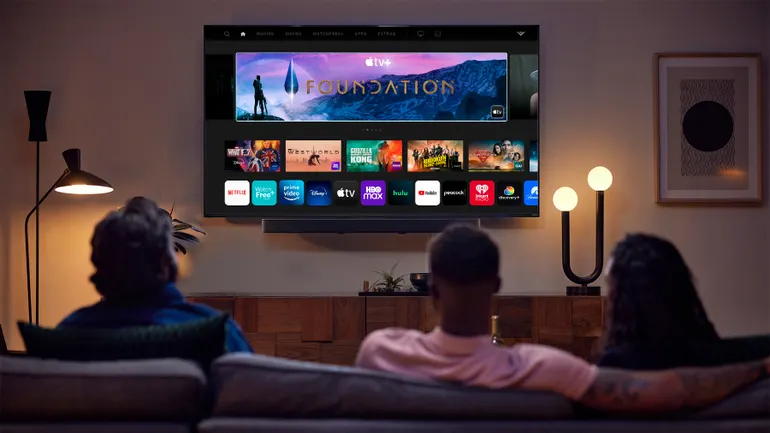
For decades, TV advertising was the domain of massive brands focusing on top-of-funnel awareness. The Vibe.co acquisition ensures that TV becomes a mid- and bottom-funnel performance channel. By making CTV accessible to the "long tail" of the market, Walmart is effectively turning the living room into a digital shelf, where the ad you see on your screen is just one click away from being delivered to your door.
Conclusion
Walmart’s acquisition of Vibe.co is a bold statement that the retailer intends to be a dominant force in the global advertising market. By lowering the entry barriers for SMBs and tying the power of CTV to the precision of retail data, Walmart is building a moat that will be difficult for competitors to cross.
For the marketing industry, this acquisition signals the end of the era where retail media was merely an "add-on" to a budget. Instead, it is rapidly becoming the central nervous system of consumer brand strategy. As the lines between streaming, data, and physical retail continue to blur, Walmart’s latest investment ensures that it will remain at the epicenter of that transformation, challenging the established giants and providing a new, integrated path for brands to reach the modern consumer.