

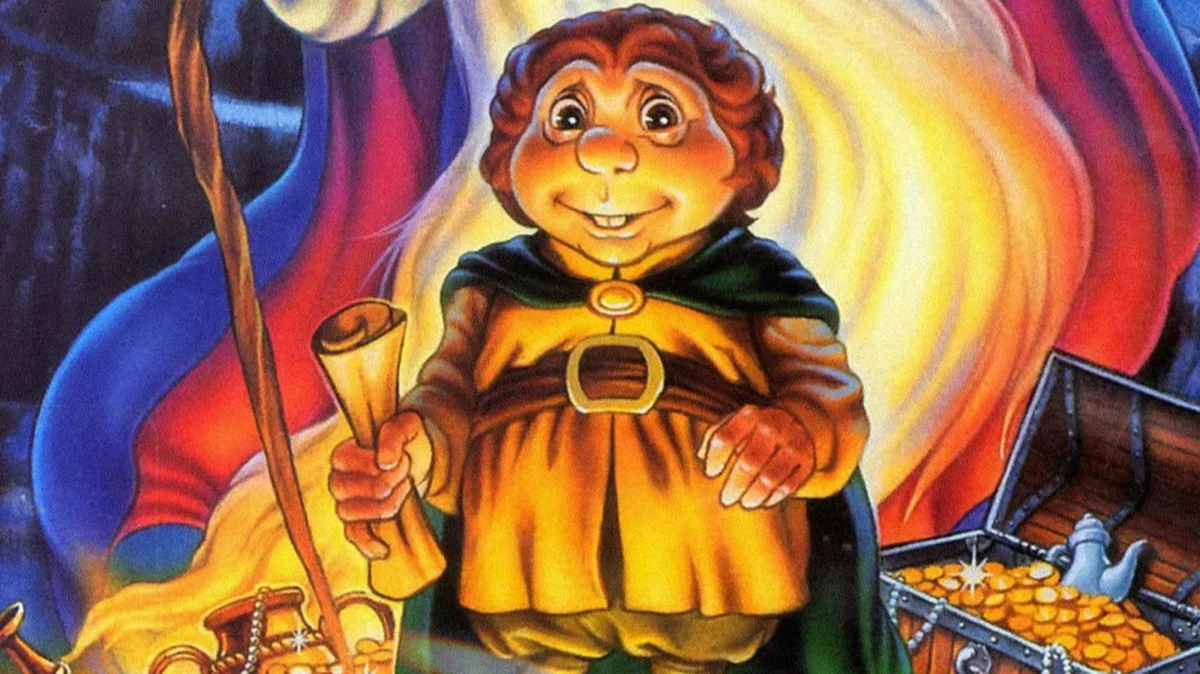
For generations, the cinematic landscape of J.R.R. Tolkien’s Middle-earth has been defined by Peter Jackson’s sweeping, Oscar-winning epics. However, the journey to bring the works of the Oxford professor to the silver screen was long, fraught with creative friction, and littered with abandoned pitches. Perhaps the most intriguing "what if" in the history of fantasy cinema is the persistent, yet ultimately aborted, courtship between The Walt Disney Company and J.R.R. Tolkien’s legendary tales.
While the 1970s saw Rankin/Bass Productions successfully animate The Hobbit (1977) and The Return of the King (1980), and Ralph Bakshi attempt a gritty, rotoscoped vision of The Lord of the Rings (1978), Disney’s own internal archives reveal that the studio had been circling Middle-earth for decades. Ultimately, the House of Mouse walked away—not for a lack of potential, but because of a fundamental, irreconcilable clash of artistic DNA.
A Legacy of Near-Misses: Chronology of the Disney-Tolkien Connection
The relationship between Disney and Tolkien was strained long before any formal negotiations began. To understand why a Disney-produced Hobbit never materialized, one must look at the timeline of the studio’s fascination and the author’s vocal disdain.
The Fantasia Proposal (1938)
Barely a year after the publication of The Hobbit, the Disney studio—buoyed by the unprecedented success of Snow White and the Seven Dwarfs—was looking for high-concept material to populate its experimental anthology film, Fantasia. According to researchers Brian J. Robb and Paul Simpson in Middle-earth Envisioned, there were internal discussions about adapting sections of The Hobbit as a segment within the film. It was an ambitious, albeit strange, prospect that would have effectively turned Bilbo Baggins into a contemporary of Mickey Mouse’s Sorcerer’s Apprentice.
The 1950s Animation Inquiry
By the 1950s, the prestige of The Lord of the Rings was growing, and legendary Disney animator Wolfgang Reitherman—the man behind many of the studio’s most iconic sequences—reportedly took a serious look at the trilogy. The internal assessment, however, was blunt: the source material was deemed "too unwieldy." The narrative density, the shifting perspectives, and the sheer scale of the War of the Ring were antithetical to the streamlined, character-focused storytelling that Disney had perfected.
The 1972 Pitch: The Final Attempt
The most concrete evidence of a Disney Hobbit exists in a 1972 pitch deck created by storyboard artist Vance Gerry and animator Frank Thomas. This document, which has since surfaced in digital archives, represents the most serious attempt by the studio to tackle the project. The pitch was a love letter to the Disney formula, arguing that The Hobbit could be the "great work" that synthesized the studio’s history: the character depth of Snow White, the dramatic intensity of Night on Bald Mountain, and the adventure of Treasure Island.
The Creative Chasm: Why the Pitch Failed
The failure of the 1972 pitch is a masterclass in understanding the limitations of studio branding. The creators of the pitch were forced to confront the reality that Tolkien’s world, in its authentic form, simply did not play by the rules of Burbank.
The "Disney-fication" Dilemma
The central issue identified in the 1972 documents was tone. Disney executives were famously protective of their brand, which relied on lighthearted humor, clear moral binaries, and emotional accessibility. When analysts looked at the source material, they encountered a problem: The Hobbit was, in their view, too frightening in parts and too sprawling in others.
There was a genuine fear that to make the story "Disney-ish," they would have to strip away the very elements that gave the book its weight. Ironically, a 1977 report from The New York Times highlighted that the project was ultimately killed because the story lacked the inherent, whimsical humor that defined the Disney brand. Adding that humor, the studio feared, would trigger a backlash from the growing, devout fanbase of Tolkien’s work.
Tolkien’s "Heartfelt Loathing"
The resistance was not one-sided. J.R.R. Tolkien was notoriously protective of his literary children. In a 1937 letter to his publishers, Tolkien explicitly forbade any illustrations in The Hobbit from mimicking the Disney style. He possessed a "heartfelt loathing" for the studio’s aesthetic, which he viewed as a garish, overly sentimental corruption of the fairy tale tradition. Had Disney actually pursued the rights, they would have likely faced a legal and public relations firestorm from the author himself, who viewed his work as deeply rooted in Northern European mythology rather than the saccharine morality plays of Hollywood.
Supporting Data: The Warning of ‘The Black Cauldron’
To understand why Disney’s hesitation was well-founded, one need only look at the mid-1980s. When Disney finally did attempt a dark, high-fantasy epic in the vein of the books they had considered in the 70s, the result was The Black Cauldron (1985).
The Black Cauldron was an attempt to shed the studio’s "kiddie" reputation, embracing a darker, more mature tone. The result was a box-office disaster that nearly crippled the studio’s animation department. It demonstrated that Disney’s core audience was not prepared for the kind of world-building that required moral ambiguity and genuine terror. Had they pushed forward with The Hobbit in the 70s, it is highly probable that the studio would have suffered a similar, perhaps even more catastrophic, failure.
The Alternative: The Rankin/Bass Legacy
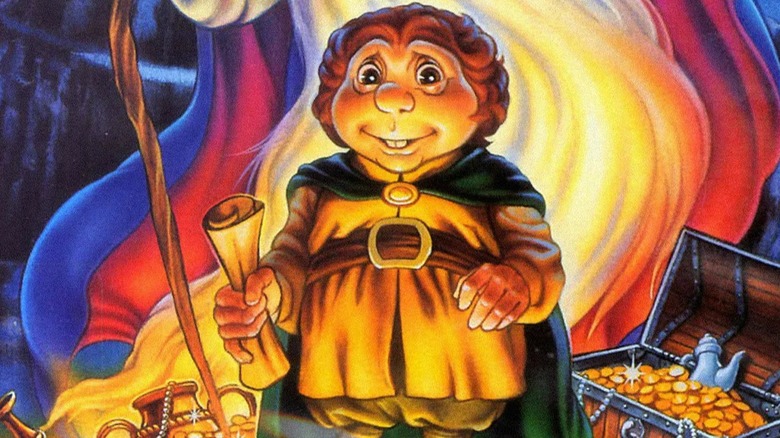
While Disney walked away, the market for Tolkien remained. The Rankin/Bass 1977 adaptation of The Hobbit offers a "what could have been" scenario. It was a musical—a format Disney would have almost certainly employed—but it leaned into the strangeness of the source material.
However, the result was a polarized experience. Songs like "Where There’s a Whip, There’s a Way" from the 1980 Return of the King illustrate the danger of adapting Tolkien with an irreverent, populist lens. These songs, while memorable, are often cited by purists as a desecration of the source material. It is a cautionary tale: when you try to force the vast, mythic structure of Middle-earth into a conventional musical or episodic format, the magic is often replaced by something far more trivial.
Implications: The Preservation of a Vision
The decision by Disney to abandon The Hobbit was arguably one of the most fortuitous "failures" in cinema history. By declining to adapt the work, Disney inadvertently protected it from a decade of potential creative degradation.
The implications are clear: some literary worlds are too singular to be processed through the standard machinery of a major studio. When Disney looked at the complexity of The Lord of the Rings and concluded it was "too unwieldy," they were acknowledging a truth that would eventually be vindicated by the scale of Peter Jackson’s production. Jackson succeeded precisely because he treated the material as a sprawling, epic, and often dark history, rather than a "fairy tale" to be sanitized for a family-friendly audience.
In retrospect, the correspondence and internal pitches from the 1930s through the 1970s serve as a reminder that artistic integrity often requires the courage to say "no." Disney’s restraint—born of brand protection and a realization of their own limitations—allowed the mythos of Middle-earth to remain intact until the technology and the industry were finally prepared to honor it with the gravity it deserved. While we can only speculate on what a 1970s Disney-animated Smaug might have looked like, the legacy of Tolkien’s work is arguably richer for having escaped the House of Mouse.










