

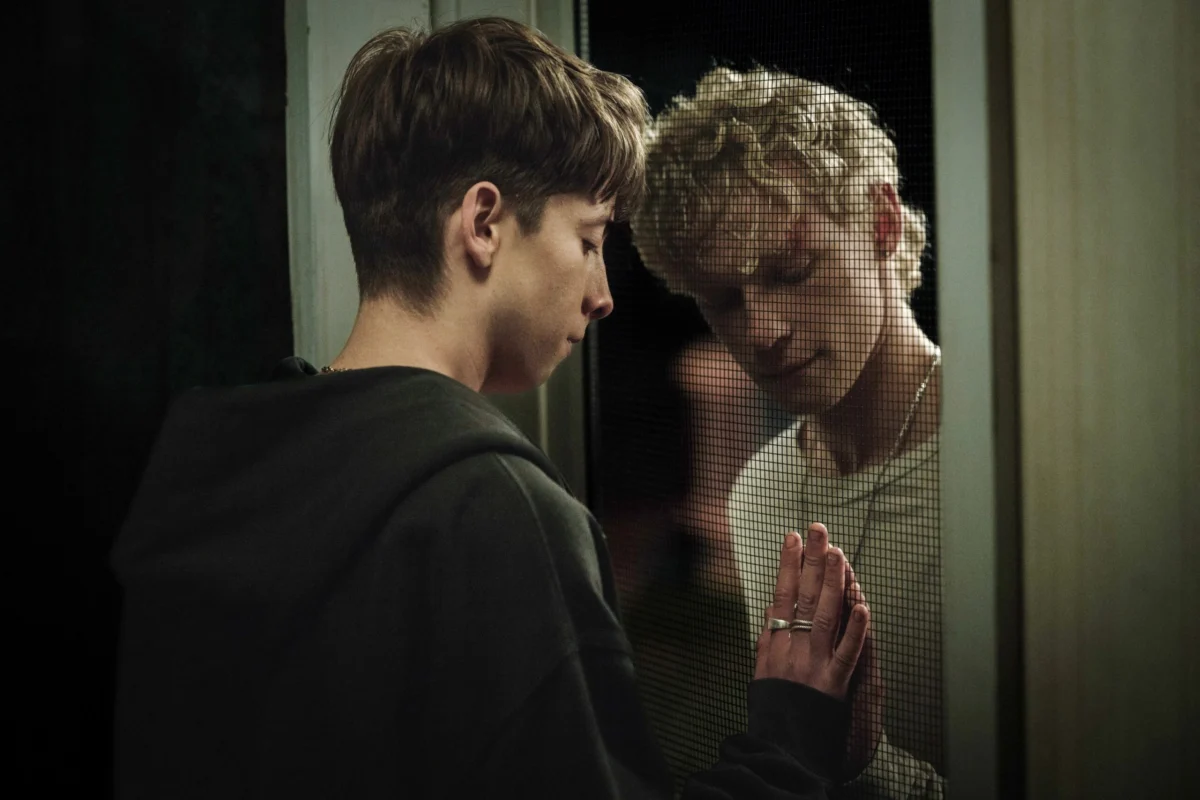
In the realm of contemporary horror, the "monster" is rarely just a beast lurking in the shadows; it is often a manifestation of the societal pressures, internalized traumas, and suppressed identities that haunt the protagonists. In Adrian Chiarella’s critically acclaimed new film Leviticus, now playing in theaters via Neon, the horror is inextricably linked to the religious persecution of queer desire. For costume designer Zohie Castellano, the wardrobe was not merely a matter of dressing actors; it was an act of visual world-building intended to map the internal decay and the fragile, blooming autonomy of the film’s two leads, Naim (Joe Bird) and Ryan (Stacy Clausen).
The Anatomy of the Supernatural: A Conceptual Approach
Leviticus follows Naim and Ryan, two Australian teenagers caught in the suffocating grip of a "Deliverance Healer" (Nicholas Hope). This leader, a proxy for conversion-therapy zealots, has cursed the boys: if they act on their longing for one another, they will be hunted by a monster that takes the shape of their deepest desires.
For Castellano, the assignment was a challenge of "Australian Gothic" synthesis. "I am drawn to the supernatural, but in a psychological sense," Castellano told IndieWire. "Horror provides a genre space where we can actually come face to face with the monstrous forces making the world unsafe for queer people. The clothing acts as a silent narrator, marking the characters’ journeys from hidden, repressed shells to individuals struggling to claim their own skin."

Chronology of a Wardrobe: From Repression to Revelation
The design process for Leviticus was deeply rooted in the script’s text, with Castellano translating metaphors of nature and decay into tangible textiles. The film’s visual language relies heavily on a "hostility in textures," creating a world that feels almost right, but is fundamentally skewed.
The Early Stages: Hiding in Plain Sight
In the film’s first act, Naim is defined by his desire for invisibility. Castellano deliberately dressed Bird in oversized layers, a common sartorial tactic for those attempting to shroud their identity. "Naim is very hidden at the beginning," Castellano explained. "He’s wearing a size up because he is actively trying to shrink his presence, to hide his body from the judgmental gaze of his community."
Conversely, Ryan is initially portrayed as more "daring," though both boys are trapped within a restrictive, conservative environment. As the narrative progresses, the costumes begin to mirror their subconscious connection—a visual tug-of-war between the light and the dark.

The Mid-Point: The "Wrongness" of the Deliverance Healer
The antagonist of the piece, the Deliverance Healer, represents the film’s corruption. To visually signal his toxicity, Castellano focused on the "incorrectness" of his attire. "We wanted a sense of ‘just-off’ wrongness," she noted. "The Deliverance Healer’s suit is pressed incorrectly, so it has this unnatural, oily shine to it—like frog skin. It’s a subtle cue to the audience that this man is a predator, even if he carries himself with the stiff authority of the church."
The Climax: The Monster’s Guise
Perhaps the most harrowing design challenge was the manifestation of the monster itself. Drawing on images of "frogs, snakes, and spiders" found in the script, Castellano utilized leather, lace, and knotty knits to create a tactile sense of dread. The monster’s look—a white, almost sheer shirt worn by Clausen—is designed to be both ethereal and deeply disturbing. "It’s a white shirt that is tempting, almost ghostly," Castellano said. "It represents the danger of desire in this specific world."
Supporting Data: Collaborative World-Building
The success of Leviticus relies on a rare level of inter-departmental synergy. Castellano worked closely with production designer Bethany Ryan to ensure the color palette was not just consistent, but psychologically resonant.

In a departure from traditional filmmaking, the team opted for a color-inverted strategy: the sets are often more colorful than the characters themselves. "Bethany and I discussed how there was more color in the set than in the costumes," Castellano revealed. "It was a choice to keep the boys in a restrained palette to evoke that profound yearning and the stifling nature of their environment."
This restraint allowed cinematographer Tyson Perkins to capture what Castellano describes as "industrial, almost-beauty." By keeping the costumes in muted, shadow-heavy tones, the film highlights the "knife’s edge" between the toxic community the boys inhabit and the vibrant, dangerous potential of their own burgeoning love.
Official Insights: The Creative Philosophy
Castellano’s process is a blend of rigorous research and intuitive artistry. While she maintains meticulous mood boards to chart the character arcs, she leaves room for the organic evolution of the wardrobe.

"It’s a good use of resources to decide to make things early," Castellano explained. "We made the monster tops early. We knitted Arlene’s (Mia Wasikowska) cardigan specifically to fit the mood. But then, there is the process of thrifting and buying. I’ll go to shops, find things that feel right, and integrate them into the story. It’s an intellectual process, but it’s also highly intuitive. You have to ask yourself: does this fabric feel like the character’s internal landscape?"
Implications: The Legacy of Queer Horror
Leviticus joins a growing lineage of queer horror that uses genre conventions to externalize the trauma of institutional abuse. By focusing on the clothing, Castellano highlights the vulnerability of the human body in the face of rigid, dogmatic control.
The implications of her work are significant: by shifting the focus from the "monster" to the "costume," she forces the viewer to recognize that the most terrifying aspect of the film is not a supernatural entity, but the social pressures that force Naim and Ryan to hide their true selves. The transition from oversized, hiding layers to more form-fitting, darker garments serves as a silent, powerful testament to Naim’s arc—he may be wrestling with the darkness inside him, but he is no longer trying to hide it.

As the film continues its theatrical run, the costumes remain a central point of discussion for critics and audiences alike. They serve as a reminder that in the hands of a skilled artisan, a shirt or a suit can hold as much narrative weight as a script, turning the act of getting dressed into a struggle for survival.
In Leviticus, the characters may not trust their own instincts, but the costumes serve as a guide—a visual language suggesting that, even in the most toxic of environments, the truth of who we are is the only thing worth fighting for.










