

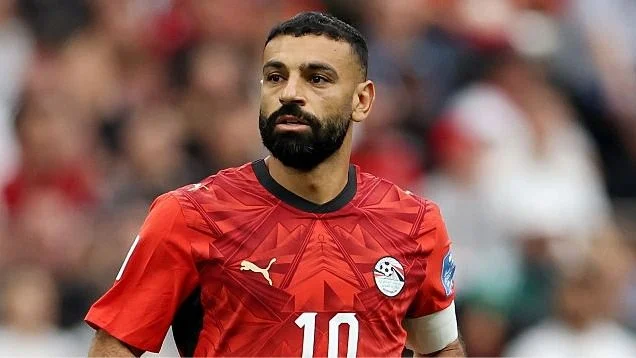
The 2026 FIFA World Cup has reached its most pressurized phase: the Round of 32. On July 3, the eyes of the footballing world will turn to Arlington, Texas, as the iconic AT&T Stadium plays host to a high-stakes clash between Egypt and Australia. For the Pharaohs, this fixture represents a historic opportunity to break their knockout-stage duck, while the Socceroos look to continue their reputation as the tournament’s ultimate giant-killers.
The Main Facts: A Clash of Styles in Arlington
The match, scheduled for a 2:00 p.m. ET (11:00 a.m. PT / 7:00 p.m. BST) kick-off, serves as a defining moment for two programs currently on divergent paths. Egypt, led by the talismanic Mohamed Salah, arrives at this stage with the weight of a nation’s expectations on their shoulders. Despite their status as African football royalty, the Pharaohs have historically struggled to translate continental success into World Cup knockout victories.
Australia, under the guidance of Tony Popovic, has navigated a rugged path to reach the Round of 32. Known for their tactical discipline and physical resilience, the Socceroos have embraced a "youth-first" philosophy, relying on an infusion of emerging talent to complement their veteran core.
The Injury Report
The buildup to the match has been dominated by medical bulletins. Egypt’s optimism is tempered by fitness concerns surrounding their biggest star, Mohamed Salah. Reports indicate that Salah, alongside key defender Mohamed Abdelmonem, is nursing minor injuries. While both are expected to feature, their mobility and effectiveness will be a primary focus for analysts. Conversely, Egypt’s defensive depth will be tested following the news that left-back Ahmed Fatouh is ruled out.
Australia, meanwhile, will be without the services of Mathew Leckie and Jacob Italiano. The loss of such experienced heads leaves a vacuum that Popovic intends to fill with youthful energy. The inclusion of breakout star Nestory Irankunda and the composure of Lucas Herrington—who etched his name into the history books as the youngest Australian player to feature in a World Cup—will be pivotal to their tactical setup.
Chronology: The Road to the Round of 32
To understand the magnitude of this encounter, one must look at the journey both teams took to reach Arlington.
Egypt’s Group Stage Resilience
Egypt’s qualification campaign was defined by defensive fortitude. By prioritizing structure over flair, the Pharaohs managed to secure narrow victories that allowed them to advance as a high-seeded runner-up. Their draw against top-tier opposition in the group stage demonstrated a newfound tactical maturity, allowing Salah to operate in pockets of space rather than carrying the entire attacking burden alone.
Australia’s Tactical Evolution
Australia’s path was arguably more arduous. Drawn into a "group of death," the Socceroos relied on high-intensity pressing and the tactical versatility of their midfield. Their victory in the final group match was a masterclass in game management, characterized by a rapid transition game that exploited the defensive lapses of their opponents. The evolution of the team under Popovic from a defensive-minded squad to an opportunistic, attacking unit has been the tournament’s quiet success story.
Supporting Data: Why This Match is a Statistical Gem
The matchup provides a fascinating statistical dichotomy.
- Possession vs. Transition: Data from the group stages shows that Egypt averages 58% possession in their matches, preferring to build from the back. Australia, conversely, thrives on low-possession, high-efficiency football, with a "passes per defensive action" (PPDA) metric that suggests they are among the most aggressive teams in the tournament when it comes to winning the ball back.
- The Salah Factor: Despite his injury concerns, Salah remains the focal point. His expected goals (xG) contribution is the highest among all players remaining in the tournament, suggesting that even at 80% fitness, he represents an existential threat to the Australian backline.
- Age and Stamina: The average age of the Australian starting XI is significantly lower than that of Egypt. With the sweltering Texas heat expected to play a role at AT&T Stadium, the physical conditioning of the younger Australian squad could become a deciding factor should the match head into extra time.
Official Responses and Managerial Mindsets
In pre-match press conferences, both managers have adopted a tone of cautious respect.
Tony Popovic acknowledged the threat posed by the Pharaohs, noting, "You cannot focus solely on Salah. Egypt is a cohesive unit with a clear tactical identity. Our challenge is to ensure our young players maintain their discipline when the pressure of a knockout game intensifies."
The Egyptian camp has been characteristically guarded. The coaching staff emphasized that while they respect the Australian work rate, the team is focused on breaking their historical cycle of early exits. "We are not here to participate; we are here to advance," a team spokesperson stated. "The injuries are being managed, and we are confident that our best eleven will be ready for the challenge."
Implications: A Turning Point for Continental Football
The outcome of this match carries significant implications for the future of both national programs.
For Egypt: The Psychological Barrier
A win for Egypt would serve as a psychological watershed moment. Successfully navigating a knockout game would validate the current generation’s talent and potentially change the way the team is perceived on the world stage. It would be a vindication of the investment in their national program and would cement Salah’s legacy as a transformative figure in African football.
For Australia: The "Golden Generation" 2.0
For the Socceroos, victory would solidify the narrative that the "Popovic Era" is one of genuine progress. By defeating a team of Egypt’s caliber, Australia would prove that their youth-driven project is capable of competing at the highest level of world football. It would likely lead to increased interest in the A-League and further opportunities for young Australian players to transition to top-tier European leagues.
How to Watch: Your Global Viewing Guide
For those looking to catch every second of the action, accessibility is key. In the United Kingdom, the match will be broadcast for free on BBC iPlayer. The BBC’s coverage provides an expert analysis, including pre-match build-up and post-match tactical breakdowns.
Streaming from Anywhere
If you are traveling outside of your home country during the tournament, you may find that local streaming services are geo-blocked. To circumvent these restrictions and ensure you don’t miss the match, many fans are utilizing a Virtual Private Network (VPN).
Steps to access the stream from anywhere:
- Select a Reliable VPN: We recommend Norton VPN for its high-speed servers and robust security features, which are essential for seamless, high-definition sports streaming.
- Choose Your Server: If you are, for example, in the United States but want to access the free BBC iPlayer coverage, simply connect to a UK-based server through your VPN interface.
- Navigate to the Stream: Once connected, visit the BBC iPlayer website or app. Because your IP address now appears to be in the UK, you will be able to stream the match as if you were sitting in London.
Technical Requirements for BBC iPlayer:
- Ensure you have a valid TV license (as required by UK law).
- Use a UK postcode (such as HA9 0WS) if prompted during the initial setup.
- The service is available on a wide array of devices, including smart TVs, gaming consoles (PlayStation and Xbox), mobile devices, and desktop browsers.
Disclaimer: We test and review VPN services in the context of legal, recreational use. Accessing services from abroad is subject to the terms and conditions of the respective platforms. We do not endorse or support the use of VPNs for illegal activities or the unauthorized consumption of pirated content.











