

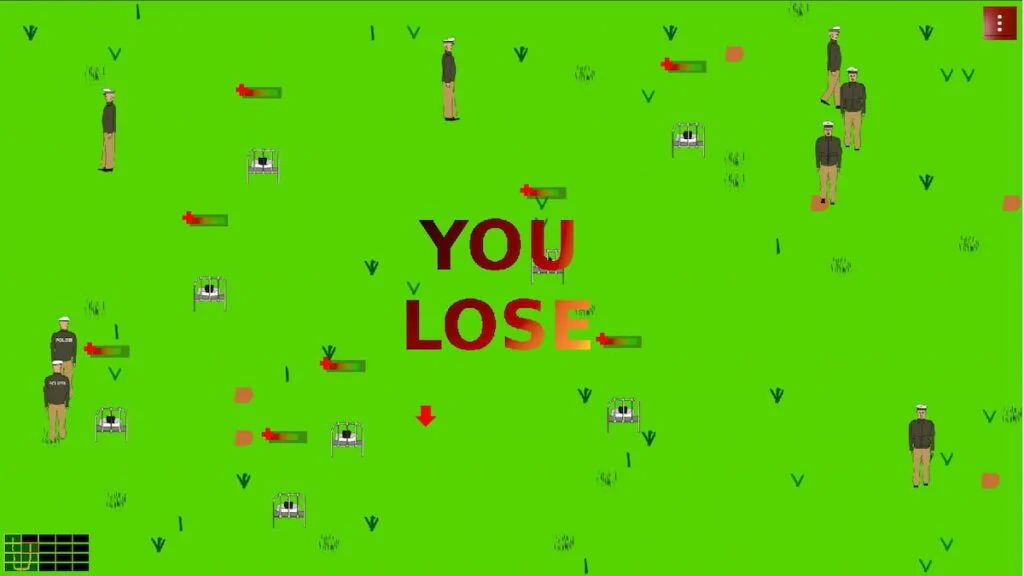
In a landscape saturated with high-octane action and competitive combat, a new mobile title, "3 Healers," is making waves by daring to be different. Launched on Android, this top-down experience pivots the traditional shooter genre on its head, inviting players to embrace pacifism as they navigate chaotic scenarios not with weapons, but with spiritual powers. The game’s most striking feature, however, is its audacious roster of playable characters: Jesus Christ, the enigmatic Siberian mystic Grigori Rasputin, and the 20th-century German faith healer Bruno Gröning.
This unique blend of historical figures, spiritual themes, and non-violent gameplay positions "3 Healers" as a potential landmark in mobile gaming, challenging conventions and sparking conversations. Developed by pc4gamers, the premium title promises a focused, ad-free experience, emphasizing its narrative and innovative mechanics over traditional monetization strategies.
Main Facts: A Paradigm Shift in Mobile Gaming
"3 Healers" is a recently released Android game that fundamentally redefines what a "top-down" game can be. Eschewing the prevalent combat-oriented mechanics of its genre siblings, it presents itself as a "top-down healer." Instead of gunning down adversaries or detonating obstacles, players are tasked with a profoundly different objective: mending the suffering of others through spiritual means. This radical departure from typical gameplay loops places healing at the forefront, creating an experience that is both novel and thought-provoking.
The game’s premise is built around an extraordinary cast of historical and religious personalities, each revered or controversial in their own right. Players can choose to embody Jesus Christ, a figure synonymous with healing and compassion; Grigori Rasputin, the infamous Russian mystic whose influence on the Romanov dynasty remains a subject of fascination; or Bruno Gröning, a German faith healer who gained a significant following in the post-World War II era. This selection immediately sets "3 Healers" apart, infusing the gameplay with layers of cultural, historical, and spiritual resonance.
At its core, "3 Healers" challenges players to navigate increasingly complex environments, identifying individuals in need of healing – from "needy paupers" to "Russian princes." The interaction is simple: approach those afflicted and use your character’s spiritual proximity to restore them. The challenge, however, arises from the constant threat of "authorities." Unlike traditional games where players confront and neutralize threats, in "3 Healers," violence is not an option. Players must skillfully evade patrolling guards and other adversaries, maintaining their pacifist stance while fulfilling their divine or mystic calling. Failure to do so results in being "detained or otherwise waylaid," leading to a loss.
"3 Healers" is a premium mobile title, available on Google Play, reflecting a developer commitment to a complete, uninterrupted gameplay experience. This means no intrusive advertisements, no in-app purchases, and all content unlocked from the outset. This business model further underscores the game’s intent to deliver a focused artistic and interactive journey, estimated to offer around two hours of engaging gameplay, with replayability stemming from the distinct experiences offered by each character.
Chronology: From Concept to Digital Redemption
The journey of "3 Healers" from an abstract idea to a playable reality represents a fascinating case study in game development, particularly within the mobile sector. While specific timelines and detailed developer logs are not publicly available in the initial announcement, one can infer the intricate process that must have unfolded to bring such a conceptually rich and mechanically distinct game to fruition.
Concept and Inception: A Vision of Pacifist Interaction
The genesis of "3 Healers" likely stemmed from a desire to subvert established gaming tropes. In an industry often criticized for its reliance on combat and destruction, the developers at pc4gamers seem to have sought a radical alternative. The decision to craft a "top-down healer" rather than a "top-down shooter" suggests a deliberate philosophical stance, aiming to explore themes of compassion, resilience, and non-violent resistance within an interactive medium.
The choice of playable characters is undoubtedly the most audacious element of the game’s concept. Selecting figures like Jesus Christ, Grigori Rasputin, and Bruno Gröning is not merely an aesthetic decision; it’s a profound narrative and thematic choice. Each character, while distinct in their historical and cultural context, shares a common thread: they were perceived as healers, mystics, or spiritual leaders who operated outside conventional authority, often attracting both fervent followers and intense scrutiny, even persecution. This commonality provides a strong thematic backbone for the game’s core mechanic of healing while evading hostile forces. The idea of these figures, separated by centuries and geographies, uniting in a singular digital experience to perform acts of spiritual aid is a powerful narrative device, inviting players to consider their legacies from a new, interactive perspective.
Development Journey: Crafting Non-Violent Chaos
Developing a game centered on pacifism within a genre traditionally associated with action presents unique design challenges. The absence of combat means the game must find alternative ways to generate tension, challenge, and player engagement. This likely involved meticulous level design, sophisticated AI for the "authorities," and intuitive controls for evasion and healing.

The "chaotic" element described in the game’s synopsis suggests that the developers invested heavily in creating dynamic environments where the threat of detection is ever-present and escalates. Designing enemy patrol patterns that are challenging but fair, incorporating environmental elements that can be used for cover or strategic movement, and balancing the healing mechanics with evasion are critical aspects that would have required extensive iteration and testing. Furthermore, the concept of "spiritual powers" for healing necessitates a subtle visual and auditory language that conveys effectiveness without resorting to flashy, destructive effects.
The differentiation between characters – "each has different targets, different adversaries, and a few bits of unique assistance" – indicates a significant investment in character-specific mechanics and narrative threads. This requires careful balancing to ensure that while each character offers a distinct experience, the overall game remains cohesive and enjoyable, providing replay value beyond the two-hour initial playthrough. The ultimate goal, centered around curing a "very well-known terminally ill character," suggests a narrative culmination that ties into the overarching themes of healing and redemption, serving as a powerful emotional anchor for the game’s conclusion.
Release and Initial Reception: A Quiet Revolution
"3 Healers" has recently launched on Android, marking its entry into the competitive mobile gaming market. As a premium title, it eschews the free-to-play model dominant on mobile, signaling a confidence in its unique value proposition. Initial reception, while still nascent, is likely to be characterized by both intrigue and discussion. The game’s distinct premise and character selection are almost guaranteed to generate buzz, drawing in players looking for something genuinely different.
Early players will be evaluating how effectively the game executes its pacifist mechanics, whether the evasion gameplay is compelling and fair, and how well the distinct character experiences truly differentiate the playthroughs. Given its premium pricing, players will also scrutinize the overall production quality, narrative depth, and replayability. "3 Healers" enters a market ripe for innovation, and its success could pave the way for more experimental and thematically rich mobile titles, demonstrating that commercial viability isn’t solely dependent on established genres or aggressive monetization. The collaborative nature of this article also points to a strategic effort by the developers to highlight the game’s distinctive features and reach a wider audience of mobile gaming enthusiasts.
Supporting Data: Deconstructing the Healing Mechanics and Cultural Tapestry
To fully appreciate the ambition and potential impact of "3 Healers," it is essential to delve deeper into its gameplay mechanics, the profound historical and cultural contexts of its characters, and its place within the broader trend of pacifist gaming.
Gameplay Mechanics in Detail: The Art of Spiritual Evasion
The core loop of "3 Healers" revolves around two primary actions: healing and evading.
- Healing: Unlike traditional RPGs where healing might involve potions or specific spells with cooldowns, "3 Healers" simplifies this to proximity. Players must position their chosen mystic or holy figure near those in need. This mechanic implies a continuous aura of spiritual energy or a passive ability that activates when close enough. The challenge isn’t in activating the power, but in reaching the target safely. This design choice emphasizes movement, positioning, and strategic pathfinding over resource management or complex ability rotations.
- Evasion: This is where the "chaotic" element truly comes into play. The game’s "authorities" act as dynamic obstacles. Their patrol patterns, line of sight, and potential detection mechanisms (e.g., sound, visual cones) will dictate player movement. Players might need to utilize environmental elements like buildings, shadows, or crowds for cover. The escalation of "more enemy patrols and more individuals in need of your help" across maps suggests a rising difficulty curve that tests players’ spatial awareness and timing, forcing them to execute increasingly complex evasion routes while simultaneously fulfilling their healing mandate.
- Character-Specific Assistance: The promise of "unique assistance" for each character is a critical element for replayability and strategic depth.
- Jesus Christ: Given his biblical narrative, "assistance" might manifest as temporary invulnerability, a brief slowing of time for adversaries, or the ability to "walk on water" (traverse difficult terrain undetected for a short period), perhaps even a temporary "cloak" that renders him invisible to guards.
- Grigori Rasputin: Reflecting his historical reputation for hypnotic charm and influence, Rasputin’s unique assistance could involve briefly distracting guards, causing them to change patrol routes, or even temporarily "charming" one to ignore him. His assistance might focus more on manipulation and misdirection.
- Bruno Gröning: As a faith healer known for his ability to channel a "healing stream," Gröning’s assistance might involve a wider healing radius, allowing him to heal multiple individuals simultaneously from a greater distance, or a temporary boost to movement speed to quickly navigate crowded areas and escape pursuit.
These distinct abilities would encourage players to adapt their strategies based on their chosen character, adding a strategic layer to the otherwise straightforward healing and evasion mechanics.
Historical and Cultural Context of the Characters: A Trinity of Mystics
The choice of protagonists is perhaps the game’s most provocative and compelling feature, drawing from diverse historical and religious narratives.
- Jesus Christ: The central figure of Christianity, Jesus is globally recognized for his teachings of love, compassion, and non-violence, as well as numerous miraculous healings. His inclusion in "3 Healers" directly aligns with the game’s pacifist theme and its focus on spiritual healing. However, his presence in a video game also carries significant weight, potentially sparking theological discussions or even controversy regarding the portrayal of such a revered figure in an interactive, commercial context. His narrative in the game would likely emphasize self-sacrifice and unwavering dedication to humanity’s well-being, even in the face of opposition.
- Grigori Rasputin: The infamous Russian mystic who exerted immense influence over Tsar Nicholas II and his family in the early 20th century. Rasputin’s life is shrouded in controversy, marked by claims of spiritual healing, prophecy, and debauchery. He famously seemed to alleviate the Tsarevich Alexei’s hemophilia, aligning him with the "healer" archetype, albeit a morally ambiguous one. His inclusion adds a dark, enigmatic, and historically rich dimension to the game. Players choosing Rasputin might experience a narrative that explores themes of power, corruption, and redemption, perhaps even hinting at the internal struggle between his divine calling and his earthly temptations. The reference to the Boney M song further highlights his pop-cultural notoriety.
- Bruno Gröning: A less universally known figure than Jesus or Rasputin, Bruno Gröning was a German faith healer who operated in the late 1940s and 1950s. He claimed to be able to channel a "healing stream" that could cure illnesses, attracting thousands of followers and considerable public attention, as well as legal battles and medical skepticism. His story reflects the human desire for healing and belief in extraordinary powers, particularly in a post-war society grappling with trauma. Gröning’s presence adds a layer of historical realism to the game’s mystic theme, grounding it in a more recent, documented phenomenon of faith healing. His narrative might explore themes of belief, skepticism, and the fine line between faith and charlatanism.
Uniting these three figures in a single game creates a fascinating juxtaposition. It invites players to consider the universal human experience of seeking healing and spiritual solace, irrespective of historical period or cultural background. It also challenges conventional portrayals, forcing players to engage with their legacies through the lens of active, non-violent intervention.
The Pacifist Gaming Trend: A Growing Niche
"3 Healers" is not an isolated phenomenon but rather a significant entry in a burgeoning sub-genre of pacifist or non-violent games. While most mainstream games feature combat, a growing number of titles explore alternative forms of interaction and conflict resolution.
- Examples: Games like "Undertale" famously allow players to complete the entire experience without killing a single enemy, offering alternative "mercy" routes. "Papers, Please" puts players in the role of an immigration officer, where moral choices and bureaucratic adherence replace combat. "Journey" emphasizes exploration, cooperation, and emotional connection over conflict.
- Appeal: The appeal of pacifist games lies in their ability to offer a different kind of challenge – often intellectual, ethical, or emotional. They force players to think creatively about problem-solving, develop empathy, and engage with narratives that prioritize understanding and preservation over destruction. In an increasingly complex world, such games can offer a reflective space, promoting values of peace and reconciliation. "3 Healers" leverages this appeal by making non-violence not just an option, but the central, non-negotiable mechanic, thereby amplifying its message.
Official Responses: Developer Intent and Business Philosophy
While "3 Healers" is a "specially commissioned article" as indicated by the "Collaboration Note," allowing for a deeper dive into the game’s vision, specific direct quotes from the developers (pc4gamers) regarding their philosophy and design choices are not provided in the original text. However, their actions and the game’s design speak volumes about their intentions and business model.

The Vision Behind Pacifism and Profound Characters
It is evident that pc4gamers aimed to create a distinctive experience that stands apart from the prevalent trends in mobile gaming. By opting for a pacifist approach, they appear to be making a deliberate statement about the potential of interactive media to explore themes beyond conflict. The inclusion of Jesus, Rasputin, and Gröning suggests a profound interest in spiritual history, myth, and the human condition, rather than merely creating a superficial gameplay loop. The developers likely recognized the inherent narrative power and controversial allure of these figures, leveraging them to create a game that is both engaging and intellectually stimulating. Their decision to grant each character unique targets and adversaries further underscores a commitment to historical nuance and varied gameplay, implying a dedication to detailed storytelling within a relatively short experience.
The Premium Model: A Commitment to Quality and Player Experience
The declaration that "The game is a premium title, with no ads or in-app purchases; buying it unlocks all the content" is a clear and strong "official response" regarding pc4gamers’ business philosophy. In an era dominated by free-to-play mobile games often criticized for aggressive monetization, loot boxes, and intrusive ads, "3 Healers" offers a refreshing alternative. This choice signals several key intentions:
- Value Proposition: The developers are confident that the unique gameplay, narrative, and overall experience warrant an upfront purchase. They believe the content itself is valuable enough without needing to extract further revenue through microtransactions.
- Uninterrupted Immersion: By eliminating ads and in-app purchases, pc4gamers prioritizes player immersion and a seamless experience. There are no distractions to pull players out of the narrative or the challenging gameplay, allowing them to fully engage with the spiritual journey.
- Artistic Integrity: This model often allows developers greater creative freedom, as they are not beholden to design choices that might maximize monetization at the expense of artistic vision or player satisfaction. It suggests that "3 Healers" is primarily conceived as a complete artistic product, rather than a service designed for continuous revenue generation.
- Trust in Players: It reflects a trust in players to recognize and pay for quality content, fostering a relationship built on mutual respect rather than exploitative tactics.
Collaboration and Editorial Standards
The "Collaboration Note" explicitly states, "GamingonPhone occasionally partners with developers, publishers, and other industry organizations for specially commissioned articles that align with our editorial standards and the interest of the readers." This transparent disclosure serves as an official acknowledgment of the article’s nature. It indicates that while the content is sponsored or commissioned, it adheres to the publication’s journalistic integrity, aiming to provide readers with valuable insights into the game. This model allows developers to articulate their vision more directly, while ensuring that the information is presented professionally and objectively to the audience. It’s a method for offering deeper context and developer perspective that might not be available in a standard news brief.
Implications: Reshaping Perceptions and Inspiring Innovation
The emergence of "3 Healers" carries significant implications, not just for mobile gaming, but for broader cultural discussions surrounding video games as a medium for artistic expression and challenging traditional narratives.
Impact on Mobile Gaming and Genre Innovation
"3 Healers" could serve as a powerful exemplar for mobile game developers, demonstrating that innovation and distinctiveness can be successful. By breaking away from the pervasive free-to-play model and the ubiquity of combat-centric games, it highlights the appetite for premium, narrative-driven experiences on mobile platforms. If "3 Healers" garners critical acclaim and commercial success, it could inspire a new wave of experimental mobile titles that prioritize unique gameplay mechanics, rich storytelling, and bold thematic choices over established genre conventions and aggressive monetization strategies. This could diversify the mobile gaming ecosystem, offering players a wider array of experiences beyond casual time-killers.
Cultural and Ethical Discussions: Gaming and Sacred Figures
The game’s most profound implication lies in its daring use of religious and historical figures like Jesus Christ and Grigori Rasputin. This will inevitably spark cultural and ethical discussions:
- Religious Sensitivities: Portraying revered religious figures in a video game can be contentious. While "3 Healers" appears to depict Jesus in a manner consistent with his compassionate image, any fictionalization carries the risk of offending some religious sensibilities. Conversely, it could also be seen as a novel way to engage with religious narratives, making them accessible and interactive for a new generation.
- Historical Interpretation: The game’s inclusion of Rasputin and Gröning invites players to reflect on their complex legacies. How does the game interpret their "healing" abilities? Does it present them as genuine spiritual powers, or does it leave room for ambiguity? This interactive engagement with historical figures can prompt players to learn more about their real-world counterparts, fostering historical curiosity.
- Artistic Freedom vs. Respect: "3 Healers" pushes the boundaries of artistic freedom in game design. It raises questions about where the line lies between creative interpretation and respectful portrayal, especially when dealing with figures of profound cultural and spiritual significance. The discussions surrounding the game could contribute to a more nuanced understanding of video games as a medium capable of tackling complex, sensitive subjects.
The Message of Pacifism: A Challenge to Gaming Norms
By making pacifism the central mechanic, "3 Healers" offers a powerful counter-narrative to the dominant culture of violence in video games. It challenges players to find solutions through evasion, empathy, and strategic non-engagement, rather than confrontation. This message is particularly salient in contemporary society, prompting players to consider the value of non-violent resistance and the impact of their actions, even in a virtual space. It demonstrates that compelling gameplay can be crafted without resorting to combat, offering a refreshing perspective on conflict resolution within interactive entertainment.
Future Prospects: What Lies Beyond Healing?
The success of "3 Healers" could open several avenues for pc4gamers. It might lead to sequels or expansions, exploring other historical or mythical figures known for healing or non-violent action. It could also inspire the development of other unique, genre-bending titles that continue to subvert expectations and push the boundaries of mobile gaming. The "ultimate aim" of curing a "very well-known terminally ill character" suggests a potential for emotional depth and a strong narrative payoff, which could become a hallmark of pc4gamers’ future projects. Ultimately, "3 Healers" has the potential to leave a lasting mark, not just as a unique game, but as a catalyst for discussion and innovation in the ever-evolving world of digital entertainment.











No comments yet. Be the first to join the conversation!