Nila Kartika Wati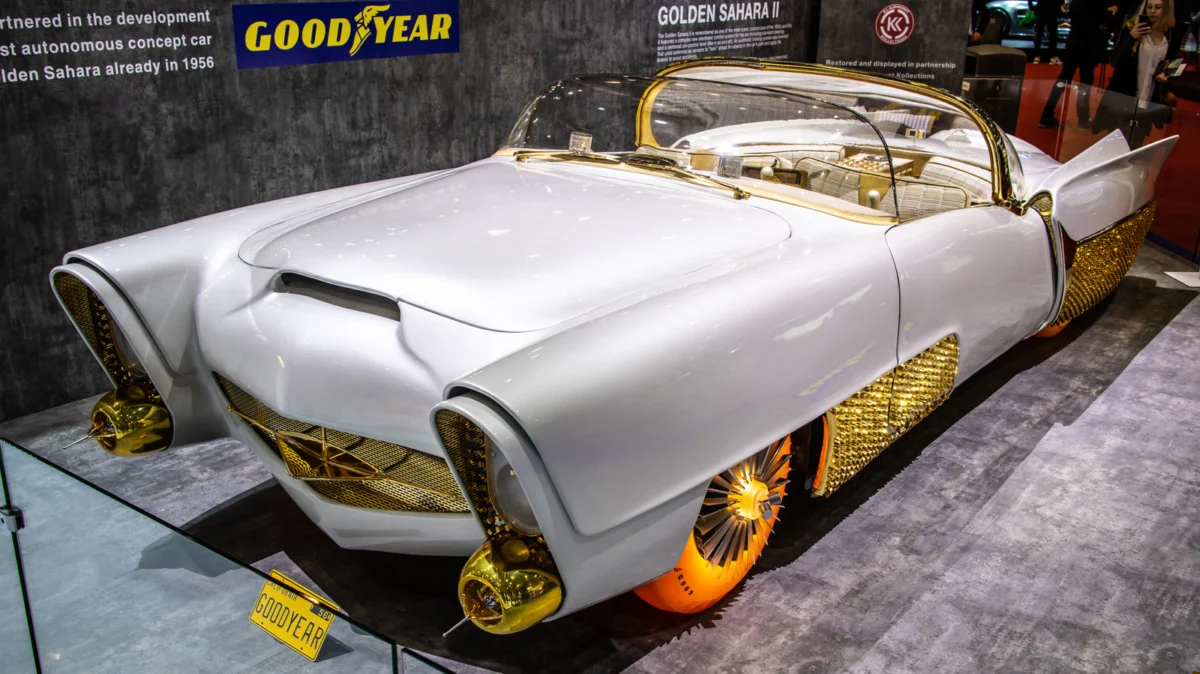
In the mid-20th century, the American automotive landscape was defined by excess, chrome, and a burgeoning obsession with space-age technology. While the era lacked modern safety benchmarks like autonomous emergency braking or advanced stability control, it was a time of unbridled industrial optimism. Among the pioneers of this "Atomic Age" design was Goodyear, which sought to marry aesthetic flair with functional safety through a revolutionary, albeit short-lived, concept: the translucent, glowing tire.
While the project—known as "Neothane"—promised to transform the way we see vehicles at night, it ultimately serves as a cautionary tale of how ambition can occasionally outpace material science. What began as a collaboration with legendary custom car designers eventually fizzled into a historical footnote, highlighting the rigid physical requirements that dictate tire engineering to this day.
The Genesis of an Idea: The Golden Sahara II
The story of the glowing tire is inextricable from the Golden Sahara II, a landmark concept vehicle that debuted in the late 1950s. Built upon a 1953 Lincoln chassis, the car was a collaborative effort between custom car visionary George Barris—the mastermind behind the iconic 1966 Batmobile—and Jim Street.
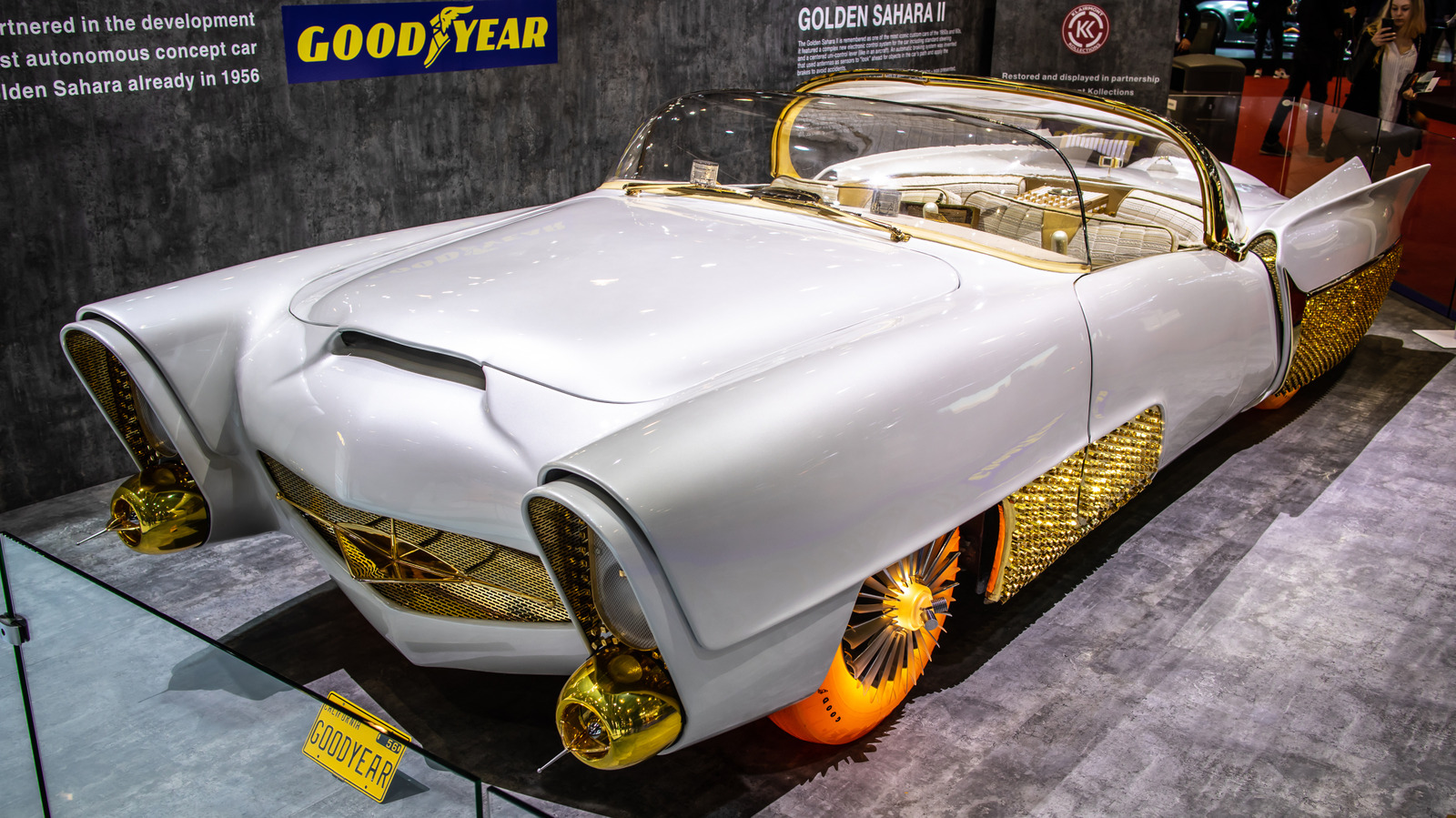
The Golden Sahara II was, for its time, a technological marvel. It featured remote-control capabilities, including voice-activated start and stop functions, a precursor to the autonomous driving systems we see today. However, its most striking feature was its rolling gear. Goodyear provided special, translucent tires cast from a synthetic rubber material dubbed "Neothane."
These tires were not merely aesthetic additions; they were illuminated from within the wheel wells by internal lighting arrays. The intent was twofold: to provide a dramatic, futuristic visual signature for the car and to increase vehicle visibility during nighttime driving. Goodyear’s marketing of the era—which included archaic and patronizing suggestions that motorists could swap tires to match their spouses’ outfits—betrayed a company focused heavily on the "lifestyle" aspect of the automobile rather than the gritty realities of road physics.
Chronology of a Failed Innovation
1950s: The Era of "Better Living Through Chemistry"
During the post-war industrial boom, synthetic rubber compounds were the frontier of engineering. Goodyear, eager to maintain its dominance in the tire market, began experimenting with polyurethane-based compounds. Neothane was marketed as a miracle material: translucent, customizable in color, and seemingly immune to the wear and tear of standard rubber.
The Late 1950s to Early 1960s: The Peak of the Hype
The Golden Sahara II made the rounds at major car shows, becoming a sensation. The public was enamored with the idea of a car that seemed to hover on rings of light. For a brief window, it appeared that the standard black tire might finally be rendered obsolete.
Mid-1960s: The Reality Check
As the prototype underwent more rigorous testing, the inherent flaws of the Neothane compound began to surface. By the mid-60s, it became clear to Goodyear engineers that the material was fundamentally unsuited for the demands of the open road. The project was quietly shelved, and the company returned to traditional carbon-black rubber compounds.
Material Failure: Why Neothane Couldn’t Survive
The downfall of the glowing tire was not a lack of vision, but a lack of structural integrity. To understand why these tires failed, one must look at the mechanical constraints of 1960s automobiles.
Thermal Instability and Melting Points
The most critical failure of Neothane was its thermodynamic profile. In the 1950s and 60s, the vast majority of vehicles utilized drum brake systems. Drum brakes dissipate heat significantly less efficiently than modern disc brakes, often causing extreme temperatures at the wheel hub during heavy or prolonged braking. Neothane, while aesthetically pleasing, had a melting point far too low to survive these conditions. In real-world testing, the tires literally began to degrade and warp under the heat generated by the brakes.
The Weight Penalty
Beyond thermal issues, the tires were massive. Each Neothane tire weighed approximately 150 pounds—an immense amount of unsprung weight for a passenger car. This significantly hampered suspension performance and vehicle handling, making the car difficult to maneuver and incredibly taxing on the drivetrain.
Wet-Weather Performance
The primary job of a tire is to provide friction (grip). Standard carbon-black tires are engineered with specific compounds that maximize surface adhesion. Neothane, by contrast, lacked the necessary coefficient of friction. In wet or rainy conditions, the tires became dangerously slick, effectively turning the vehicle into a liability rather than a safety innovation.
The Practical Paradox: Aesthetics vs. Utility
Even if Goodyear had solved the mechanical issues, a significant practical hurdle remained: the environment of the road. A glowing, translucent tire relies on its transparency to function. However, the average road is a repository of brake dust, oil, mud, and road grime.
After only a few miles of driving, the tires would lose their translucent luster, becoming opaque and dingy. The "glow" that was supposed to enhance visibility at night was quickly obscured by the very surfaces the car was traversing. It was a classic case of design failing to account for the utilitarian reality of the product’s intended use case.
Implications for Modern Automotive Design
The failure of the glowing tire serves as a foundational lesson in automotive R&D. Goodyear’s experiment proved that the automotive industry is governed by a strict hierarchy of needs: safety and performance must always supersede aesthetics.
Why We Still Use Black Tires
There is a functional reason why tires are black: carbon black. This chemical additive is crucial for reinforcing the rubber, conducting heat away from the tread and belt area, and protecting the material from UV radiation and ozone degradation. Without carbon black, tires would disintegrate at a fraction of their current lifespan. While color-changing technology has been explored in various patents since, the chemical necessity of carbon black remains the standard for durability.
The Legacy of Customization
While the glowing tire itself failed, the spirit of the Golden Sahara II lives on. Today, we see remnants of this design philosophy in ambient vehicle lighting, LED-accented wheels, and the growing market for custom tire lettering. The industry learned that while consumers want their vehicles to be expressive, they are unwilling to trade safety for aesthetic novelty.
Official Perspective and Historical Context
Goodyear never issued a formal apology or a public "cancellation" announcement for the Neothane project; it simply faded away as the data became irrefutable. In industry archives, the project is frequently cited as an example of "marketing-led engineering"—a scenario where the desire for a flashy headline pushes a product forward before the engineering team has fully vetted the safety implications.
In the decades since, Goodyear has pivoted toward sustainable materials, such as bio-based rubber and low-rolling-resistance compounds, focusing on efficiency and environmental impact rather than showy, high-maintenance visuals. The Golden Sahara II remains a prized piece of automotive history, a monument to a time when designers believed that, with enough chemistry, they could redefine the very laws of physics.
Conclusion
The story of the glowing tire is a fascinating chapter in the history of innovation. It reminds us that the automotive world is a graveyard of brilliant ideas that were simply too fragile for the road. While we may not have tires that glow in the dark, we have achieved safety standards that the engineers of the 1960s could only dream of. The Neothane tire, while a failure, was a bold, necessary step in the exploration of what a tire could be—and a definitive lesson on why some traditions, like the reliable black rubber tire, are meant to stay.


 Asep Darmawan
 Rifan Muazin