Sagoh
Sagoh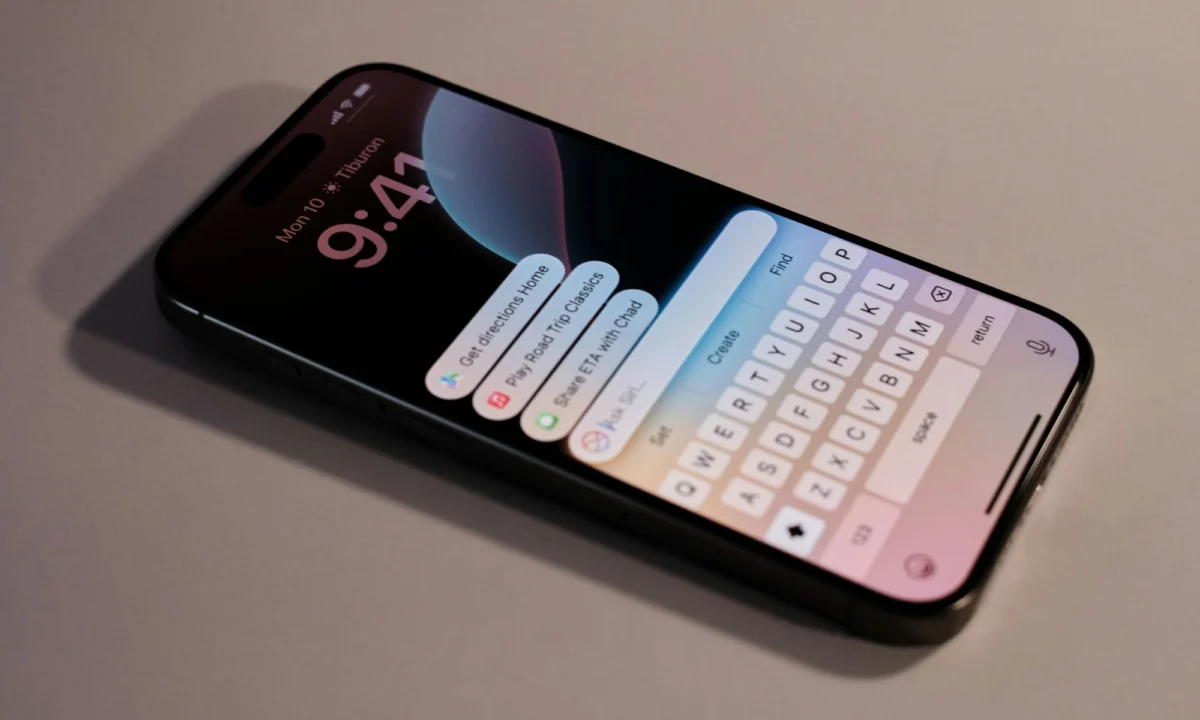
For years, the gold rush in generative AI has been defined by a "collect first, secure later" philosophy. Tech giants like OpenAI, Google, and Meta have built massive, multi-modal language models on the back of vast troves of user data, creating a landscape where personalization often comes at the expense of privacy. However, a seismic shift is on the horizon. According to recent insights from Bloomberg’s Mark Gurman, Apple is preparing to unveil a comprehensively overhauled Siri in the upcoming iOS 27, and the headline feature isn’t just smarter responses—it is the implementation of a rigorous, user-first privacy framework that could fundamentally alter how we interact with chatbots.
The Core Transformation: Moving Beyond Voice Commands
The most immediate change coming to iOS 27 is the structural evolution of Siri. Long criticized for being a reactive, limited voice assistant, Siri is poised to shed its clunky interface for a dedicated, chatbot-style experience. This shift represents Apple’s answer to the "chatbot era."
Reports indicate that the new Siri will operate more like an intelligent agent. Users will be able to engage in continuous, context-aware dialogues rather than relying on isolated, one-off voice commands. The update is expected to introduce a "Search or Ask" toggle, allowing for a fluid transition between traditional information retrieval and generative AI-driven reasoning. By allowing Siri to retain conversational history and context, Apple is finally positioning its assistant to compete with the sophisticated reasoning capabilities of ChatGPT and Gemini. Yet, in true Cupertino fashion, this capability is being built with "guardrails" that prioritize user autonomy over model training.
Chronology of a Redesign: From Assistant to Agent
Apple’s journey toward this overhaul has been marked by caution and internal deliberation. The following timeline highlights the strategic evolution of the company’s AI roadmap:
- 2023–2024 (The Foundation): As competitors surged ahead, Apple focused on foundational research, emphasizing "on-device" processing to minimize data transmission.
- Late 2024 (Strategic Partnerships): Reports emerged that Apple began exploring partnerships with Google to leverage the Gemini infrastructure to bridge the capability gap in complex reasoning.
- Early 2025 (The Integration Phase): Apple shifted its internal focus toward building a "Private Cloud Compute" architecture—a system designed to handle complex AI tasks in the cloud while maintaining a level of encryption and isolation that keeps user data inaccessible even to Apple itself.
- Mid-2026 (The iOS 27 Reveal): The industry now turns toward WWDC, where the expected launch of the redesigned Siri will signify the most substantial update to the assistant since its inception in 2011.
Privacy as a Product: The Auto-Delete Paradigm
The most provocative aspect of the upcoming update is the potential introduction of automatic conversation deletion. While platforms like ChatGPT offer manual "incognito" modes or settings to disable history, these are often opt-in features that the average user may overlook.
Apple’s reported approach is to make privacy the default. By allowing users to set a mandatory retention window—30 days, one year, or a permanent archive—Apple is bringing the same granularity to AI that it introduced to the Messages app. This represents a fundamental divergence from the industry standard. Most AI companies view chat history as the "fuel" for future model training and personalization. Apple, by contrast, is betting that users will prioritize the ability to "forget" as much as they prioritize the ability to "learn."

Supporting Data: The Privacy-Intelligence Tradeoff
The challenge for Apple lies in the "Privacy-Intelligence Gap." Historically, AI models require massive datasets to learn nuances, slang, and cultural context. By limiting data retention, Apple theoretically restricts the amount of feedback its models can ingest from individual users.
However, data suggests that the market is becoming increasingly skeptical of the "everything-in-the-cloud" model. According to recent consumer sentiment surveys, a significant majority of smartphone users express concern over how their AI interactions are being used to train third-party models. Apple is attempting to capitalize on this sentiment by branding its AI as "The Private Assistant."
To maintain competitive parity, Apple is reportedly balancing this with:
- On-Device Processing: Using the A-series and M-series chips to perform as much computation locally as possible, ensuring that the "brain" of the assistant never leaves the user’s device.
- Private Cloud Compute (PCC): A revolutionary infrastructure that extends Apple’s security protocols to the cloud, ensuring that even when a request is too heavy for a phone, the processing remains ephemeral and isolated.
Official Responses and Industry Context
While Apple has maintained its characteristic silence regarding specific iOS 27 features, CEO Tim Cook has frequently reiterated that privacy is a "fundamental human right." In previous earnings calls, Apple executives have hinted that their AI strategy would be distinct from competitors, focusing on "relevance" and "utility" rather than raw, unchecked scale.
Industry analysts suggest this is a calculated risk. If Siri becomes significantly more useful, the privacy controls will be seen as a "premium" feature. If the privacy controls make the assistant feel "dumber" than its competitors, Apple may struggle to convert users who prioritize raw, AI-driven speed over security.
Implications: A New Era for Human-Computer Interaction
The implications of this strategy are far-reaching. If Apple successfully integrates a high-functioning, privacy-first chatbot into the core of iOS, it will effectively force competitors to justify their own data-hoarding practices.

1. The "Safety" Competitive Advantage
By framing privacy as a core component of the user experience, Apple is creating a moat that companies like Google and Meta—which rely heavily on advertising revenue—cannot easily replicate. For a user, the choice may eventually come down to: "Do I want the absolute smartest assistant that knows everything about me, or the most helpful assistant that I can trust?"
2. A Shift in Developer Expectations
With a dedicated Siri app, developers will likely need to adjust how they integrate their own services. We can expect new APIs that allow third-party apps to interact with the "Search or Ask" interface, potentially allowing for a more modular, app-based ecosystem rather than a monolithic chatbot.
3. The Regulatory Landscape
Governments worldwide are tightening regulations on AI data handling (e.g., the EU AI Act). Apple’s pivot toward automatic deletion and on-device processing may actually be a proactive regulatory strategy, insulating the company from future legal battles concerning data privacy and user consent.
What Lies Ahead at WWDC
As we approach the Worldwide Developers Conference (WWDC), the tech world is holding its breath. The delay in Apple’s broader AI roadmap has fueled speculation that the company was struggling to balance its high security standards with the demands of a modern LLM.
If the rumors are true, the reveal of the new Siri will not just be about a better voice interface. It will be a statement of philosophy. By turning the "chatbot" into a "private agent," Apple is attempting to prove that AI does not have to be an invasive technology.
Whether this strategy succeeds depends on the intelligence of the model itself. Privacy is a powerful selling point, but for an assistant to be useful, it must understand the user. As the lines between search, assistant, and generative AI blur, Apple’s ability to weave these elements together while keeping the user’s data behind a "digital vault" will be the defining story of the year. If they get it right, they won’t just be releasing an update—they will be setting the standard for how the rest of the world builds AI.

 Muslim
 Suro Senen