

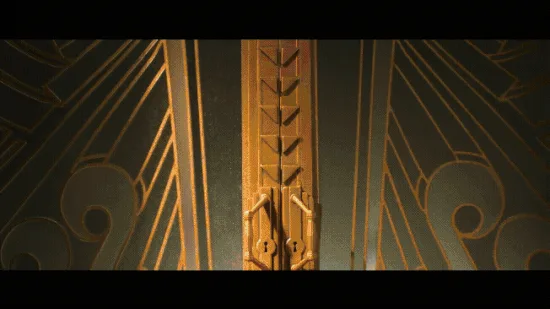
In the annals of contemporary fantasy literature, few settings are as evocative or as hauntingly realized as the "Impassable Wilderness." This forbidden expanse, bordering the urban sprawl of Portland, Oregon, serves as the heart of Wildwood, the beloved young adult novel by Colin Meloy. For years, readers have navigated its sylvan depths through the prose of the Decemberists’ frontman and the intricate illustrations of his wife, Carson Ellis. Now, that literary journey is set to undergo a breathtaking transformation. Under the meticulous stewardship of Portland-based animation powerhouse LAIKA Studios and director Travis Knight, Wildwood is preparing to make its grand debut on the big screen, promising to push the boundaries of stop-motion artistry once again.
Main Facts: A Tale of Courage and Consequences
The narrative architecture of Wildwood begins with a moment of domestic upheaval that quickly spirals into a high-stakes adventure. The story follows Prue, a young girl whose mundane afternoon in the park is shattered when a murder of crows descends to abduct her infant brother. This inciting incident pulls Prue—accompanied by her classmate, Curtis—into the Impassable Wilderness, a realm strictly off-limits to the residents of Portland.
Inside this hidden kingdom, Prue and Curtis discover a society governed by its own complex rules, political intrigue, and magical flora and fauna. As they navigate this labyrinthine landscape in a desperate search for the missing child, they find themselves caught in the middle of an epic conflict.
The film adaptation, slated for release on October 23, brings this expansive world to life with a star-studded ensemble voice cast, including Carey Mulligan, Mahershala Ali, Awkwafina, and Angela Bassett. By blending the organic charm of stop-motion puppetry with the precision of modern digital effects, LAIKA aims to capture the distinct aesthetic established by Ellis’s original book illustrations, translating her two-dimensional vision into a tangible, breathing reality.
Chronology: From Meloy’s Imagination to the Silver Screen
The path to Wildwood as a cinematic event has been a decade-long labor of love. The saga began in 2011 with the publication of the first book in what would become a celebrated trilogy. Colin Meloy, already a household name for his songwriting prowess with The Decemberists, proved that his narrative talents extended far beyond the constraints of a three-minute track. Carson Ellis, a frequent collaborator on the band’s visual branding—designing album covers, tour posters, and merchandise—provided the visual bedrock for the series.
The transition from page to screen began in earnest when LAIKA, a studio already renowned for its commitment to the laborious craft of stop-motion, optioned the rights. The studio’s trajectory—moving from the success of Coraline and The Boxtrolls to the technical mastery of Kubo and the Two Strings—perfectly positioned them to handle the scale of Wildwood.

Throughout the mid-2020s, fans have watched with bated breath as production updates trickled out. By 2026, the studio had reached a critical mass of development. The unveiling of the official teaser trailer served as the definitive marker that the Impassable Wilderness was no longer just a literary curiosity, but a fully realized cinematic destination.
Supporting Data: The Craft of "Performance Through Observation"
LAIKA has carved out a unique niche in the animation industry by rejecting the industry-wide trend of purely digital production. Instead, they champion a hybrid model that marries the tactile nature of hand-built puppets and miniature sets with the limitless potential of computer-generated imagery (CGI).
The Avian Principality
Central to the film’s visual identity is the "Avian Principality," a society of birds that serves as a core faction within the narrative. To achieve the level of realism required for these characters—most notably the crown prince, Owl Rex—LAIKA’s animation team engaged in an intensive, multidisciplinary study of ornithology.
The studio’s behind-the-scenes featurette, "Where the Sky Remembers," highlights the ethos that "performance starts with observation." Animators spent months analyzing the micro-movements of real birds—the twitch of a feather, the rotation of a neck, the specific cadence of flight patterns—to ensure that the puppets didn’t just move, but possessed an authentic, living essence. This commitment to verisimilitude ensures that when a character like Owl Rex appears on screen, the audience perceives a creature defined by naturalistic weight and intent rather than just a collection of materials.
Technical Synthesis
The studio’s approach involves:
- Puppet Engineering: Using advanced 3D printing and internal armatures to allow for hyper-expressive character movement.
- Set Design: Constructing sprawling, hand-carved forests that blur the line between a model and an actual wilderness.
- Digital Integration: Utilizing sophisticated camera rigs and digital compositing to marry the physical sets with atmospheric effects that would be impossible to replicate in real-time.
Official Responses and Creative Vision
Director Travis Knight has spoken extensively about the philosophical alignment between LAIKA’s mission and the source material. For Knight, Wildwood is more than just a story about a lost brother; it is an exploration of the threshold between the known world and the mysterious.

"We are building a world that feels as old as the earth itself," Knight noted in a recent production briefing. By retaining the core creative DNA of Meloy and Ellis, the production team has ensured that the film remains faithful to the tone of the books—a blend of whimsy, danger, and deeply felt human emotion. The inclusion of high-caliber talent like Mahershala Ali and Angela Bassett adds a layer of gravitas to the voice performances, grounding the fantastical elements in raw, emotional truth.
The creative team has emphasized that the goal is not merely to adapt the plot, but to adapt the feeling of reading the book—that specific sensation of uncovering a secret that has been hidden in plain sight all along.
Implications: The Future of Stop-Motion Animation
The release of Wildwood comes at a pivotal time for the animation industry. As artificial intelligence and automated generation tools begin to proliferate, LAIKA’s steadfast commitment to the "human-made" element of filmmaking serves as a provocative counter-narrative.
By continuing to invest in the artisanal side of cinema, LAIKA is effectively asserting that the imperfections of the human hand—the slight wobble in a puppet’s movement or the subtle texture of hand-painted foliage—are what lend a film its "soul." Wildwood stands to be the most ambitious testament to this philosophy to date.
Cultural Impact
Should Wildwood resonate with audiences as strongly as the source material did with readers, it could signify a resurgence for stop-motion as a commercially viable blockbuster format. It challenges the notion that animation must be slick, glossy, and purely digital to attract a global audience. Furthermore, by centering on a story of young, vulnerable protagonists navigating a complex, often frightening world, the film taps into a timeless narrative vein that resonates across generations.
As the October 23 release date approaches, the anticipation is palpable. The Impassable Wilderness is opening its gates, and for those who have spent years waiting to see the world of Prue and Curtis realized in the light of the projector, it promises to be a homecoming. Whether the film ultimately achieves the status of a classic remains to be seen, but its place in the history of artisanal animation is already assured. By bridging the gap between the tactile, ancient art of puppetry and the cutting-edge requirements of modern cinema, Wildwood is set to define the next chapter of LAIKA’s storied legacy.









No comments yet. Be the first to join the conversation!