

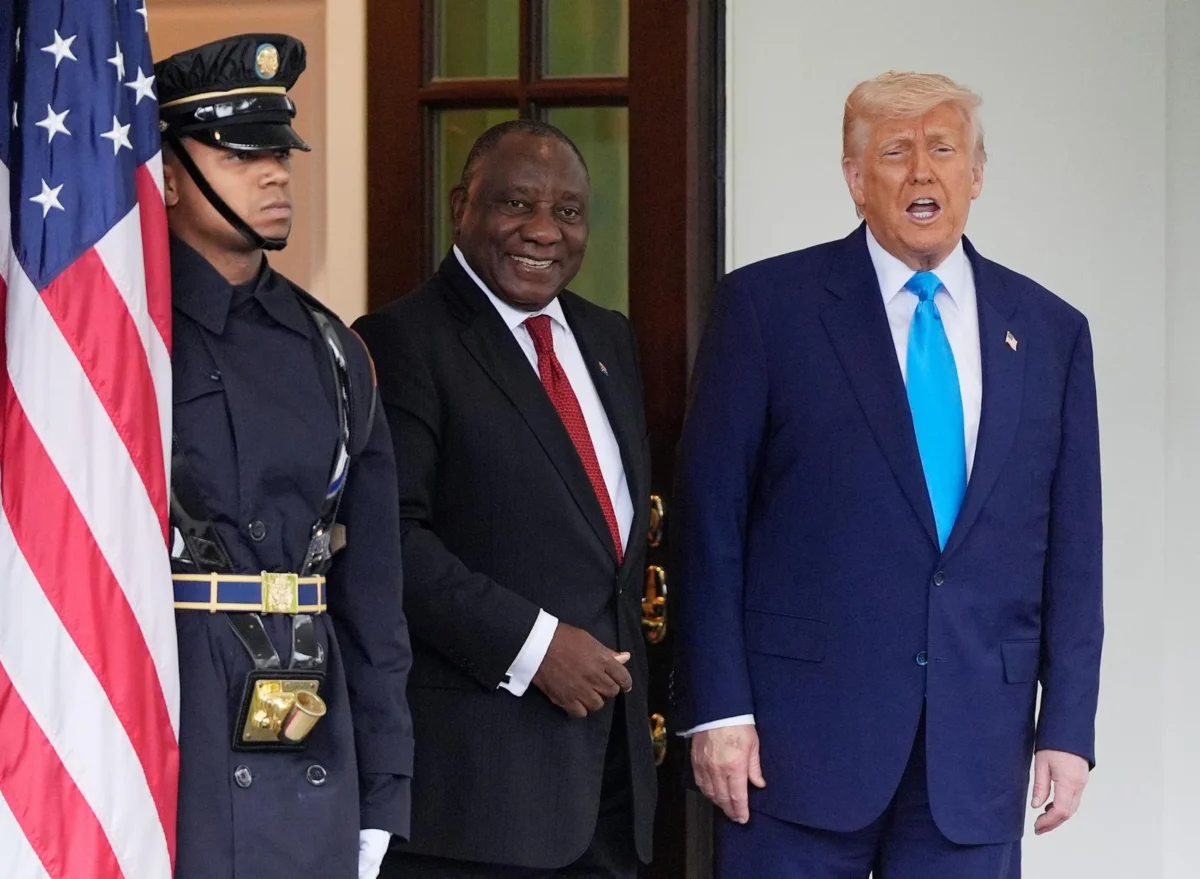
WASHINGTON — In a move that signals a significant shift in American humanitarian priorities and further complicates an already fraught bilateral relationship, the Trump administration announced on Monday its intention to increase the number of South African Afrikaner refugees admitted into the United States by 10,000.
The State Department, in an emergency notice delivered to Congress, stated that the total cap for Afrikaner refugees through the end of the current fiscal year (September 30) has been raised to 17,500. This marks a sharp departure from the initial cap of 7,500 set earlier in the year, with officials citing "unforeseen developments" and an "emergency refugee situation" as the primary drivers for the policy reversal.
The decision arrives amidst a backdrop of escalating rhetoric between Washington and Pretoria, characterized by public confrontations between President Donald Trump and South African President Cyril Ramaphosa, and a broader strategic pivot in U.S. foreign policy regarding the protection of minority groups in post-apartheid South Africa.
The Core Conflict: A Clash of Narratives
The Trump administration’s decision is rooted in a belief that the white Afrikaner minority—descendants of Dutch settlers—is facing systematic, government-sponsored discrimination and violence. At the heart of this argument is the safety of South Africa’s farming communities. President Trump has frequently pointed to high-profile incidents of violence against farmers, arguing that the rhetoric of certain South African political figures has effectively sanctioned an environment of persecution.
Conversely, the South African government has consistently rejected these characterizations as baseless. Pretoria maintains that while South Africa suffers from a high national crime rate that affects citizens of all racial backgrounds, there is no evidence of state-sponsored or racially motivated systematic persecution of the white minority.
Chronology of Escalation
The friction between the two nations has evolved over several years, marked by a series of diplomatic incidents that have strained the historic ties between the U.S. and South Africa.
- Mid-2025: During a high-stakes Oval Office meeting, President Trump reportedly played a video for President Ramaphosa featuring a radical politician chanting the controversial "kill the farmer" lyric. The meeting was described by insiders as "contentious," as the two leaders clashed over the interpretation of violence in rural South Africa.
- Late 2025: President Trump signaled his displeasure with the situation by cutting off specific aid programs to South Africa and choosing to boycott the G20 summit held in Johannesburg, citing concerns over the treatment of the Afrikaner minority.
- December 2025: A flashpoint occurred when South African government officials conducted a raid on a U.S. refugee processing center. The Trump administration labeled the incident "unacceptable," further hardening its resolve to prioritize Afrikaner resettlement.
- January–February 2026: Following continued reports of hostility toward the minority group, the State Department initiated an emergency review, culminating in the formal notification to Congress on Monday evening to expand the refugee cap.
Data and Logistics: The Cost of Resettlement
According to the State Department’s briefing to Congress, the fiscal impact of this policy shift is estimated at $100 million. This budget covers the logistics of processing, transportation, and initial integration services for the additional 10,000 individuals.
The administration’s notice emphasizes that the increase is necessary due to "escalating hostility" that threatens the safety of Afrikaners. By targeting this specific group for expedited processing, the U.S. is signaling a departure from its traditional, broader refugee criteria. Historically, the U.S. refugee program has prioritized individuals based on geographic conflict zones or broad humanitarian crises. The focus on a specific ethnic and cultural minority group within a functioning democracy represents a unique application of the Refugee Act of 1980.
Official Responses and Diplomatic Fallout
The response from Pretoria has been swift and condemnatory. President Ramaphosa has reiterated that his administration is "completely opposed" to the violence referenced by the U.S. and has repeatedly stated that such actions are neither government policy nor reflective of the nation’s values.
"We are completely, completely against what he was saying," Ramaphosa stated following the 2025 summit, emphasizing that South Africa is a constitutional democracy that protects the rights of all its citizens regardless of race.
In Washington, the administration is preparing for a series of consultations with lawmakers. Under federal law, the executive branch is required to brief Congress on refugee ceilings. While the administration maintains that it has the authority to adjust these levels in an emergency, the move is expected to face scrutiny from members of Congress who have previously expressed concern over the administration’s overall reduction in refugee intake.
Implications for U.S. Refugee Policy
This policy shift is particularly notable given the Trump administration’s broader track record on immigration. Under President Trump, the U.S. has seen a historic contraction in the number of refugees accepted from across the globe. The initial cap of 7,500 set for the current fiscal year was already the lowest level since the inception of the U.S. Refugee Admissions Program (USRAP) in 1980.
By choosing to expand the intake for a specific group—even while maintaining historically low overall levels—the administration is signaling a "tailored" approach to humanitarian protection. This suggests a shift toward ideological and identity-based resettlement, rather than the traditional focus on war-torn regions or systemic political oppression in the conventional sense.
Geopolitical Repercussions
The decision carries significant weight for U.S.-Africa relations. By designating Afrikaners as a protected class of refugees, the U.S. is implicitly questioning the legitimacy and human rights record of the South African government. This could lead to a retaliatory cooling of trade relations, potential sanctions, or a recalibration of intelligence and security cooperation between the two nations.
Furthermore, observers in the international community are watching closely to see how this precedent will affect future asylum claims. If the U.S. acknowledges that a minority group in a stable democracy is entitled to refugee status based on the "escalating hostility" of political rhetoric, it could open the door for a host of new claims from various nations worldwide.
Looking Ahead: The Congressional Consultation
The upcoming consultations between the State Department and Congress will be critical in determining the longevity of this policy. Congressional aides, speaking on condition of anonymity, indicated that the meetings will focus on the specific criteria used to define the "emergency" in South Africa.
While the administration insists the situation is dire, skeptics in the human rights community and international policy groups argue that the narrative of systemic persecution is being driven by political optics rather than empirical data. Experts on South African demography and crime suggest that while the "farm murders" are a tragic reality, they are symptoms of a broader national crisis—violent crime—that disproportionately affects the poor and the marginalized, rather than a race-based campaign of ethnic cleansing.
As the administration moves to implement these changes, the focus will remain on whether this resettlement program can be successfully executed without permanently damaging the diplomatic bridges that remain between Washington and Pretoria. For the 10,000 Afrikaners now prioritized for entry, the coming months will be a period of profound uncertainty, as they navigate the complex legal and social path from a divided South Africa to a new life in the United States.
The policy not only reshapes the lives of these individuals but also serves as a potent reminder of the power of the American presidency to redefine the boundaries of global humanitarian aid, often in ways that provoke deep divisions both at home and abroad.











No comments yet. Be the first to join the conversation!