

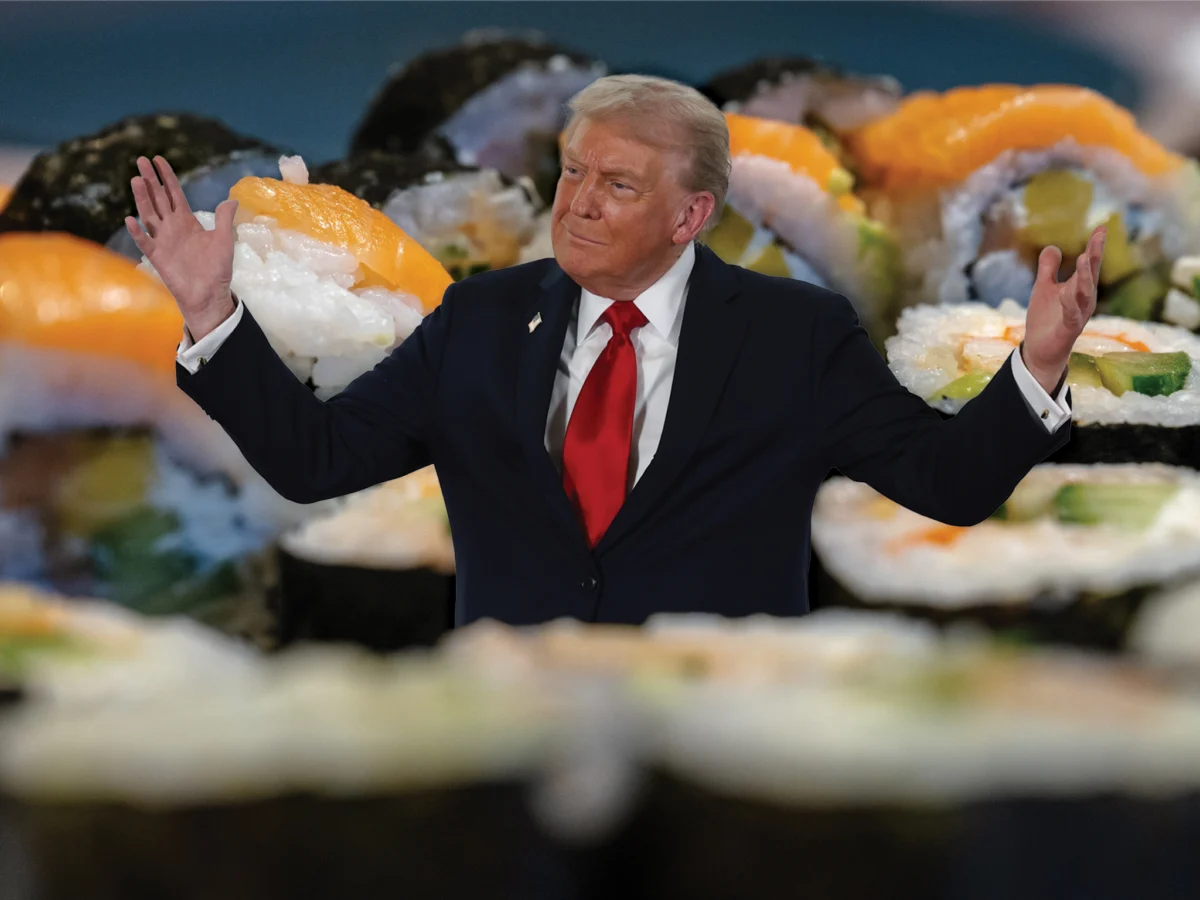
Market Reaction: The "Trump Effect" on Kura Sushi USA
The financial markets reacted with notable volatility this past Monday following the public disclosure of President Donald Trump’s first-quarter investment activity. Among the thousands of securities traded, shares of Kura Sushi USA (KRUS) surged more than 5% as investors reacted to news that the President had acquired a position in the company valued between $1 million and $5 million during the month of February.
The sharp uptick in Kura Sushi’s stock price—a phenomenon often referred to by traders as the "Trump Effect"—highlights the intense scrutiny currently placed on the President’s personal portfolio. While the acquisition of such a stake by a high-net-worth individual is typically viewed as a routine diversification strategy, the intersection of political power and public market influence has turned these routine disclosures into major catalysts for short-term market movement.
The disclosure, provided by the Office of Government Ethics (OGE), revealed that Kura Sushi was just one component of a massive, high-frequency trading cycle. Alongside the restaurant chain, the filings noted significant activity in blue-chip tech stocks, including Nvidia, Amazon.com, and Apple, marking a broad-based investment strategy that spans various sectors of the global economy.
Chronology of Disclosures: A Quarter of High-Frequency Activity
The data released by the OGE covers the period between January and March, a quarter characterized by high levels of volatility and economic uncertainty. During this three-month window, the President’s managed portfolios executed approximately 3,700 individual securities transactions.
- January: The start of the fiscal year saw initial rebalancing efforts, with significant movement in tech-heavy indices.
- February: This month saw the notable acquisition of Kura Sushi USA shares, occurring alongside a larger rotation into consumer-facing retail brands.
- March: The final month of the quarter reflected a stabilization phase, with the total volume of transactions suggesting a systematic, algorithmic approach to wealth preservation and growth.
According to financial analysts reviewing the OGE filings, the aggregate value of these transactions ranged between $220 million and $750 million. This sheer volume of trade underscores the scale of the President’s personal wealth and the complexity of the financial instruments utilized by his advisors.
The Operational Mechanics: Third-Party Management
To address potential concerns regarding conflicts of interest, the Trump Organization has been emphatic in its explanation of how these trades are executed. A spokesperson for the conglomerate clarified that the President maintains a "blind" relationship with his financial assets, which are managed by independent, third-party financial institutions.
Automated Portfolio Management
"Trades are executed and portfolios are balanced through automated investment processes and systems administered by those institutions," the spokesperson stated. The organization asserts that the systems are designed to minimize human intervention, ensuring that investment decisions are based on data-driven algorithmic models rather than political foresight or insider knowledge.
The "No-Input" Policy
Central to the defense against accusations of conflicts of interest is the "no-input" policy. The Trump Organization maintains that:
- Selection: Neither President Trump, his family members, nor executives at the Trump Organization play any role in selecting or approving specific stocks.
- Notification: The President receives no advance notice of trading activity.
- Governance: The institutions maintain total autonomy, acting solely in a fiduciary capacity to maximize the long-term value of the assets under their management.
Official Responses and Political Defense
The disclosure of such high-value, high-frequency trading has inevitably drawn scrutiny from political opponents and ethics watchdogs. However, the administration has mounted a robust defense, led by Vice President JD Vance.
During a press conference on Tuesday, Vice President Vance addressed the skepticism surrounding the disclosures with characteristic bluntness. "The President doesn’t sit in the Oval Office on his computer, on his Robinhood account, buying and selling stocks. That’s absurd," Vance remarked. He emphasized that the focus on these disclosures serves more as a political distraction than a legitimate concern regarding governance. "He has independent wealth advisors who manage his money. He is a wealthy person, and his financial structure is consistent with that status."
Vance’s comments aim to decouple the President’s personal wealth management from his executive duties, framing the trades as a standard byproduct of a large, professionally managed estate rather than a reflection of policy-driven market manipulation.

The Kura Sushi Profile: A Global Expansion
The spotlight on Kura Sushi USA provides an opportunity to examine the company that caught the eye of the President’s portfolio managers. As Japan’s second-largest revolving sushi chain—trailing only Sushiro—Kura Sushi has built a reputation on efficiency, technological integration, and affordable quality.
Historical Evolution
- 1977: The company began as a modest sushi restaurant in Sakai, Osaka Prefecture.
- 1984: The chain pivoted to the "revolving sushi" model, a move that would define its operational success.
- 1995: The Kura Corporation was officially formed, initiating an aggressive expansion throughout the Japanese archipelago.
- 2008: The company expanded internationally, establishing a U.S. subsidiary.
- 2009: The first American Kura Sushi restaurant opened in Irvine, California.
The U.S. subsidiary has since become a staple in the growing "fast-casual" dining sector, capitalizing on the popularity of Japanese cuisine. Its appeal to the market, and by extension its inclusion in the President’s portfolio, reflects a growing investor interest in scalable, technology-driven food service models.
Implications for Governance and Market Ethics
The situation presents a complex set of implications for modern governance. As the U.S. continues to navigate an era where political figures often possess significant private wealth, the threshold for transparency and the definition of a "conflict of interest" are being continuously redefined.
The Transparency Dilemma
While the OGE disclosures provide a transparent view into the President’s financial life, they also create a feedback loop. When the public learns that the President holds a stake in a company like Kura Sushi, the resulting market movement—the 5% jump in stock value—creates a scenario where the President’s mere financial participation influences the success of that company.
The Role of Independent Agencies
The Office of Government Ethics plays a critical role in mitigating these risks. By mandating the disclosure of 3,700 transactions, the agency ensures that the public remains informed. However, the challenge remains: how to maintain investor confidence while preventing the appearance of impropriety.
Legal experts suggest that as long as the "third-party management" structure remains robust and free from influence, the legal requirements are met. Yet, the social contract—the public’s perception of fairness—remains a more fluid standard.
Economic Policy and Personal Wealth
Finally, there is the question of the relationship between policy and profit. Critics argue that even if the President does not direct individual trades, the overarching economic policies set by his administration (tax rates, trade regulations, or international relations) could influence the sectors in which his portfolio is heavily invested.
The administration maintains that their economic policies are designed for the benefit of the nation as a whole, not for the optimization of any individual’s portfolio. Nevertheless, the scale of the $220 million to $750 million in transaction volume ensures that this conversation will continue to be a focal point of political and economic discourse throughout the remainder of the term.
Conclusion
The surge in Kura Sushi stock is a microcosm of the broader intersection between high-stakes politics and the global financial system. As the administration continues to fulfill its duties, the public, the markets, and the press will remain focused on the OGE disclosures. Whether these trades are seen as the routine activities of a wealthy individual or as a point of concern for democratic governance, the reality is that in today’s hyper-connected, real-time news environment, every financial move by the President will continue to carry significant weight, influencing markets and public opinion alike.
Moving forward, the primary metric for success will be the continued integrity of the third-party management systems and the transparency of the reporting process, ensuring that the trust between the government and the governed remains intact, even in the face of significant private wealth and market volatility.












No comments yet. Be the first to join the conversation!