Siti Muinah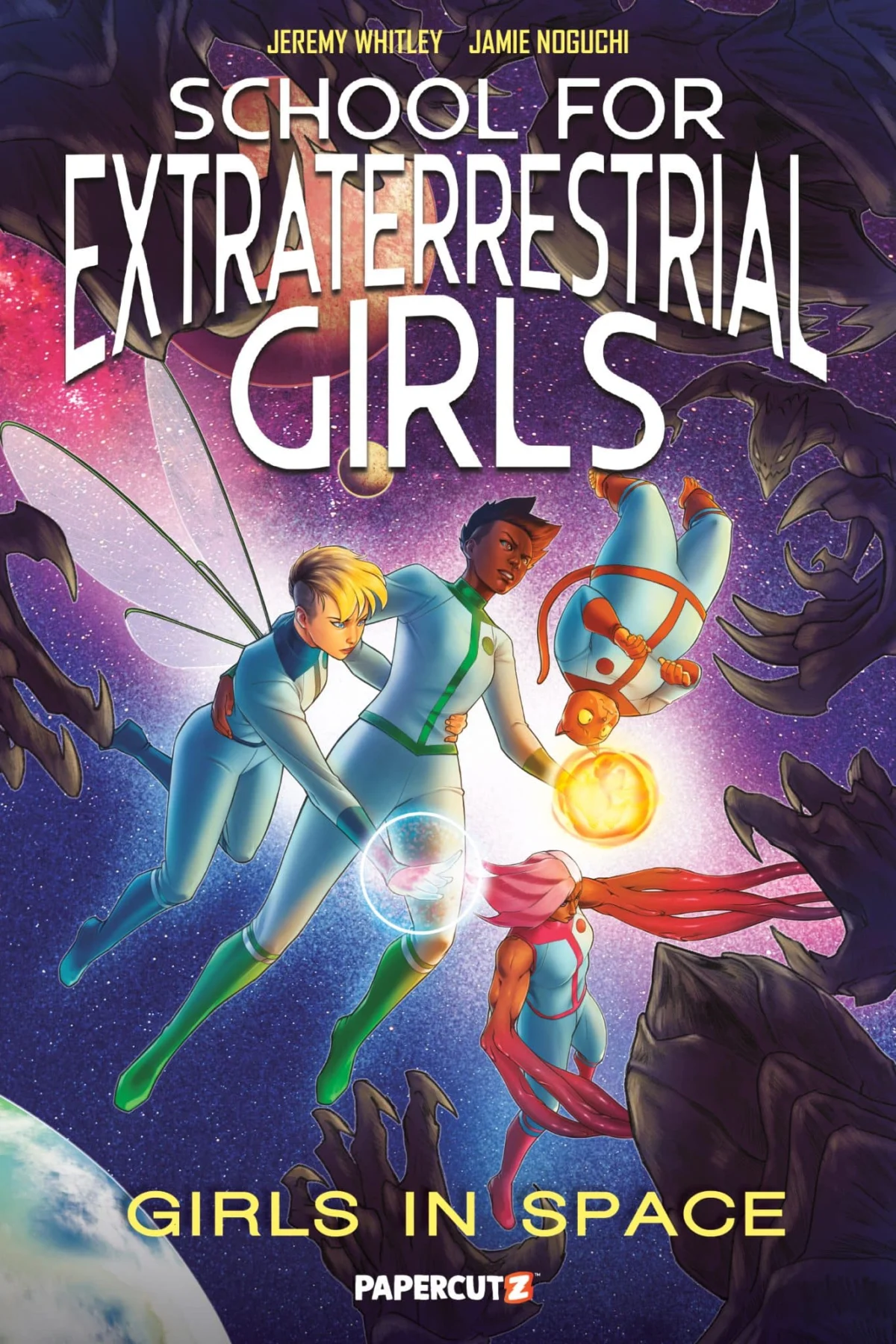
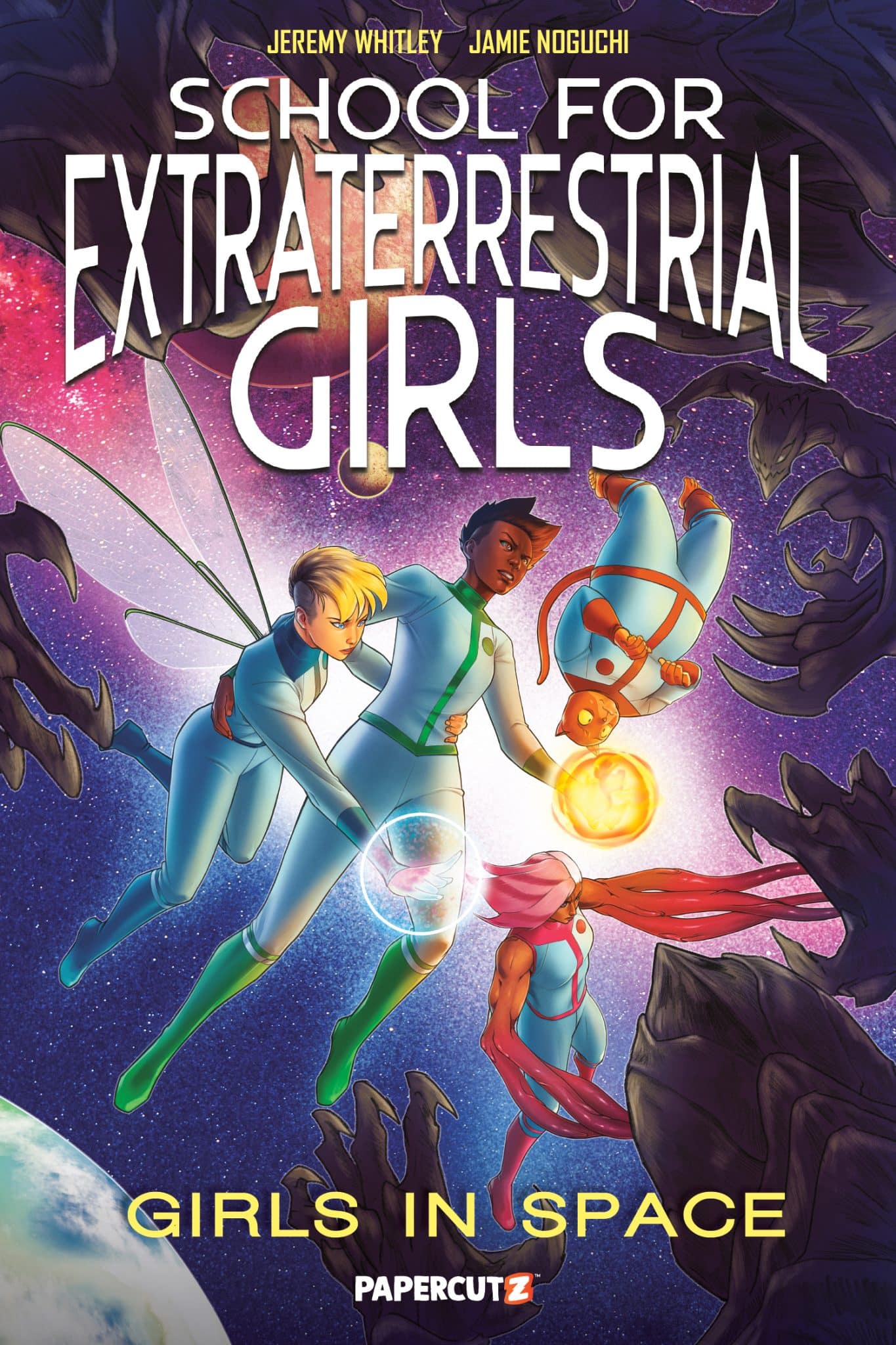
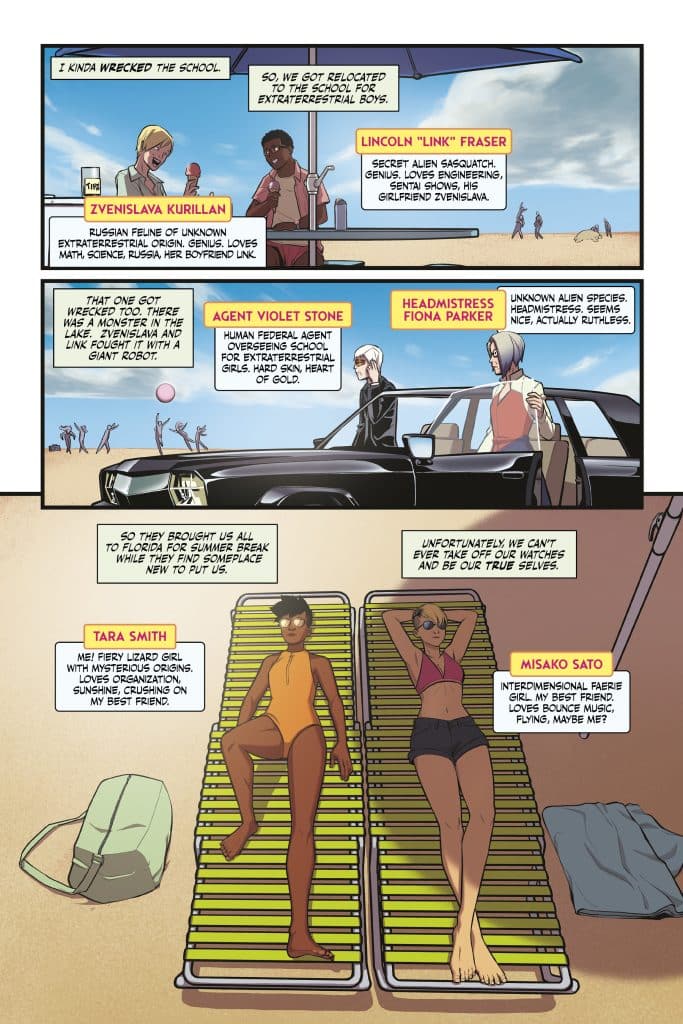
The stakes have never been higher for the students of Earth’s most unusual academy. As the summer break beckons, the protagonists of Jeremy Whitley’s celebrated comic series, School for Extraterrestrial Girls, find their vacation plans abruptly canceled by a looming existential threat. In the upcoming Volume 3, written by Whitley with dynamic illustrations by Jamie Noguchi, the narrative shifts from the trials of academic life to a desperate, high-stakes race against an encroaching galactic power. With an armada from the formidable Lacertillian Empire descending upon Earth, the fate of the planet rests squarely on the shoulders of Tara, Misako, Summer, Kat, and their peers.
The Impending Crisis: Main Facts
The core conflict of Volume 3 centers on the arrival of the Lacertillian Empire, an interstellar civilization renowned for its military might and ruthless efficiency. The narrative hook is deceptively simple: summer vacation is interrupted by the approach of a massive battlecruiser fleet. This is not a diplomatic mission or a scouting party; it is the arrival of the most dangerous empire in the galaxy, and they are arriving in mere days.
The protagonists—a group of extraterrestrial students navigating the complexities of life on Earth—must pivot from their studies to planetary defense. The primary objective is intelligence gathering: Why has the Lacertillian Empire targeted Earth? The suspicion among the students and their headmasters is that the arrival is deeply personal. With connections to Tara’s own heritage and the tragic history of Misako’s destroyed home planet, the impending invasion feels like a culmination of past grievances rather than a random act of galactic conquest.
A Chronology of Escalation
The narrative pacing of the third volume is designed to evoke a sense of urgency. The timeline is tight, with the students working under a "ticking clock" scenario.
- Phase One: The Signal. The initial discovery of the incoming armada triggers an immediate state of high alert at the academy. As the ships enter the local star system, the students must reconcile their personal backgrounds with the looming geopolitical reality.
- Phase Two: The Investigation. In the days leading up to the fleet’s arrival, the focus shifts to uncovering the Lacertillian agenda. The girls work closely with their headmasters, pouring over archives and leveraging their unique knowledge of extraterrestrial politics to decipher the fleet’s trajectory.
- Phase Three: The Confrontation. The climax of the volume involves the final approach of the fleet and the direct confrontation of the students with the reality of their origins. As the battlecruisers loom in the sky, the girls must decide whether to stand and fight, negotiate, or flee—a decision that will define the future of Earth.
Supporting Data: The Players Involved
To understand the gravity of this threat, one must look at the key figures and factions driving the plot:
- The Lacertillian Empire: Characterized as the "most dangerous empire in the galaxy," their military infrastructure and lack of clear motive make them a terrifying antagonist. Their previous destruction of Misako’s home planet serves as a chilling precedent for what might happen to Earth.
- Tara: As a member of the Lacertillian species, Tara sits at the center of the conflict. The mystery of why her people are here—whether to reclaim her for a family crime or to eliminate her—adds a layer of psychological tension to the physical threat.
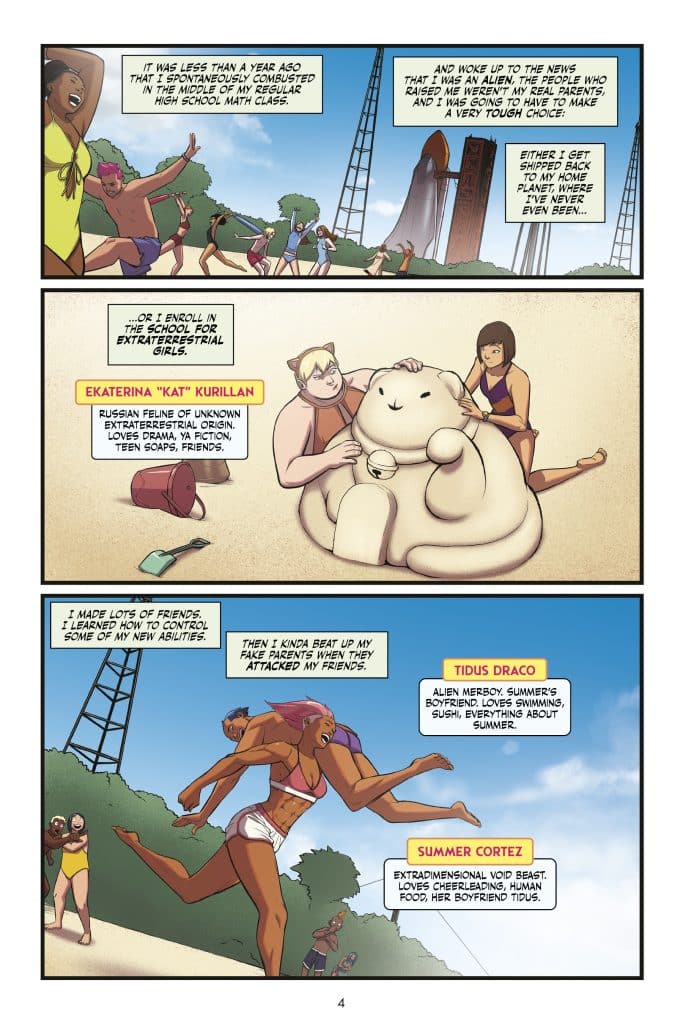
- The Students (Misako, Summer, Kat, and others): Each character brings a specific skill set to the table. Their growth from Volume 1 to Volume 3 is tested here, as they transition from being "fish out of water" students to becoming the de facto guardians of a planet that has become their second home.
- The Headmasters: Acting as the mentors and strategic leads, the school administrators are forced to bridge the gap between human authorities and the extraterrestrial reality of the threat, complicating the logistical side of the defense.
Official Perspectives and Narrative Context
While the "official" response within the story remains shrouded in the mystery of the ongoing invasion, the meta-narrative perspective provided by creator Jeremy Whitley suggests that this volume is an exploration of identity and consequence.

Whitley has often utilized the School for Extraterrestrial Girls series to explore themes of belonging and the "other." In Volume 3, these themes are pushed to their logical extreme. If the past comes back to haunt you, can you ever truly move on? The Lacertillian armada acts as a physical manifestation of the characters’ pasts—a literal, steel-plated reminder that their history is not something they can leave behind in the classroom.
Jamie Noguchi’s art style provides a vital counterpoint to the heavy subject matter. His ability to render character expressions—from the confusion of a schoolgirl to the steely resolve of a warrior—ensures that the reader remains grounded in the human (or alien) element of the story, even when the scope expands to planetary-scale warfare.
The Broader Implications
The arrival of the Lacertillian Empire suggests a permanent shift in the world-building of the series. Regardless of the outcome of the battle, the existence of Earth is now firmly on the map for the most powerful entities in the galaxy.
1. The End of Anonymity
For the students, the "school" setting has provided a sanctuary—a buffer zone between their extraordinary natures and the mundane world. The arrival of the armada threatens to strip away that anonymity. If the world is saved, it will likely be through a public or semi-public act of heroism, forcing the students to reveal their existence to a wider, potentially hostile human population.
2. The Burden of Heritage
The conflict highlights the recurring motif of "sins of the father." Whether it is the destruction of Misako’s planet or the alleged crimes of Tara’s family, the characters are being forced to pay for actions they did not commit. This creates a moral dilemma: should they be judged by the actions of their kin, or by the lives they have built for themselves?
3. Diplomatic Fragility
The mystery surrounding the empire’s arrival ("Is there something far more dangerous on their agenda?") implies that the girls are dealing with a complex political landscape that goes beyond simple conquest. The potential for a hidden, even more sinister motive suggests that Volume 3 will serve as a pivot point for the series, potentially moving from a "slice of life" fantasy into a more traditional space-opera political thriller.
Conclusion: A Turning Point
School for Extraterrestrial Girls Vol. 3 represents a significant escalation in both stakes and narrative depth. By taking the characters out of the controlled environment of the classroom and placing them directly into the path of an interstellar armada, Jeremy Whitley and Jamie Noguchi are testing the very foundation of their creation.
Readers who have followed the series since its inception will find that the humor and camaraderie remain, but they are now tempered by the sobering reality of war. The question of whether these students can defend their world is not just a question of firepower, but a question of character. Can they define themselves in the face of an empire that has already decided who they are?
As the release date approaches, anticipation is high. Whether you are a long-time fan of the series or a newcomer intrigued by the premise of intergalactic diplomacy meeting the high school experience, Volume 3 promises to be an essential chapter in the saga. The clock is ticking, the fleet is arriving, and for the students of the school, there is no more room for error. The fate of the Earth is no longer an academic exercise; it is the final exam.


 Sagoh
Sagoh
 Ammar Sabilarrohman