Jia Lissa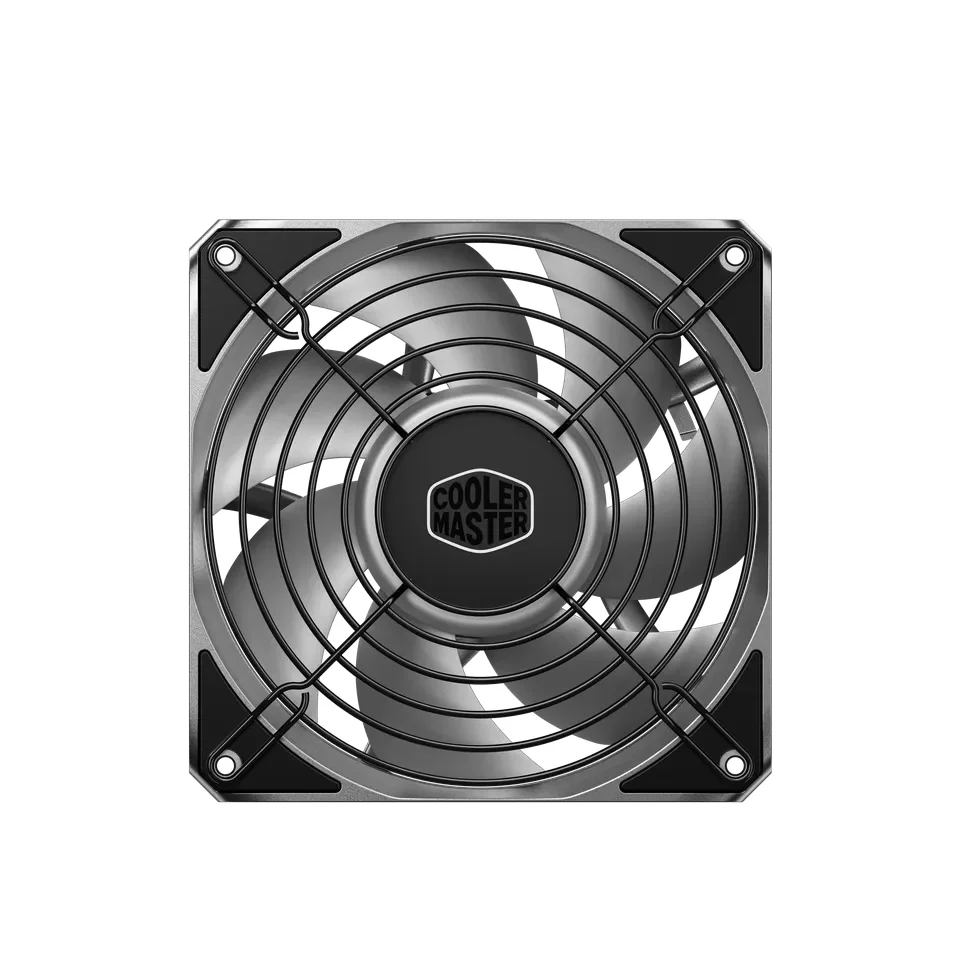
In a move that signals a significant shift in consumer-grade thermal management, Cooler Master has officially unveiled its new MasterFan A and M Series. By bridging the gap between high-density enterprise AI computing hardware and the enthusiast PC market, the company is introducing unprecedented build materials and motor architectures to the cooling sector. With a focus on premium aesthetics, industrial-grade durability, and extreme performance metrics, these fans represent the most ambitious cooling product launch from the manufacturer in recent memory.
Main Facts: Bringing Enterprise Tech to the Desktop
The core value proposition of the MasterFan A and M series lies in their pedigree. Cooler Master has leveraged engineering insights directly from its enterprise AI computing division to address the growing thermal demands of high-TDP (Thermal Design Power) processors and power-hungry GPU architectures.
At the heart of both series is a three-phase, industrial-standard motor paired with a sophisticated Magnetic Dynamic Bearing (MDB). This bearing system incorporates an active lubricant recycling mechanism, ensuring longevity that far exceeds standard sleeve or rifle bearing configurations. This is a critical development for high-performance builds, where mechanical failure of fans in tight, hot chassis environments often leads to thermal throttling.
The product lineup is segmented by material composition, catering to different thermal requirements and aesthetic preferences:
- MasterFan A Series: Distinguished by its full-aluminium frame and high-rigidity aluminium blades. This is a pioneering design for the consumer segment, offering superior thermal dissipation properties and structural integrity.
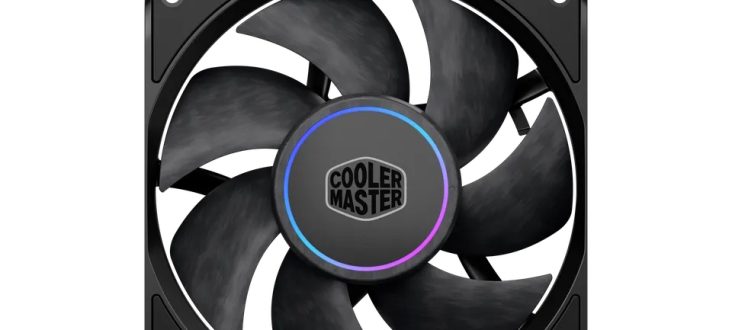
- MasterFan M Series: Utilises Liquid Crystal Polymer (LCP) blades housed within the same high-quality aluminium frame. LCP is renowned for its low thermal expansion and extreme stiffness, allowing for tighter tolerances between the fan blade tips and the frame, which significantly boosts static pressure.
Both series share a 30mm thickness—a slight departure from the industry-standard 25mm—which provides the additional volume necessary for increased airflow capacity. Furthermore, both utilize 4-point rack-mount-derived corner pads for advanced vibration isolation and feature center-hub ARGB lighting to satisfy the demands of the modern enthusiast market.
Chronology: From R&D to European Retail
The journey of the MasterFan A and M series began deep within Cooler Master’s R&D labs, where the primary objective was to miniaturize the reliability of server-grade cooling for the desktop ecosystem. While the company has long been a staple in the cooling market, the transition to aluminium-framed consumer fans required a complete retooling of their manufacturing lines.
Following months of testing against competitors in the high-static-pressure segment, the specifications were finalized earlier this year. The announcement for the European market marks the first phase of a global rollout. The timeline for availability is set for the immediate future, with distribution partners and authorised retailers across the continent already preparing inventory. By positioning these fans as a premium component, Cooler Master is clearly aiming to capture the "prosumer" and high-end workstation market, where users are increasingly willing to pay a premium for hardware that mirrors the build quality found in data centers.
Supporting Data: The Metrics of Performance
When evaluating the MasterFan series, the specifications indicate a clear lean toward heavy-duty performance. For enthusiasts managing liquid cooling loops or high-density air coolers, the numbers are particularly compelling.
The high-performance variants are capable of reaching a maximum speed of 4,000 RPM. At this velocity, they produce an impressive 121.73 CFM (Cubic Feet per Minute) of airflow. Perhaps more importantly for radiator users, these fans generate a static pressure of 13.15 mmH2O. This level of pressure is essential for pushing air through the dense fin stacks of modern AIO (All-in-One) liquid coolers and custom loop radiators, where resistance is high.
For those prioritizing acoustics without sacrificing significant performance, Cooler Master has introduced a silent variant. Operating at a capped 2,500 RPM, this iteration still manages a respectable 76.9 CFM. This dual-track approach ensures that users can optimize their build for either "brute force" thermal management or a balanced, quieter profile.
Pricing has been structured to reflect the premium materials utilized:
- MasterFan M120/140 ARGB: €17 (The entry-level premium option).
- MasterFan A120: €24 (The aluminium-blade standard).
- MasterFan A120 FC: €32 (The flagship aluminium-construction model).
Official Perspectives and Industry Context
While official comments from Cooler Master focus heavily on the "enterprise-to-consumer" technology transfer, industry analysts note that this shift is a direct response to the "thermal wall" encountered by modern CPUs. As processors from Intel and AMD continue to push higher boost clocks and consume more power, the limitations of traditional plastic fan blades have become apparent.
Aluminium blades, as seen in the A Series, do not flex under high rotational speeds, maintaining a consistent air gap and preventing "blade flutter" that can introduce noise and reduce efficiency. By incorporating this into a consumer product, Cooler Master is effectively setting a new benchmark for what can be expected from a high-end cooling solution.
Furthermore, the decision to adopt a 30mm frame thickness is a tactical choice. By increasing the surface area and the "depth" of the airflow path, the fans can move more air at lower revolutions compared to a thinner 25mm fan, potentially mitigating the noise penalty usually associated with high-RPM operation.
Implications for the PC Building Ecosystem
The introduction of the MasterFan A and M series carries significant implications for the future of PC builds.
1. Shift in Material Expectations
For years, the cooling industry has relied on ABS plastic. The transition to aluminium frames and LCP blades suggests that enthusiasts may soon stop accepting plastic-dominated components as the "standard." If these fans perform as well as the specifications suggest, we may see a cascading effect where other manufacturers are forced to upgrade their material quality to remain competitive in the enthusiast tier.
2. The Rise of "Prosumer" Cooling
The target audience for these fans is not the casual user. With price points reaching up to €32 per fan, these are components designed for users investing in high-end RTX 40-series or 50-series GPUs and high-core-count CPUs. This signals a maturation of the PC building market, where cooling is no longer treated as an afterthought but as a core component of system stability and performance longevity.
3. Vibration Management
The mention of "4-point rack-mount-derived" corner pads is significant. Vibration is the silent killer of both acoustic comfort and mechanical reliability. By adopting standards from the server industry, Cooler Master is acknowledging that the desktop PC environment is becoming as mechanically demanding as a server rack, necessitating more robust vibration-dampening solutions.
Conclusion
Cooler Master’s MasterFan A and M series represent a bold step toward premium engineering. By focusing on industrial-grade motors, advanced bearing technology, and high-performance materials like aluminium and LCP, the company has delivered a product line that directly addresses the needs of the modern, power-intensive PC.
Whether these fans will redefine the market remains to be seen once they reach the hands of independent reviewers and power users. However, the intent is clear: Cooler Master is betting that the future of desktop computing lies in the robust, reliable, and high-performance technologies that currently power the world’s AI and data infrastructure. For the enthusiast looking to push their system to the absolute limit, the MasterFan A and M series offer a compelling—albeit premium—path forward. As the lines between the workstation and the gaming rig continue to blur, such high-performance cooling solutions will undoubtedly become a foundational requirement for top-tier hardware configurations.

 Raul Delapena Setiawan
 Ali Ikhwan