Asep Darmawan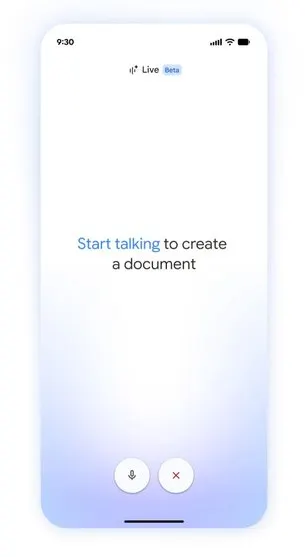
Google has officially doubled down on its commitment to artificial intelligence, utilizing its 2026 I/O event to unveil a sweeping array of updates designed to integrate generative AI into every facet of the user experience. As the search giant looks to solidify its market dominance, the messaging from this year’s conference is clear: the era of passive browsing is over, and the era of conversational, multimodal, and omnipresent AI has arrived.
With the Gemini ecosystem now boasting over 900 million active users, Google is no longer just experimenting with AI; it is embedding it into the infrastructure of daily digital life. From creative content generation to seamless commerce and wearable technology, here is an in-depth analysis of the announcements defining Google’s 2026 roadmap.
The Gemini Evolution: Introducing Gemini Omni
The headline of the 2026 event was undoubtedly the unveiling of Gemini Omni, a transformative generative model that represents a significant leap in how AI perceives and interacts with the physical world.
Unlike its predecessors, which primarily operated within siloed modalities, Gemini Omni is designed for fluid, multimodal synthesis. It possesses the unique ability to process and combine images, audio, video, and text simultaneously to generate high-fidelity, photorealistic outputs.
Bridging Physics and Imagination
Google’s engineers highlighted that Gemini Omni does more than just replicate images; it incorporates a deep understanding of physical laws. By combining real-world reasoning with generative capability, the model ensures that the content it creates—whether a short film or a complex architectural render—behaves according to the rules of gravity, light, and motion. For marketers and creative professionals, this tool is poised to be a game-changer, allowing for the rapid production of assets that feel tangibly "real" rather than purely digital.
Chronology of the 2026 I/O Announcements
The event was structured to showcase a rapid-fire succession of innovations, demonstrating the velocity at which Google is pushing its AI pipeline:
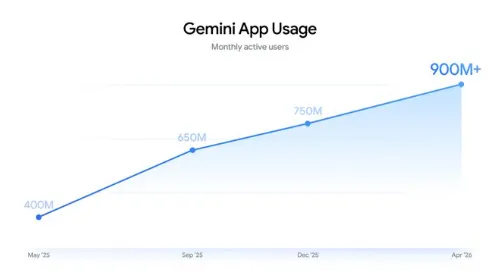
- Opening Strategy: Google leadership reinforced the dominance of the Gemini app, crossing the 900-million user threshold.
- Multimodal Breakthrough: The launch of Gemini Omni, aimed at bridging the gap between digital generation and physical realism.
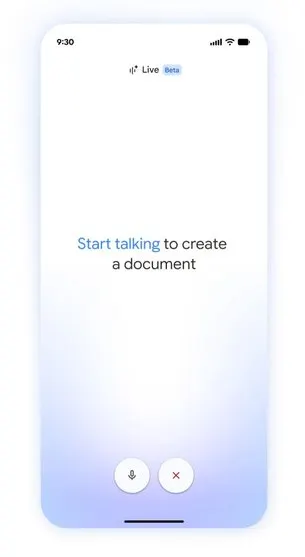
- Productivity Integration: The introduction of "Google Docs Live," moving from static editing to conversational, AI-driven document creation.
- Creative Suite Expansion: The debut of "Google Pics," a dedicated tool for generating professional-grade infographics and visual assets via natural language prompts.
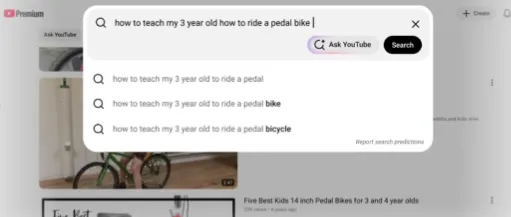
- Search Revolution: The integration of "Ask YouTube," enabling deeper, context-aware queries within video content.
- Technical & Developer Tools: The release of Gemini 3.0 Flash and the "Antigravity" coding environment.
- The Commerce Shift: The announcement of the Universal Cart for cross-platform shopping.
- Hardware Ambitions: The reveal of smart glasses in collaboration with Samsung, Warby Parker, and Gentle Monster.
Supporting Data: Why Google is Winning the Scale Game
The staggering usage figures provided at I/O 2026 serve as a critical metric for Google’s success. With 900 million active users, the Gemini app has successfully transitioned from a niche tech enthusiast tool to a mainstream utility. This scale provides Google with a virtuous cycle: more users provide more data, which in turn allows the model to undergo more rigorous fine-tuning, leading to higher-quality outputs that attract even more users.
Furthermore, by integrating these AI capabilities into Google Workspace—specifically through Google Docs Live—Google is effectively creating a "walled garden" of productivity. When users can generate, edit, and format documents through conversational AI within the same interface where they store their files, the friction of switching between third-party AI tools and productivity software disappears.
Deep Dive: The New Creative and Productivity Tools
Google Docs Live
The transition from a keyboard-centric document editor to a conversational interface is a major shift for enterprise software. Google Docs Live allows users to dictate structural changes, stylistic adjustments, and content additions using natural language. This effectively turns the word processor into a collaborative partner rather than a blank canvas.
Google Pics
While Gemini Omni handles the complex physics-based generation, Google Pics is intended for the everyday user. Whether a small business owner needs a social media flyer or a student needs a quick, custom infographic, Google Pics provides an intuitive interface that removes the need for advanced graphic design software.
Ask YouTube
Perhaps one of the most practical upgrades, "Ask YouTube" allows users to engage with video content on a deeper level. By providing text-based summaries and secondary video results based on specific search queries within a video, Google is transforming YouTube from a passive viewing platform into a dynamic learning tool. This makes complex information significantly more accessible and searchable in real-time.
Implications for Industry and Commerce
The Universal Cart
Google’s foray into the retail space is becoming increasingly sophisticated. The "Universal Cart" is designed to eliminate the fragmented shopping experience typical of the modern internet. By allowing users to save items from Search, YouTube, and Gmail into a single, persistent cart, Google is positioning itself as the ultimate middleman in the consumer purchasing funnel. This is a direct challenge to Amazon and other e-commerce giants, as it keeps the user within the Google ecosystem from the discovery phase all the way to checkout.
The Return of Smart Glasses
Perhaps the most ambitious announcement was the partnership with Samsung, Warby Parker, and Gentle Monster to produce AI-powered smart glasses. History is a harsh teacher in the wearable space—Google Glass famously failed to achieve mass adoption due to social stigma and a lack of clear utility.
However, by partnering with fashion-forward eyewear brands like Warby Parker, Google is addressing the "cool factor" problem that plagued its previous attempts. By integrating full Gemini functionality, these glasses act as an "always-on" digital assistant. The goal is to provide heads-up information, translation, and real-time guidance without the need to glance at a smartphone, potentially changing the way we interact with our environment.
Official Responses and Strategic Vision
Google executives emphasized that these updates are not merely "bells and whistles," but a fundamental restructuring of the internet experience. "Our goal is to make AI helpful, not just impressive," one spokesperson noted during a keynote follow-up.
The focus on "real-world knowledge and reasoning" in Gemini Omni suggests that Google is attempting to solve the "hallucination" problem that has historically plagued generative AI. By anchoring outputs in physical laws and verifiable data, the company aims to move from creative novelty to trusted, functional utility.
The Road Ahead: Why 2026 is a Pivot Point
As we look toward the remainder of 2026 and into 2027, the implications of these announcements are profound.
- For Developers: The release of Gemini 3.0 Flash and Antigravity suggests that Google is committed to keeping its developer ecosystem robust. By providing faster, more efficient models for technical tasks, they are ensuring that the next generation of apps will be built on Google’s infrastructure.
- For Marketers: The multimodal capabilities of Gemini Omni mean that the barrier to entry for high-quality production is collapsing. Brands will need to pivot their strategies to focus on prompt engineering and creative direction rather than traditional technical execution.
- For Consumers: The future is undeniably more conversational. The line between "searching" for information and "discussing" information with a digital entity is blurring.
Final Thoughts
Google I/O 2026 has set a new benchmark for the industry. By focusing on integration—making AI available across Docs, Search, YouTube, and even wearable eyewear—Google is betting that the most successful AI company won’t necessarily be the one with the smartest model, but the one with the most useful, accessible, and integrated platform. As these features roll out to the public, the question remains: are we ready to move from using the internet to having the internet use AI on our behalf? If the 900 million users of Gemini are any indication, the answer is a resounding "yes."


 Ammar Sabilarrohman
 Siti Muinah