Azzam Bilal Chamdy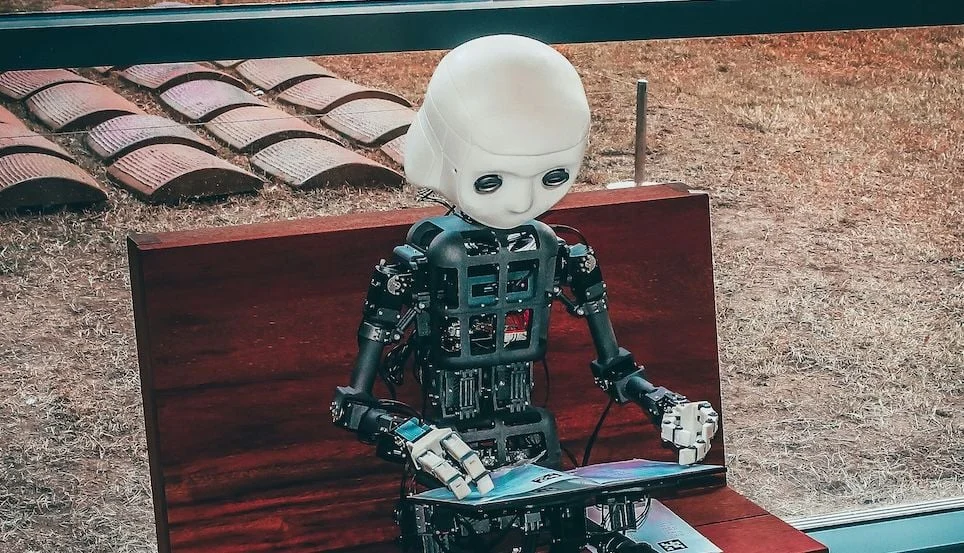
The intersection of artificial intelligence and intellectual property has reached a critical inflection point. As large language models (LLMs) continue to ingest vast swaths of human-authored content to fuel their generative capabilities, the publishing industry has moved from passive observation to aggressive litigation. At the center of this burgeoning conflict is a landmark class-action lawsuit filed by a coalition of five major publishers and renowned author Scott Turow against Meta Platforms and its CEO, Mark Zuckerberg. This legal battle represents more than a mere dispute over royalties; it is a fundamental challenge to the architecture of the modern internet and the future of human creativity.
Main Facts: The Core of the Conflict
The lawsuit, which emerged into the public consciousness this week, alleges that Meta has systematically scraped copyrighted literary works—without permission, compensation, or attribution—to train its proprietary AI models, including Llama.
The plaintiffs, a powerful consortium representing the interests of both corporate publishing houses and individual creators, argue that this unauthorized ingestion constitutes large-scale copyright infringement. The core of their argument is not merely that AI exists, but that its development is predicated on the "unjust enrichment" of tech giants at the expense of those who labor to create original literature. By utilizing protected works to teach machines how to replicate human literary styles, structures, and factual reporting, the plaintiffs claim Meta has created a product that threatens the very market for the source material it consumed.
A Chronological Evolution of the Crisis
The road to this courtroom showdown has been paved with years of technological escalation and regulatory hesitation.
- 2022–2023: The Generative Explosion: The public release of ChatGPT and subsequent models triggered a gold rush. Tech companies prioritized the acquisition of "high-quality" training data, which, in the context of LLMs, means books, articles, and long-form journalism.
- Early 2024: The Silent Scrape: As authors began noticing their entire bibliographies appearing in training datasets (often uncovered through research tools like the "Books3" dataset), industry alarm grew. Professional guilds, including the Authors Guild, began issuing formal warnings.
- Late 2024 – Early 2025: The Failure of Negotiation: Several attempts at licensing agreements between major publishers and AI developers stalled. Tech companies argued that their use of data fell under "Fair Use," while publishers maintained that reproducing an entire book for the purpose of machine learning is a derivative work.
- May 2026: The Litigation Catalyst: With no consensus in sight, the coalition involving Scott Turow filed the current class-action suit against Meta. The filing serves as a signal that the "Wild West" era of data scraping is officially coming to a close.
Supporting Data: The Scale of the Ingestion
To understand the scope of the problem, one must look at the mechanics of LLM training. Modern models require trillions of "tokens"—the building blocks of language—to achieve human-like fluency.
Data scientists estimate that the "Books3" dataset, a common component of AI training, contained nearly 200,000 books. When multiplied across multiple models, billions of pages of copyrighted content have been digitized and processed into mathematical weights and parameters.
According to market analysts, the potential financial impact is staggering. If courts determine that Meta must pay licensing fees for the use of each book, the cost to tech companies could reach into the billions. Conversely, if the models are forced to "unlearn" or scrub this data, the operational costs for companies like Meta would skyrocket, potentially setting back the development of generative AI by years. This creates a binary outcome: either a massive transfer of wealth from tech giants to the creative class, or a total devaluation of human-authored literary property.
Official Responses: The Battle of Narratives
The rhetoric surrounding the lawsuit highlights a profound divide in how society values information.
The Plaintiffs’ Position:
Scott Turow, acting as both a plaintiff and a legal voice for the creative community, has emphasized the "theft" aspect of the issue. The plaintiffs argue that AI companies are essentially building a mirror of human intellect using stolen bricks. Their position is that "fair use" was never intended to cover the wholesale replacement of an industry’s revenue stream. They are calling for a "licensing ecosystem" where publishers and authors are compensated every time their work contributes to the training of an AI model.
The Defendant’s Stance:
Meta, for its part, maintains a consistent defensive posture. A spokesperson for the company recently reiterated that Llama models are designed to be "transformative." They argue that the AI is not "copying" books in the traditional sense, but learning the statistical relationships between words, much like a human student learns by reading a library. Meta asserts that restrictive copyright enforcement would stifle innovation, disadvantage the U.S. in the global AI race, and prevent the development of beneficial tools that could revolutionize education and research.
Implications: The Future of the Written Word
The implications of this lawsuit extend far beyond the courtroom. We are witnessing the first major "stress test" of intellectual property law in the digital age.
1. The Death of the "Free" Internet
If the court rules in favor of the publishers, it could mark the end of the internet as an open, scrapable commons. AI companies will be forced to negotiate individual or collective licenses for data, which will lead to a tiered system where only the largest, best-funded tech companies can afford to build competitive models.
2. The Economic Reshaping of Publishing
For authors and publishers, this is a fight for survival. If AI models can summarize, mimic, and distribute the core value of a book without the reader needing to purchase it, the traditional royalty model—the bedrock of the professional writing industry—could evaporate. A victory for the plaintiffs would establish a new revenue stream: "AI Licensing Fees," which could provide a much-needed lifeline to a sector that has struggled since the advent of the digital download.
3. The Definition of "Human"
Perhaps the most philosophical implication is the question of what constitutes original thought. If a machine can be trained on the entirety of human literature to produce a novel that is indistinguishable from one written by a human, what is the value of the human act of writing? The lawsuit forces a legal recognition of "human-authored" as a protected category of work, distinct from machine-generated output.
4. The Regulatory Vacuum
Finally, this case highlights the failure of the legislative branch to keep pace with technology. As the judiciary begins to set precedents through these lawsuits, it leaves the industry in a state of legal limbo. Without clear Congressional guidance on how copyright applies to LLMs, the publishing industry is forced to rely on 20th-century laws to solve 21st-century problems.
Conclusion: A Turning Point
As we look toward the remainder of 2026, the case against Meta stands as a watershed moment. It is the frontline of a larger war regarding who owns the knowledge of our species. Will the future of intelligence be an open, shared resource that is "transformed" into new products by those with the most computing power? Or will we protect the right of the individual creator to control their labor and be compensated for the fruits of their intellect?
While the outcome of the Meta lawsuit remains "TBD," the message from the publishing world is clear: the era of uncompensated ingestion is over. The robots may be reading our books, but the authors are finally ready to turn the page on the status quo. The courtroom will now decide if the future of AI will be built on collaboration, or if it will be defined by the heavy-handed extraction of the very culture it aims to emulate.

 Layla Zulfa
 Sagoh
Sagoh