Jia Lissa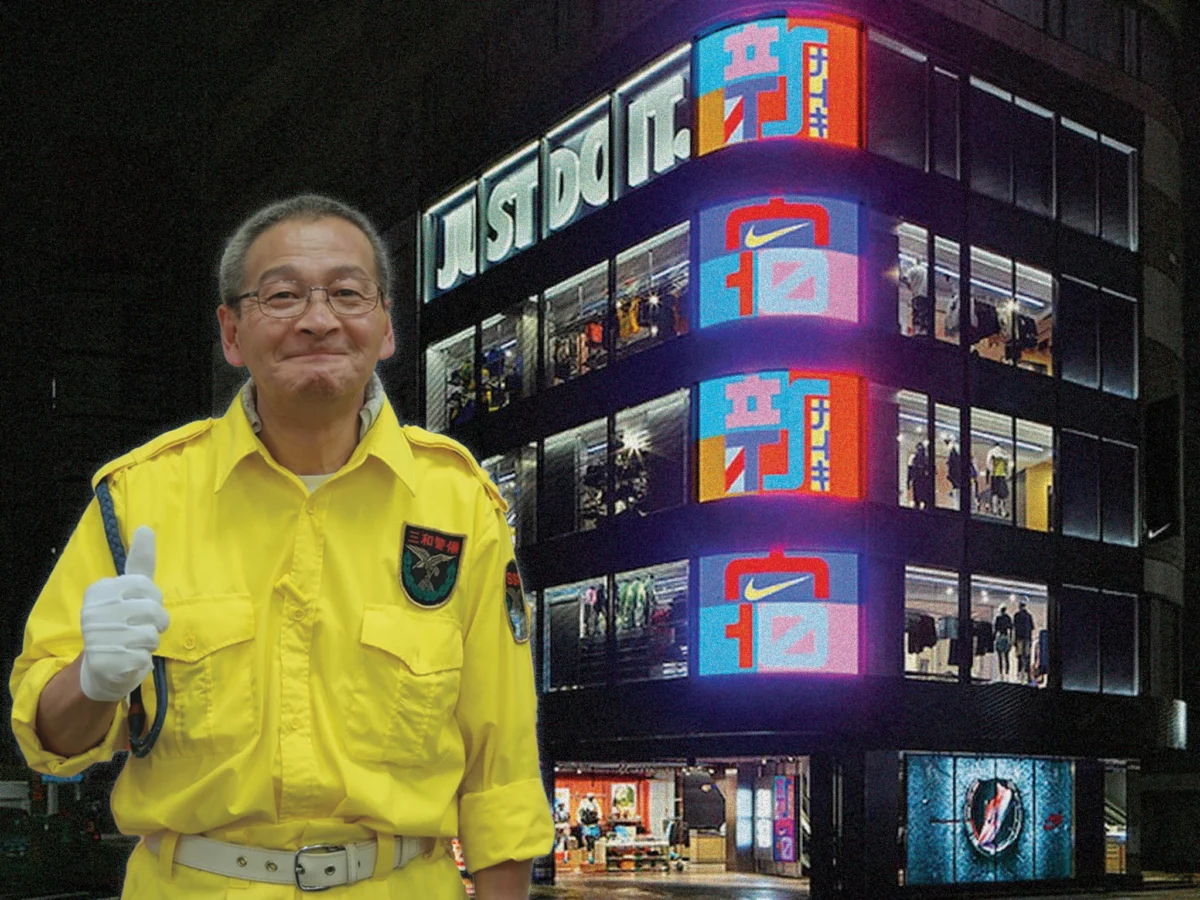
On April 10, Nike unveiled its sprawling, four-story flagship store at the East Exit of Shinjuku Station, the beating heart of Tokyo’s transit network. While the store offers the latest in athletic innovation and lifestyle apparel, the most striking feature is not found on the shelves, but on the exterior signage. Emblazoned in bold, rounded kanji, the word "Shinjuku"—with the iconic Nike swoosh seamlessly integrated into the final stroke—serves as a bridge between a global sportswear giant and the local spirit of Japan’s busiest station.
The creator of this typography is an unlikely design icon: Shuetsu Sato, a 72-year-old security guard who has spent the last two decades guiding millions of commuters through the labyrinthine corridors of Shinjuku Station. His signature style, crafted entirely from industrial duct tape, has become a cultural phenomenon, transforming from an act of public service into a celebrated element of high-end commercial design.
A Chronology of Duct Tape Craftsmanship
The story of "Shutetsu-tai" (Shuetsu font) begins not in an art studio, but in the trenches of daily transit maintenance.
The Origins (2002–2004)
Sato joined the security staff at Shinjuku Station in 2002. At the time, the station was undergoing an extensive, years-long renovation project that left the sprawling transit hub a maze of detours and temporary partitions. As commuters grew increasingly frustrated by the lack of clear signage, they turned to the nearest authority figure: Sato.
Day after day, the same questions were posed to him. Recognizing the inefficiency of verbal directions, Sato decided to take matters into his own hands. Using scraps of construction tape and discarded panels, he began crafting makeshift signs. These were not merely utilitarian notes; they were bold, legible, and intentionally soothing.
The Evolution of the Craft (2004–2023)
Sato’s process is a masterclass in improvisational discipline. He works entirely freehand, eschewing sketches or digital drafts. He lays down strips of tape in a grid pattern and uses a standard utility knife to carve out each character. This tactile, physical method results in the "hand-cut warmth" that has come to define his work—thick, plump, and rounded characters designed to offer a visual reprieve to the harried, fast-paced commuters of Shinjuku.
In December 2023, the Japan Sign Design Association formally recognized his contribution, awarding Sato a Platinum Honorable Mention for his "creation of pathways." The recognition cemented his status as an unofficial guardian of Tokyo’s urban navigation.
The Nike Collaboration (2024–2025)
The transition from station wall to international storefront began when graphic designer Shun Sasaki, a long-time admirer of Sato’s work, was tapped to lead the art direction for the new Nike Shinjuku flagship. Sasaki, who had first encountered the "Shutetsu-tai" font over a decade ago, knew immediately that this project required the soul of the station itself.
Sato was initially skeptical, unable to fathom why a global brand would be interested in his "gum tape" letters. After much persuasion, he agreed to collaborate. The process involved a unique synthesis of the old and the new: Sato cut his characters by hand, while Sasaki provided digital refinements, creating a hybrid workflow that honored the original aesthetic while meeting the precision requirements of a global retail brand.
Supporting Data: The Mechanics of the "Shutetsu" Aesthetic
What exactly makes Sato’s lettering so resonant in a city saturated with sleek, digital signage? Experts point to a combination of intentionality and human error.
The Geometry of Comfort
Unlike standard digital fonts that prioritize uniformity and machine-like precision, Sato’s characters feature subtle, irregular curves. His aesthetic draws inspiration from Gothic lettering he studied in a high school art class in Iwate Prefecture. By applying these clean, linear concepts to the malleable medium of duct tape, he created a style that feels simultaneously retro and futuristic.

Technical Precision
The "Shutetsu-tai" font relies on three core principles:
- Grid-Based Layout: Despite the lack of a pencil sketch, Sato maintains a rigorous internal grid that ensures consistency in stroke weight.
- Material Resistance: The physical act of cutting through duct tape forces a certain thickness and roundedness, as sharp, brittle corners are difficult to execute with a knife.
- Ergonomic Legibility: The font was specifically designed to be read by commuters walking at high speeds, leading to high-contrast, thick lines that remain clear even in low-light, high-traffic environments.
Official Responses and Industry Reception
The reception of the Nike Shinjuku signage has been overwhelmingly positive, serving as a case study for "vernacular design" in corporate spaces.
In a statement regarding the partnership, the design team at Nike highlighted the importance of "hyper-local integration." By utilizing Sato’s typography, the store anchors itself within the physical and cultural infrastructure of Shinjuku. It transforms the store from a foreign entity into a neighbor.
Shuetsu Sato remains humble despite the global exposure. In various interviews, he has emphasized that his work was never intended to be "design"—it was intended to be "help." This perspective has resonated deeply with the Japanese public, who often champion "craftsmanship" (monozukuri) as a vital part of the national identity. The Japan Sign Design Association’s decision to honor him signaled a broader shift in the design community, moving away from purely digital perfection toward celebrating the "human touch" of the everyday worker.
The Broader Implications: Japan’s Handmade Type Tradition
The story of the Nike Shinjuku font is not an isolated incident; it is a manifestation of an enduring tradition of vernacular lettering in Japan.
The Noramoji Project
Sato’s work exists alongside movements like the Noramoji Project (from nora, meaning "stray," and moji, meaning "text"). This initiative focuses on cataloging and digitizing the unique, hand-painted fonts found on aging storefronts—barbershops, florists, and small neighborhood shops where the signage was created by the owners themselves, not professional graphic designers.
These projects reveal a fundamental truth about urban design: that a city’s personality is defined by the irregularities left by its citizens. In an era of globalization, where every major city looks increasingly identical due to standardized corporate branding, the "Shutetsu-tai" font acts as a counter-narrative. It proves that identity can be curated from the ground up, utilizing the very materials that define a local environment.
Implications for Future Urban Design
The success of the Nike-Sato collaboration suggests a new path for multinational corporations. By engaging with the existing "folk" typography of their host locations, companies can achieve a level of cultural resonance that is impossible to manufacture in a boardroom.
The Nike Shinjuku flagship is now a destination that invites visitors to look up and engage with the environment. As people move through the four floors—transitioning from performance-based athletic gear to lifestyle and street-ready apparel—the interior design mirrors the flow of the subway system outside. The signage, in this context, is more than just a brand name; it is a bridge between the high-octane world of professional sports and the humble, daily reality of the Tokyo commuter.
In the end, Shuetsu Sato’s duct-tape kanji serve as a reminder that great design is not always the product of a degree or a sophisticated software suite. Sometimes, it is the product of two decades of service, a sharp knife, a roll of tape, and a simple, heartfelt desire to help someone find their way home.


 Neng Nana
 Asro
Asro