Nila Kartika Wati
For decades, the name Frank Herbert was synonymous with a singular, daunting challenge in the realm of science fiction: the "unfilmable" epic. When the 1965 masterpiece Dune was first published, it redefined the space opera, weaving a dense tapestry of feudal politics, ecological catastrophe, religious prophecy, and psychedelic philosophy. However, translating that depth to the silver screen proved to be a graveyard for even the most visionary directors.
Today, that narrative has shifted. With the release of Denis Villeneuve’s Dune: Part One (2021) and Dune: Part Two (2024), the consensus among critics and fans is that the spice has finally flowed in the right direction. But perhaps the most vital endorsement comes from within the Herbert family itself. Brian Herbert, son of the late author and the current steward of the Dune literary estate, has officially crowned Villeneuve’s duology as the definitive cinematic interpretation of his father’s legacy.
A Legacy Transferred: The Weight of the "Dune" Canon
To understand the gravity of Brian Herbert’s approval, one must first recognize the sheer scale of the Dune universe. Spanning approximately 15,000 years of fictional history, the saga began with Frank Herbert’s six foundational novels. Following his father’s passing in 1986, Brian Herbert took up the mantle, collaborating with author Kevin J. Anderson to expand the lore significantly.
Together, they have produced over 20 additional novels, short stories, and novellas, effectively building a transmedia empire that includes everything from prequel trilogies to detailed historical accounts of the Butlerian Jihad. Given that Brian Herbert has spent the better part of his career navigating, expanding, and protecting this complex ecosystem, his opinion carries a weight that few others in the literary or film community can claim. When he speaks on the Dune adaptations, he isn’t just offering a fan’s perspective; he is speaking as the custodian of the source material.
The Chronology of Adaptation: From Lynch to Villeneuve
The history of Dune on screen is a cautionary tale of ambition versus accessibility. Before Villeneuve, several attempts were made to tackle the "unfilmable" tome, each leaving a distinct mark on pop culture:

- The Jodorowsky Dream: In the 1970s, Alejandro Jodorowsky attempted an avant-garde, psychedelic version of Dune that never reached production. While it never hit theaters, its concept art and visionary scope influenced decades of science fiction filmmaking.
- The 1984 David Lynch Era: David Lynch’s Dune remains one of the most divisive films in cinema history. While the film was critically panned at the time and largely disowned by Lynch, it holds a strange, cult-like status today. Interestingly, Frank Herbert himself lived to see the 1984 film and expressed a surprising level of satisfaction with it, specifically praising Lynch for preserving the core thematic essence of his writing—a nuance often overlooked by contemporary critics.
- The Sci-Fi Channel Miniseries: In the early 2000s, a more faithful, albeit lower-budget, miniseries attempted to capture the breadth of the novels. It succeeded in scope but lacked the cinematic grandeur required for a true "blockbuster" experience.
Denis Villeneuve’s approach, however, differed in a critical way: he recognized that the novel could not be compressed into a single film. By splitting the first book into two distinct, massive chapters, he allowed for the necessary "breathing room" to explore the politics of the Atreides and the harsh, mystical landscape of Arrakis.
Official Responses: What Brian Herbert Really Thinks
Following a private studio screening of Dune: Part Two, Brian Herbert took to social media to share his thoughts, providing what many consider the "official" blessing for the project.
"It is gratifying to see my father’s story told with such great care," Herbert wrote in a widely circulated Facebook post. "When the new movie is combined with Dune: Part One, it is by far the best film interpretation of Frank Herbert’s classic novel Dune that has ever been done."
This sentiment is echoed by the creative team behind the film. Villeneuve has been vocal about his desire to treat the material with reverence, focusing on the intersection of human frailty and the burden of messianic prophecy. The collaborative process between the production team and the Herbert estate was not a superficial arrangement; it was a deep, sustained dialogue.
Behind the Scenes: A Collaborative Effort
It would be a mistake to assume Brian Herbert’s approval was merely a reaction to a completed film. He was, in fact, an active participant in the process. From the earliest stages of pre-production, Herbert provided input on the scripts, working alongside screenwriters like Eric Roth to ensure that the adaptation remained tethered to the heart of the source material.

Herbert’s role as an advisor was focused on a specific demographic: the "demanding, discriminating Dune fan." He urged producers Mary Parent and Cale Boyer to prioritize the lore that long-term readers held sacred. During the development of Dune: Part One, he maintained a steady channel of communication with the creative leads, ensuring that while the film took the necessary creative liberties inherent in visual storytelling, it never drifted into a betrayal of the original text.
Implications: The Future of the "Dune" Universe
The success of Villeneuve’s duology has profound implications for the future of the franchise. It has proven that audiences are hungry for "hard" science fiction—stories that do not shy away from dense political allegories or slow-burn character development.
The immediate horizon for this cinematic universe is Dune: Part Three, which will adapt the 1969 novel Dune Messiah. This novel is crucial because it serves as a direct critique of the "hero’s journey" presented in the first book, a nuance that Frank Herbert was very keen to emphasize in his later writings. With Brian Herbert serving as a producer on the upcoming installment, fans can expect the same level of granular attention to detail that defined the first two entries.
Furthermore, the triumph of these films has validated the "long-form" adaptation model for complex literature. Much like The Lord of the Rings before it, the success of Dune will likely influence how studios approach other "unfilmable" properties in the coming decade.
Conclusion: A New Standard
The relationship between an author and the screen adaptations of their work is often fraught with tension. We have seen authors like Roald Dahl and Stephen King publicly distance themselves from versions of their work that they felt misrepresented their vision. In contrast, the collaboration between the Villeneuve production team and the Herbert estate represents a gold standard for intellectual property management.
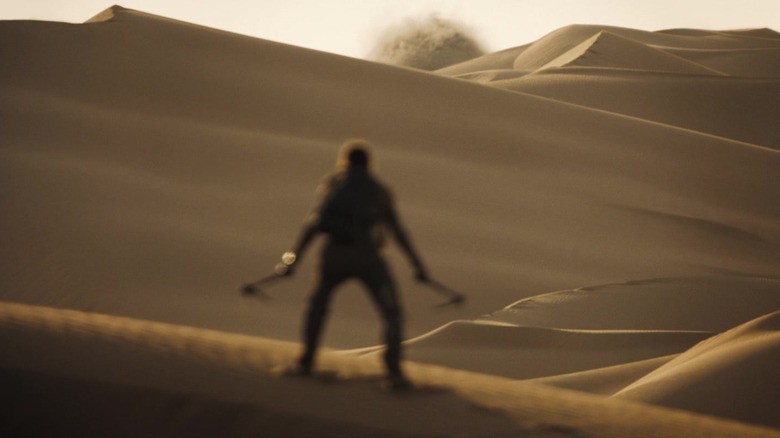
By respecting the source material while embracing the medium of film as an independent art form, Villeneuve and Herbert have crafted a legacy that stands on its own. For the fans who spent years worrying about whether the tragedy of Paul Atreides would be reduced to a generic action movie, the verdict is in: the Dune that we see on screen today is a testament to the enduring power of Frank Herbert’s vision, shepherded by a filmmaker who understood that in the desert of Arrakis, detail is everything.
As the franchise moves toward Dune Messiah, the partnership between the estate and the director remains a beacon for high-concept science fiction. It is a rare moment in Hollywood where commercial success and narrative integrity align, proving that even the most "unfilmable" stories can thrive when treated with the reverence they deserve.


 Reynand Wu
 Pevita Pearce