

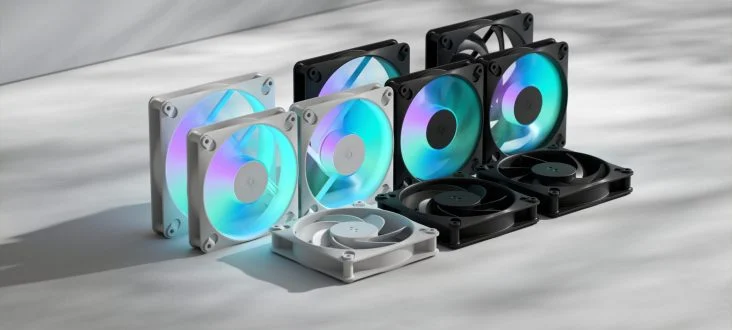
Fractal Design, a name synonymous with minimalist Swedish aesthetics and high-performance PC components, has officially expanded its cooling portfolio with the introduction of the Dynamic 3 series. Designed to serve as the new standard for mainstream and enthusiast-grade desktop systems, this versatile lineup of PWM (Pulse Width Modulation) fans aims to strike a perfect balance between acoustic efficiency, structural integrity, and visual customization.
Available in both 120mm and 140mm form factors, the Dynamic 3 series offers an extensive array of configurations, including standard airflow, reverse airflow, and ARGB-equipped models. By prioritizing modularity and user-friendly installation, Fractal is positioning this series as the definitive choice for builders who demand high performance without sacrificing the clean, uniform look of their internal components.
Main Facts: The Core Engineering of the Dynamic 3
The Dynamic 3 series is built upon a foundation of reliable, low-noise performance. Central to the design is the use of high-quality rifle bearings, which are engineered to provide a longer lifespan and quieter operation compared to standard sleeve-bearing fans. These bearings minimize friction and vibration, ensuring that the fans maintain consistent performance even under heavy thermal loads.
Performance-Oriented Blade Design
The blades themselves feature a swept-profile geometry designed to optimize static pressure and airflow volume. Whether being used as case fans to promote general air circulation or as high-resistance fans mounted against heat sinks and radiator stacks, the Dynamic 3 is engineered to move air effectively while minimizing turbulence-induced noise.
Versatility Through Variants
Fractal understands that modern PC builds vary wildly in design. Consequently, the Dynamic 3 series is divided into several categories:
- Standard Airflow: Designed for general chassis exhaust and intake, prioritizing volume.
- Reverse Airflow: A vital addition for showcase builds. These fans pull air through the "front" of the fan frame while maintaining the sleek, finished aesthetic of the fan’s rear side. This allows builders to achieve a uniform look in dual-chamber cases (like the Fractal North or O11-style chassis) without sacrificing intake performance.
- ARGB Gen 2 Integration: For users looking to elevate their build’s visual profile, the RGB variants utilize Addressable RGB Gen 2 technology, allowing for precise, individual LED control through motherboard software.
Chronology of Development: Refinement in Cooling
The release of the Dynamic 3 marks a significant evolution in Fractal’s component philosophy. Over the past few years, the market has seen a shift toward "cable-less" or "daisy-chainable" ecosystems, a trend that Fractal has carefully observed before implementing its own take.
- The Design Phase: Fractal engineers focused on the "daisy-chaining" requirement early in the development cycle. Recognizing that modern cases can hold up to 10 or more fans, the team developed an integrated cabling system that allows multiple fans to be linked together, drastically reducing the clutter of PWM and ARGB wires trailing across the motherboard.
- Prototyping and Acoustic Testing: Throughout late 2024 and early 2025, Fractal subjected the Dynamic 3 to rigorous stress testing. The focus was on the "hump" of the acoustic curve—ensuring that the fan’s sound profile remains pleasant even as the PWM signal ramps up toward 100% duty cycle.
- Final Production and Launch: The finalized product includes moulded centre caps that give the fan a premium, industrial feel, effectively hiding the motor hub and creating a seamless aesthetic that aligns with Fractal’s reputation for Scandinavian design language.
Supporting Data: Technical Specifications
The appeal of the Dynamic 3 lies in its specifications, which are designed to compete directly with premium offerings from competitors like Lian Li, Corsair, and Noctua.
| Feature | Specification |
|---|---|
| Sizes | 120mm / 140mm |
| Bearing Type | Rifle Bearing |
| Control Type | PWM (4-pin) |
| RGB Standard | ARGB Gen 2 (5V) |
| Cable Management | Integrated Daisy-chainable system |
| Orientation | Standard & Reverse Flow options |
| Finish Options | Black, White, and specific accent colorways |
By providing both 120mm and 140mm options, Fractal ensures that the Dynamic 3 is compatible with the vast majority of ATX, Micro-ATX, and ITX chassis on the market. The inclusion of reverse-flow variants is particularly important for modern "fish-tank" style cases, where side and bottom intake fans are often visible to the user. Historically, using standard fans in these positions meant displaying the unsightly fan hub and structural struts; the Dynamic 3 solves this by providing a clean intake face.
Official Responses and Market Strategy
Fractal Design has emphasized that the Dynamic 3 series is not just about raw cooling numbers, but about the experience of building a PC. In a statement regarding the product launch, a spokesperson for the company highlighted the "Cable Management Initiative," which is a core pillar of the Dynamic 3’s value proposition.
"Our goal with the Dynamic 3 series was to eliminate the frustration of ‘cable soup’ that occurs when installing multiple fans," the company noted. "By integrating the daisy-chaining directly into the frame, we allow the builder to focus on aesthetics and airflow rather than struggling with fan hubs or excessive splitters."
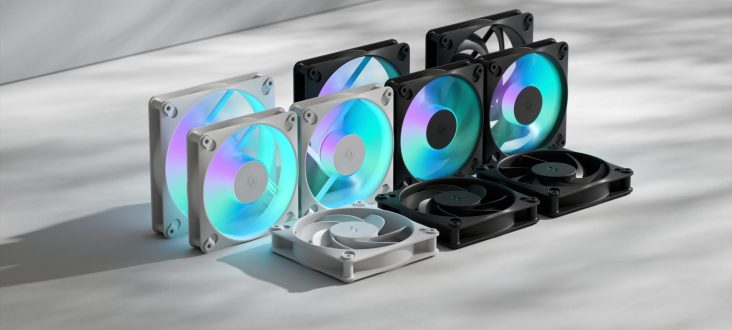
Market analysts suggest that Fractal is positioning the Dynamic 3 as a "value-premium" product. While not priced at the ultra-premium tier of some magnetic-levitation fans, the build quality and the aesthetic polish suggest that Fractal is targeting the segment of the market that currently drives DIY trends: the visual perfectionist who also values long-term hardware reliability.
Implications: How the Dynamic 3 Changes the Market
The arrival of the Dynamic 3 has several implications for the PC hardware landscape.
1. The Death of the "Ugly" Intake
For years, builders have had to choose between optimal airflow and the aesthetic finish of their case. The reverse-flow trend, spearheaded by the likes of Lian Li and now fully embraced by Fractal, is becoming an industry standard. This change signals that manufacturers are listening to the community’s demand for "clean builds."
2. Standardizing ARGB Gen 2
By adopting the ARGB Gen 2 standard, Fractal is future-proofing its cooling solutions. Gen 2 lighting allows for much more complex patterns and smoother transitions compared to the older, simpler ARGB protocols. This ensures that the Dynamic 3 fans will remain relevant as motherboard lighting controllers become more sophisticated.
3. Acoustic Optimization for All
Because the Dynamic 3 utilizes rifle bearings across all variants, it raises the floor for entry-level cooling. Users who buy the non-RGB versions for budget builds will receive the same high-quality bearing technology as those who buy the top-tier RGB models. This democratization of quality is a win for the consumer.
4. Compatibility with Future AIOs
As manufacturers like Lian Li continue to innovate with products like the HydroShift II, the market for high-quality, daisy-chainable fans is expanding. Fractal’s Dynamic 3 serves as the perfect companion to these new AIO liquid coolers, allowing users to match their radiator fans with their case fans for a unified, cohesive look.
Conclusion: Is the Dynamic 3 Right for Your Build?
The Fractal Design Dynamic 3 series is a testament to the brand’s ability to iterate on fundamental components. By focusing on the "invisible" aspects of PC building—cable management, acoustic consistency, and orientation versatility—Fractal has created a product that solves real-world builder problems.
If you are currently planning a new build, or if your current setup is suffering from cable clutter and mismatched fan aesthetics, the Dynamic 3 series offers a compelling path forward. With its combination of robust engineering, sophisticated ARGB control, and the thoughtful addition of reverse-airflow models, it is arguably one of the most versatile fan lineups released in the current fiscal year.
As the industry continues to push toward more visually complex and aesthetically driven hardware, Fractal Design has demonstrated once again that they are not just following the trends, but refining them to meet the exacting standards of the modern PC enthusiast. Whether you are building a quiet, high-performance workstation or a vibrant, RGB-saturated gaming rig, the Dynamic 3 provides the reliability and visual uniformity required to take your build to the next level.










No comments yet. Be the first to join the conversation!