Dwi Wanna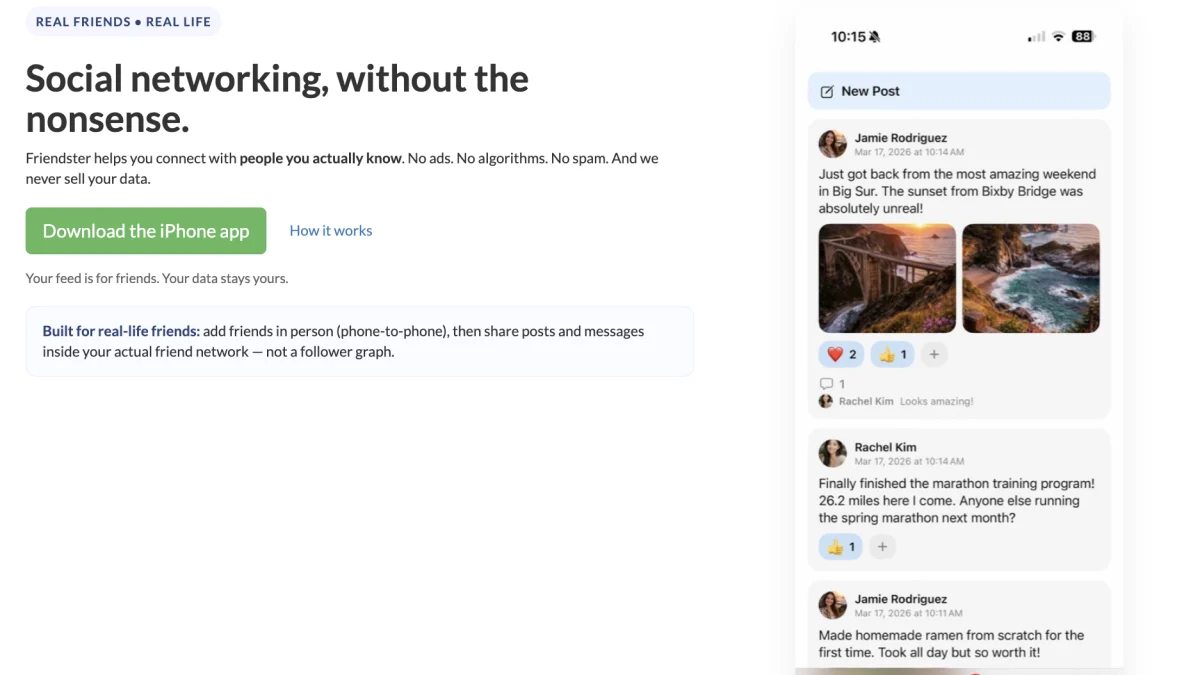
Nearly a quarter-century after it pioneered the landscape of digital socialization, the name "Friendster" has re-emerged from the graveyard of tech history. For a generation that came of age during the dawn of the internet, the name evokes a specific nostalgia—a time of pixelated profile pictures, "Top 8" rankings, and the primitive thrill of the digital "poke." But the Friendster that returned in 2024 is not the platform that defined the early 2000s. Under the stewardship of new owner Mike Carson, the resurrected brand has abandoned the addictive, algorithmic, and ad-saturated models that dominate today’s social media landscape. Instead, it has adopted a radical, minimalist philosophy: the complete elimination of digital abstraction in favor of forced physical interaction.
The Genesis of a Digital Pioneer: A Chronology
To understand the significance of this revival, one must first revisit the meteoric rise and inevitable fall of the original platform. Launched in March 2002 by computer programmer Jonathan Abrams, Friendster was the vanguard of the social networking revolution. Long before Facebook or MySpace became household names, Friendster provided a digital space to map out one’s real-world social graph. It was, for a brief window in time, the internet’s primary town square.
However, the platform’s technical instability—famously plagued by slow page loads and database crashes—paved the way for more agile competitors. MySpace, and later Facebook, surged in popularity, leaving Friendster to struggle for relevance. While the platform found a dedicated and massive user base in Southeast Asia for several years, it eventually pivoted to become a social gaming site in 2011. By 2015, the once-titular giant of Silicon Valley was officially shuttered, its assets liquidated and its legacy relegated to textbooks on internet history.
The journey to the current relaunch began in 2023, when entrepreneur Mike Carson discovered that the domain "Friendster.com" had been reduced to a spam-ridden site populated by intrusive pop-up ads. Upon investigation, Carson discovered that the domain had been purchased at an expired auction for just $7,456. In a move that bridged the gap between old-world tech acquisitions and modern finance, Carson negotiated a deal, purchasing the domain for $20,000 in Bitcoin plus an additional asset—a domain he owned that generated $9,000 in annual revenue.
The "Anti-Algorithm" Manifesto
The new Friendster operates on a premise that is fundamentally antithetical to the modern social media business model. Where apps like TikTok, Instagram, and X (formerly Twitter) rely on sophisticated machine-learning algorithms to keep users glued to their screens, the new Friendster offers a vacuum.
Upon downloading the current iOS app, users are greeted by a blank canvas. There are no "Recommended for You" lists, no viral video feeds, no trending hashtags, and, perhaps most notably, no advertisements. The platform has been stripped of the "infinite scroll" that has come to define modern screen time. By removing the feedback loops of likes, shares, and algorithmic suggestions, Carson is attempting to pivot the social network back toward its original utility: a digital address book for real-life relationships.
The Physicality of Connection: A New Protocol
The most striking feature of the new Friendster is its rigid, almost archaic, approach to user interaction. Unlike every other major social platform, which allows users to follow, friend, or message strangers across the globe with a single click, the new Friendster requires physical presence.
To connect with another user, both individuals must have the app open and literally tap their phones together. This "physical handshake" protocol is the only mechanism for adding a contact. This design choice serves as a structural safeguard against the parasocial relationships and digital harassment that have become endemic to online networking. By mandating physical proximity, the app enforces a "real-life" barrier to entry. If you are not in the same room as someone, you cannot be their "friend" on Friendster.
Supporting Data and The Economics of Minimalism
The economic model behind the current iteration of Friendster is, by design, non-commercial. By eschewing data-harvesting ads, the platform avoids the need to incentivize long-duration engagement. This creates a paradox: how does a social network survive without the engine of advertising?
Carson’s vision is not one of hyper-growth or massive user acquisition. Rather, it appears to be an exercise in intentionality. The cost of running a server for a platform that does not host heavy media files or algorithmic feeds is significantly lower than that of its competitors. By keeping the infrastructure lean, Carson has created a boutique social experience that relies on the utility of the network rather than the commodification of the user’s attention.
Official Responses and The Roadmap Ahead
In a series of blog posts detailing his acquisition and subsequent development, Mike Carson has articulated a clear, if unconventional, roadmap for the platform’s future. He acknowledges that the current "nothingness" of the app can be daunting to new users, but he views this as a feature, not a bug.
"It’s not a punishment—a gentle nudge that real friendships are kept alive in person, not online," Carson wrote regarding his upcoming features. One such planned update is the "Friends of Friends" feature, which would allow users to bridge the gap between their real-life contacts and their wider social circles, provided there is a verified, real-world connection linking them.
Perhaps most provocatively, Carson intends to roll out a "Fading Connection" feature. This system will notify users when they haven’t been in the same room as one of their listed connections for more than a year. It is a digital call to action to maintain friendships in the physical world, treating digital connections as ephemeral markers of real-world history rather than permanent, static entries in a database.
Implications for the Future of Social Networking
The return of Friendster presents a fascinating case study for the future of digital communication. As the "Big Tech" era faces increasing scrutiny regarding mental health, screen addiction, and the toxicity of viral algorithms, a niche market for "slow" or "mindful" social media has begun to emerge.
However, the implications of Friendster’s model are significant. By prioritizing physical interaction, the platform essentially removes the "network effect" that has made Facebook and Instagram so dominant. Without the ability to grow exponentially through shared content and viral loops, Friendster will never be a "mass-market" platform in the traditional sense. It is, by definition, an exclusive club that requires physical access to join.
The primary hurdle for the platform will be the "empty room" problem. As the article’s author noted after testing the app, the lack of content makes it difficult for a new user to find immediate value. Unlike an app that starts with a pre-populated feed of content, the new Friendster requires the user to do the hard work of building their community from scratch.
Ultimately, Friendster is attempting to prove that the original promise of social media—connecting with people you actually know—was lost in the shuffle of trying to connect everyone with everyone else. By limiting the scope of the platform, Carson is betting that users are tired of the noise of the global digital town square and are ready to return to the quiet of their own immediate circles.
Whether this experiment succeeds as a sustainable business remains to be seen. But as an act of digital philosophy, it serves as a powerful critique of where we have been and a radical suggestion of where we might go. In a world that is more connected than ever, Friendster is betting that what we actually need is a little less connectivity, and a lot more presence.

 Basiran
 Ali Ikhwan