

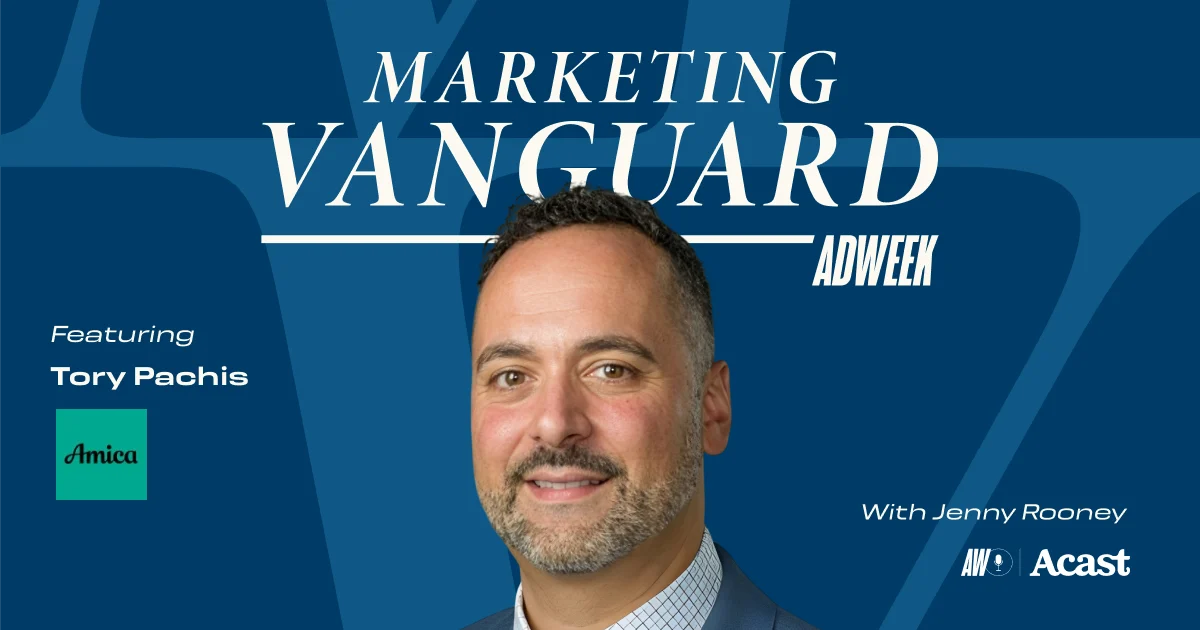
In an era defined by aggressive performance marketing, algorithmic targeting, and the rapid commoditization of financial services, the traditional insurance landscape is arguably one of the most hostile environments for brand differentiation. Yet, for Amica Insurance—the nation’s oldest mutual automobile insurer—the solution to modern relevance hasn’t been found in more data or cheaper rates, but in a radical commitment to the human element.
In a recent episode of Marketing Vanguard, Tory Pachis, Executive Vice President and Chief Marketing Officer at Amica, provided a masterclass in how a 119-year-old institution can act like a challenger brand. By balancing deep-rooted heritage with modern structural innovation, Pachis is proving that empathy is not just a soft skill—it is a competitive moat.
The Crucible of Insurance: A Masterclass in Marketing
Pachis, a veteran with 27 years in the industry and leadership stints at Travelers and Hanover, views insurance as the ultimate proving ground for marketers.
"If you can sell insurance, you can sell anything," Pachis argues. His logic is rooted in the inherent difficulty of the product: it is invisible, highly regulated, expensive, and, most importantly, something consumers actively avoid thinking about until a crisis occurs.
For the modern CMO, this creates a unique challenge. Unlike consumer packaged goods or tech gadgets, there is no "unboxing" experience or immediate gratification. However, Pachis suggests that this limitation is actually a competitive advantage. Mastering the art of communicating value in a category where the consumer is inherently disinterested forces marketers to develop sophisticated persuasion skills. For CMOs navigating commoditized markets, the lesson is clear: the friction of the category is not an excuse for poor performance; it is a catalyst for developing marketing mastery.
Challenging the Status Quo: The Pivot to Emotional Storytelling
The insurance industry has long been dominated by a specific creative trope: the loud, humorous mascot or the catchy jingle designed to achieve high-frequency brand recall. While these tactics have built empires for companies like Geico and Progressive, Pachis recognized that they also created a "sea of sameness."
Amica’s strategy, conversely, leans into the brand’s tagline: "Empathy is our best policy."
Moving Against the Grain
In an industry that often treats customers as transaction IDs, Amica has pivoted toward emotional, human-centric storytelling. By focusing on the moments when a policyholder is most vulnerable—during a claim, after an accident, or in the middle of a life transition—the brand fosters a sense of pride and partnership.
For brands competing against entrenched incumbents with vastly larger budgets, Pachis’s advice is stark: identify the dominant creative convention of your category and move in the opposite direction. By eschewing the "mascot-led" humor model for a "human-led" empathy model, Amica cuts through the noise without having to outspend its rivals.
Structural Innovation: The "Intentional Tension" Framework
Modern marketing departments often fall victim to silos, where brand-building teams and performance-marketing teams operate as if they are in different companies. At Amica, Pachis has restructured the 160-person marketing organization into five distinct centers of excellence: brand/creative, media, data/analytics, digital, and product.
The Power of OKRs
The genius of this structure lies in how it manages objectives. Pachis implements five unified Objectives and Key Results (OKRs) across these departments, but with a twist: he intentionally builds "healthy tension" into the system.
This design forces strategic trade-offs. When the creative team pushes for a bold brand statement, the performance team is tasked with ensuring that statement drives tangible funnel conversion. By design, these teams must negotiate, forcing a continuous alignment between long-term brand equity and short-term performance optimization. This structure prevents the "siloed decision-making" that plagues so many legacy organizations, ensuring that every marketing dollar contributes to a shared business outcome.
The AI Paradox: Augmentation, Not Replacement
Perhaps the most critical takeaway from Pachis’s leadership is his balanced stance on artificial intelligence. While many insurers are rushing to automate the customer journey to reduce headcount, Amica is using AI as a "force multiplier" for human interaction.
Operational Efficiency vs. Human Connection
Amica utilizes AI to process vast amounts of unstructured data—specifically, millions of call transcripts. By removing Personally Identifiable Information (PII), the marketing team can mine these conversations to identify unmet needs. For example, if data shows a rising interest in e-bikes or specific motorcycle accessories, that information moves directly into the product roadmap.
However, the "last mile" of the customer experience remains exclusively human. Pachis argues that empathetic service delivery is an irreplaceable competitive advantage. By using AI to handle the heavy lifting of administrative tasks and claims processing, Amica frees its human representatives to act as "coverage counselors." This allows the staff to spend more time on meaningful engagement, reinforcing the brand’s commitment to empathy during the moments that matter most.
Implications for the Future of Brand Management
As we look toward 2026, the case study of Amica Insurance provides a roadmap for companies struggling to bridge the gap between their historical past and a digital future.
- Complexity is a Teacher: CMOs should stop viewing "boring" or "complex" product categories as obstacles and start viewing them as professional development tools. The ability to articulate value in difficult spaces creates elite marketers.
- Contrarian Creative: When a category becomes crowded with similar creative archetypes, the most effective move is often to reject the status quo entirely. Empathy is a powerful differentiator when the rest of the market is screaming for attention through humor.
- Organizational Friction is Good: Leadership should not aim to eliminate tension within their teams. Instead, they should structure that tension to ensure brand, data, and product teams are pulling in the same direction, forcing essential trade-offs that lead to better decision-making.
- AI as a Compass, Not a Captain: The most successful brands will be those that use AI to gain deep, predictive insights into their customers, but continue to use human empathy as the primary vehicle for customer service.
Conclusion: The Heritage Advantage
Amica’s 119-year heritage is not a burden; it is a repository of trust. By resisting the urge to modernize at the expense of human connection, Tory Pachis and his team are proving that the most advanced technology is only as good as the service experience it supports.
For marketing leaders attending events like Brandweek, the overarching lesson is that true innovation is not about adopting the newest tool—it is about refining your core identity. In a world of automated interactions and algorithmic noise, the most disruptive thing a brand can do is to be authentically, intentionally human.
As Pachis concludes, the goal is not to be the biggest brand in the category, but the most trusted one. By marrying the precision of data-driven insights with the warmth of empathetic service, Amica is setting a high bar for what a modern, legacy-driven challenger brand looks like. In the race to win the future, those who double down on the human experience will be the ones that endure.












No comments yet. Be the first to join the conversation!