Suro Senen
The Japanese language is a complex and beautiful tapestry, woven from three distinct scripts: Kanji, Hiragana, and Katakana. While Kanji provides the semantic core of the language and Hiragana serves as the grammatical backbone, Katakana stands as the essential tool for navigating the modern, globalized world of Japan. For language learners, mastering Katakana is not merely a supplemental exercise—it is a foundational requirement for literacy in contemporary Japan.

The Role and Importance of Katakana
Katakana is the sharp, angular cousin to the flowing, cursive-like Hiragana. While the two systems share the same phonetic values, their functions are distinct. Katakana is primarily utilized for transcribing foreign loanwords, names, places, scientific terms, and for providing emphasis in written text. In the context of a modern Japanese city, one cannot traverse a grocery store aisle, navigate a train station, or read a restaurant menu without encountering Katakana.
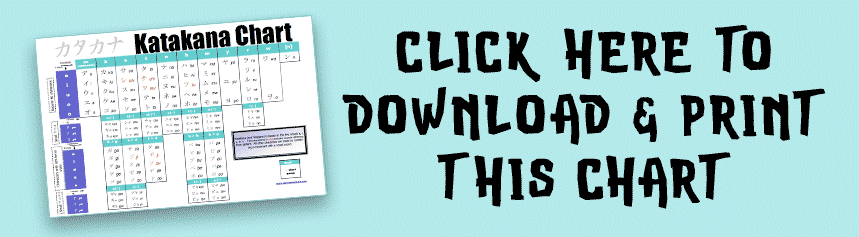
Many pedagogical experts argue that the optimal time to tackle this script is immediately following the acquisition of Hiragana. Because the sounds remain identical, learning Katakana while the phonetic memory of Hiragana is still fresh allows for a synergistic learning effect. Though the visual differences between the two scripts can be a hurdle for beginners, the logical structure of the Katakana syllabary makes it a manageable and rewarding milestone in the journey toward fluency.

A Chronology of Learning: From Basics to Proficiency
The acquisition of a new writing system is a process of incremental cognitive mapping. For the student, this journey follows a logical progression:
1. Understanding the Syllabary Structure
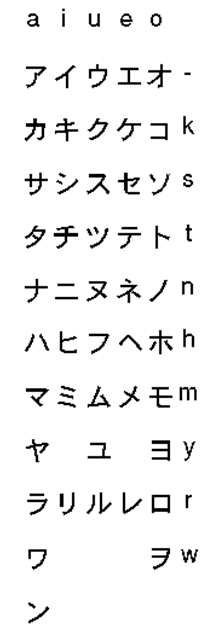
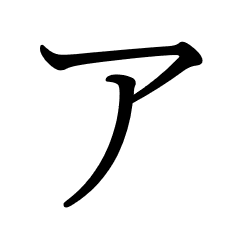
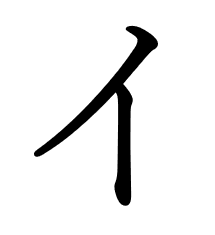
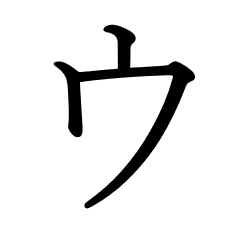
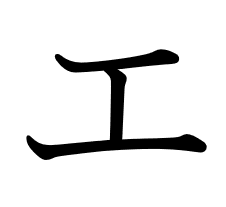
The Katakana chart is organized with mathematical precision. Columns represent vowels (A, I, U, E, O), while rows denote consonant sounds. This grid system acts as a mnemonic map. By identifying this pattern, students can quickly grasp the systematic nature of the Japanese phonetic structure, moving from the base vowels to the K, S, T, N, H, M, Y, R, and W rows.
2. Mastering Individual Characters and Stroke Orders
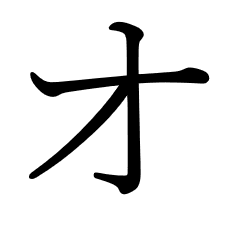
Success in writing Japanese characters lies in the discipline of stroke order. Every character, from the simple single-stroke "no" to the complex four-stroke "ne," has a specific, codified way of being written. Adhering to these rules is not merely an aesthetic choice; it builds muscle memory that makes handwriting more legible and fluid. Students are encouraged to use visual mnemonics—linking the shape of the character to an English word or a mental image—to cement the connection between the symbol and its sound.

3. The Shift to Complex Phonetics
Once the basic syllabary is conquered, the student must transition to advanced phonetic features. This includes the implementation of "ten-ten" (diacritical marks that transform soft consonants into hard ones, such as K to G or S to Z) and the "maru" (a small circle used to turn H sounds into P sounds). Finally, students master the small "ya," "yu," and "yo," which combine with preceding characters to create blended sounds like "kya," "shu," or "ryo."
Supporting Data: The Mechanics of the Script
To ensure long-term retention, learners should rely on structured practice environments. The following data points highlight the specific areas where students most frequently require reinforcement:

- Visual Confusion: Characters like "so" and "n" are notoriously easy to mix up. The distinction lies in the direction of the strokes—"so" is written from top to bottom, while "n" is written from the bottom up.
- Irregular Pronunciations: Unlike some languages, Japanese is highly phonetic, but it contains exceptions. For instance, "shi" (シ) is often Romanized as "si," yet pronounced with the "sh" sound. Similarly, "tsu" (ツ) is a common point of struggle for non-native speakers, requiring a distinct, percussive "ts" articulation.
- Modern Adaptations: Because Katakana is used for foreign words, it is a living system. As new technologies and cultural trends emerge, new ways to combine these characters are developed, making Katakana a window into the evolving Japanese lexicon.
Official Guidance and Pedagogical Perspectives
Language institutions, such as The Japanese Page, emphasize that students should not rush the process. An "official" approach to learning involves active recall—regularly testing one’s ability to read and write characters in isolation. The consensus among educators is that once a student can move beyond simple recognition and begin identifying foreign loanwords in a real-world context, their confidence surges.
The inclusion of "Chapter Tests" or periodic assessments is a critical component of successful language acquisition. By taking a sample of 50 common words and attempting to transcribe them, students gain immediate feedback on their weak points. This iterative process of testing and reviewing is considered the gold standard for achieving long-term memory consolidation.

The Implications of Literacy: Why Katakana Matters
The implications of becoming proficient in Katakana extend far beyond the classroom. The ability to read Katakana unlocks:
1. Cultural Navigation
Japan is a country that embraces foreign influence. From menu items like hambāgu (hamburger steak) to technical terms like konpyūta (computer), the ability to read these words allows a traveler or resident to function independently. It is the difference between feeling like a perpetual tourist and feeling like a participant in Japanese society.

2. Cognitive Development
The study of a non-Latin script exercises the brain in unique ways. It requires the learner to stop associating letters with sounds in an alphabetic sense and instead engage with a syllabic system. This cognitive shift fosters linguistic flexibility and enhances the learner’s overall capacity for language acquisition.
3. The Foundation for Advanced Study
While Katakana is often viewed as the "easier" of the two kana scripts, it is the bridge to advanced materials. Many beginning-level textbooks, children’s literature, and even some manga are written with a mix of Hiragana and Katakana. Mastering the latter is the final hurdle before diving into the vast, complex world of Kanji.

Conclusion: A Path Forward
The transition from a non-Japanese speaker to a literate learner is a marathon, not a sprint. Katakana is the secondary milestone that proves to the student that they possess the discipline and the intellectual capacity to master the language. By utilizing structured charts, focusing on stroke order, and engaging with consistent practice through quizzes and real-world application, any dedicated student can achieve mastery.
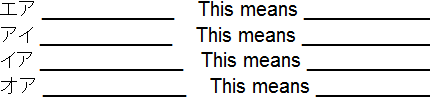
For those seeking to accelerate their progress, professional resources—such as the Beri-Beri-Shoshinsha bundles or interactive online quizzes—provide the necessary scaffolding to support the learning process. Whether you are learning for professional, academic, or personal reasons, remember that every stroke you write is a step closer to fluency. Embrace the challenge, enjoy the process, and soon, you will find that the mysterious signs and symbols of Japan have become a clear, inviting path to a new world of communication.


 Neng Nana
 Asro
Asro