

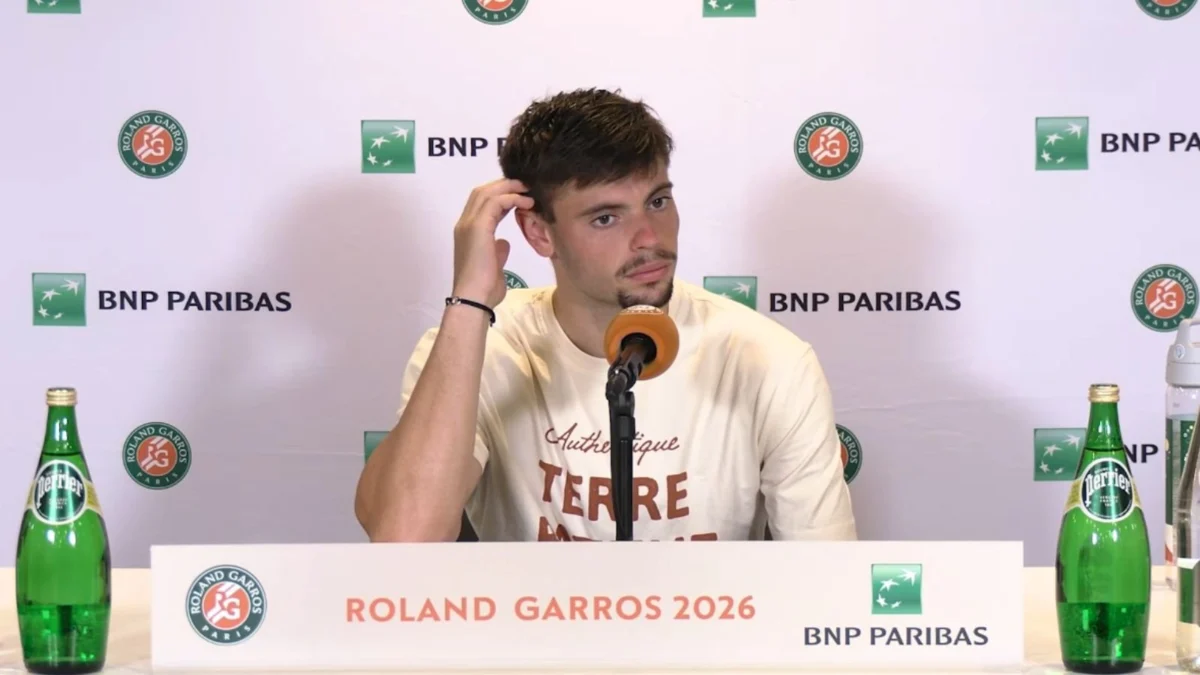
The French Open, renowned for its prestige, history, and the grueling physical demands of red clay, has seen its fair share of dramatic moments. From legendary five-set epics to controversial line calls, the tournament is a theater of human endurance. However, during the 2026 iteration of the Grand Slam, French wildcard Arthur Gea found himself at the center of a different kind of drama—one that pushed the boundaries of professional decorum and highlighted the visceral, often unglamorous realities of elite athletics.
Gea’s debut on the main stage of Roland Garros will be remembered not for a stunning upset, but for a desperate, mid-match plea to the chair umpire that has since gone viral, sparking conversations about the rigidity of tennis regulations and the unpredictable nature of the human body under immense pressure.
The Chronology of an Emergency
The match, held on a sweltering afternoon, pitted the 20-year-old French wildcard against the 13th-seeded Russian powerhouse Karen Khachanov. While the tennis community expected a display of baseline grit, the narrative shifted abruptly in the first set.
With the scoreboard reading 4-2 in favor of Khachanov, Gea began to show signs of extreme physical distress. Moving sluggishly between points and clutching his midsection, the young Frenchman finally reached a breaking point. Under standard ATP and Grand Slam rules, bathroom breaks are strictly regulated, typically permitted only during changeovers or between sets, and even then, are subject to time constraints.
Gea, however, was not concerned with protocol. In a moment captured clearly by the TNT Sports broadcast microphones, he approached the chair umpire, abandoning any pretense of diplomatic composure. "I’m going to sht on the fking court," he stated bluntly.
When the umpire appeared hesitant to grant an exception, Gea escalated his plea, switching to his native French to convey the urgency of the situation. "I have diarrhea. I need to go to the bathroom. I can’t hold it anymore. I’m gonna sh*t myself."
The exchange was tense. Khachanov, eager to maintain his momentum, protested the potential disruption, arguing that the rules were clear. However, the optics of the situation—and the genuine physical desperation visible in Gea’s demeanor—forced the hand of the officials. A tournament doctor was summoned to the court to assess the situation. Upon confirming the legitimacy of Gea’s medical distress, the doctor authorized an emergency departure under a medical exemption.
Gea was escorted off-court, where he was administered medication to stabilize his digestive system. He returned to the court moments later, though the interruption left the rhythm of the match fundamentally altered.
Supporting Data: The Physical Toll of Roland Garros
To understand the severity of Gea’s plight, one must consider the environment of the French Open. Roland Garros is notoriously punishing. The combination of high humidity, the heat-absorbing properties of the red clay, and the physical intensity of professional tennis creates a recipe for physiological strain.
Gea later revealed in his post-match press conference that he had been feeling "really, really bad" since the early hours of the morning. The exertion of the match, compounded by the high-stakes atmosphere of a Grand Slam debut, likely exacerbated an existing digestive ailment.
Statistically, "medical timeouts" in tennis are increasingly common, though they are usually reserved for musculoskeletal issues—sprained ankles, shoulder fatigue, or cramping. Digestive emergencies, while less documented, are an "invisible" reality of the sport. Athletes consume high-energy gels, isotonic drinks, and specialized diets that, when combined with the extreme physiological stress of a three-to-five-set match, can lead to sudden gastrointestinal failure.
Official Responses and Rulebook Rigidity
The incident has ignited a debate within the tennis world regarding the flexibility of the rulebook. While the ATP and ITF enforce strict time-keeping to ensure the pace of play and prevent gamesmanship—often called "tactical bathroom breaks"—critics argue that there is insufficient leeway for genuine medical crises.
In the wake of the match, tournament officials at Roland Garros were tight-lipped, maintaining that they followed protocol by involving the on-site medical staff. "The health of the player is paramount," a representative stated, noting that the doctor’s intervention was the deciding factor in bypassing the standard "between sets" rule.
Khachanov, while visibly frustrated during the encounter, was diplomatic afterward. "You want to keep your rhythm, and you don’t know if it’s a tactic or reality," the Russian star remarked. "But when it’s a health issue, you have to have empathy. We are all humans, and we all know how the body reacts under stress."
The Human Element: Implications for the Sport
The viral nature of the video—which has been shared millions of times across social media platforms—speaks to a modern fascination with the "humanization" of athletes. In an era of meticulously curated social media images and high-performance marketing, seeing a young professional in a moment of utter, undignified vulnerability strikes a chord with audiences.
However, the implications for the sport are more serious. This incident underscores the need for a more nuanced approach to player welfare. If the governing bodies of tennis wish to maintain the integrity of the sport while acknowledging the biological reality of its participants, they may need to revisit the current bathroom break policies.
Some analysts suggest that a "red card" style system for medical emergencies—where a player must provide a certificate from an official tournament doctor to avoid penalty—could be a way forward. Others argue that the current system is sufficient, and that such occurrences, while embarrassing, are rare enough to remain as isolated anomalies rather than systemic issues.
Looking Forward: A Bitter Debut
Despite the ordeal, Gea attempted to continue playing. He held his own for the remainder of the first set and managed to force a competitive tie-break in the second. Yet, the physical toll had clearly drained his reserves. As the match progressed into the third set, his body gave out completely. Khachanov closed out the match 6-3, 7-6(3), 6-0.
"It was really, really hard," Gea reflected during his post-match media session. "Physically with my health, but overall, it was two really good sets at the beginning. The last one was obviously really hard to maintain the level."
Gea’s experience serves as a stark reminder that beneath the facade of the Grand Slam—the pristine courts, the cheering crowds, and the millions of dollars in prize money—there is the raw, unpredictable reality of human biology. Whether this leads to a formal change in tennis regulations remains to be seen, but for Arthur Gea, his debut at Roland Garros will forever be defined by the moment he chose the sanctity of the bathroom over the rules of the game.
As the tournament continues, the focus will return to the tennis. But for a brief, uncomfortable moment in Paris, the world of sports was reminded that even the most elite athletes are subject to the same unpredictable, inconvenient, and occasionally public bodily functions as the rest of us. It was a chaotic, unscripted, and deeply human chapter in the annals of Grand Slam history.











No comments yet. Be the first to join the conversation!