

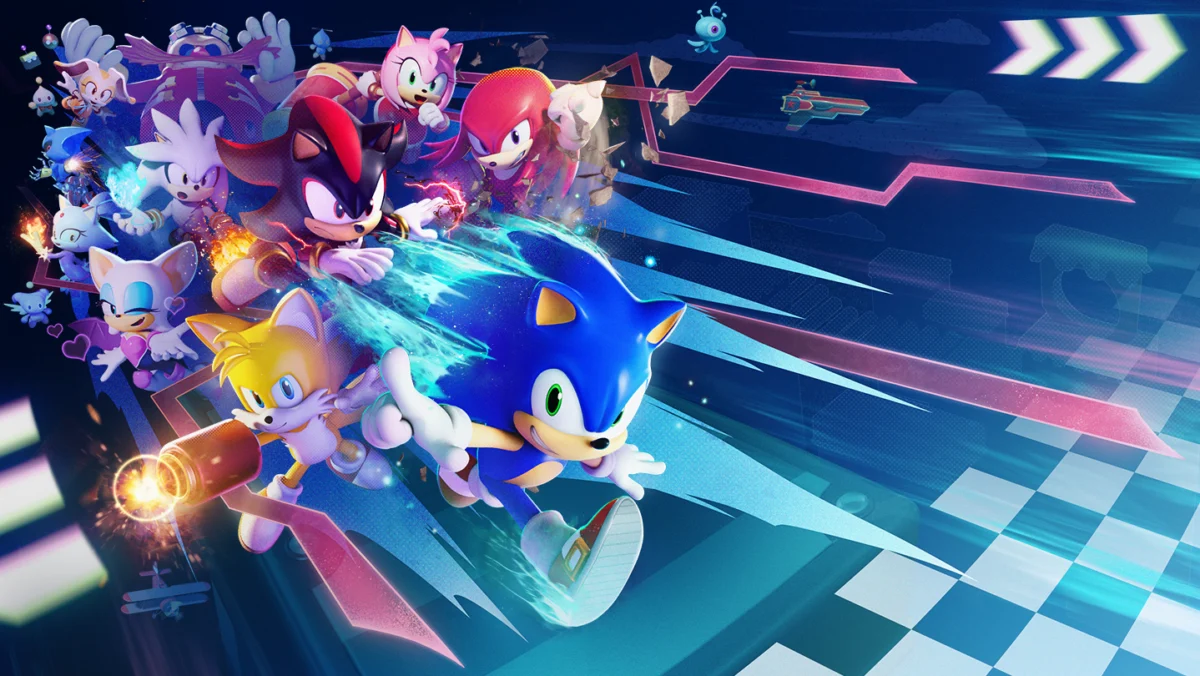
Tokyo, Japan – Sega Sammy Holdings, the renowned Japanese entertainment conglomerate, has unveiled its financial results for the fiscal year ending March 31, 2026, revealing a complex picture of growth in net sales overshadowed by substantial operating income declines and a significant overall net loss. Driven by considerable impairment losses related to its acquisitions, particularly mobile gaming giant Rovio Entertainment and online casino game developer Stakelogic, the company has announced a major strategic pivot. Sega is set to de-prioritize free-to-play (F2P) game development, reallocating over 100 developers to bolster its full game, premium title segment and consolidate its core intellectual properties (IPs). This shift signals a critical reevaluation of its growth trajectory and market strategy in an increasingly competitive global gaming landscape.
Main Facts: A Challenging Fiscal Year Prompts Strategic Overhaul
Sega Sammy’s latest financial report paints a stark picture of a company grappling with the complexities of its diversified entertainment portfolio. While the conglomerate reported a healthy 13.6% increase in net sales for the fiscal year, reaching ¥487.6 billion (approximately $3.09 billion USD), this positive top-line growth was severely undermined by a substantial dip in profitability within its crucial entertainment contents division. Operating income for this segment, which encompasses its video game operations, plummeted from ¥40.8 billion ($259 million) to ¥32.4 billion ($205.5 million).
The primary catalysts for this decline were significant impairment losses. Sega recorded a staggering $200 million impairment loss for Rovio Entertainment in the third quarter alone. This write-down, alongside another impairment loss from Stakelogic, the online slots and live casino game company acquired in 2024, pushed Sega Sammy to an overall net loss of ¥5.7 billion ($31.6 million) for the fiscal year. An impairment loss essentially means that the company has determined the value of an asset (in this case, its investment in Rovio and Stakelogic) on its balance sheet is greater than its current market or recoverable value, necessitating a reduction in its recorded value.
In response to these financial pressures and a candid acknowledgment that "business development efforts did not progress as planned, resulting in profitability falling short of forecasts," Sega has announced a decisive strategic reorientation. The company will significantly reduce its emphasis on free-to-play mobile game development. A key component of this new direction involves reassigning over 100 developers from the F2P segment to focus on the creation of full-price, premium titles, specifically those tied to Sega’s established and flagship intellectual properties. This move underscores a renewed commitment to its traditional strengths in console and PC gaming, aiming to leverage its iconic franchises for sustained, medium-to-long-term growth. The ambitious ‘Super Game’ project, once envisioned as an "online AAA global hit" with potential investments nearing $1 billion, has also been formally cancelled, further solidifying the company’s shift away from certain high-risk, high-investment online ventures.
Chronology: From Ambitious Acquisitions to a Strategic Reassessment
Sega Sammy’s current strategic pivot is the culmination of several key decisions and market developments over recent years, illustrating a journey from aggressive expansion into mobile and online gaming to a necessary reevaluation of its core strengths.
2021: The Dawn of the ‘Super Game’ Ambition
The story begins with significant ambition. In 2021, Sega first unveiled its ‘Super Game’ project, a bold initiative to create a "major global title" that would transcend traditional gaming experiences. The company indicated it was prepared to invest nearly $1 billion USD in internal development resources and potential studio acquisitions to realize this vision. This announcement signaled Sega’s intent to compete at the highest echelons of online, global gaming, potentially aiming for a live-service blockbuster akin to titles like Fortnite or Genshin Impact. It was a clear statement of intent to expand beyond its traditional premium game offerings into the potentially lucrative, but also highly competitive, live-service space.
2023: The Rovio Acquisition – A Mobile Power Play
A pivotal moment in Sega’s mobile strategy was the acquisition of Rovio Entertainment in April 2023 for approximately $775 million. Rovio, the Finnish developer behind the globally recognized Angry Birds franchise, was seen as a cornerstone for Sega’s mobile expansion. At the time, Sega leadership expressed a strong desire to grow its mobile expertise and live-ops capabilities across its entire portfolio, leveraging Rovio’s proven track record in the free-to-play mobile market. Ben Mattes, Angry Birds creative director, articulated this ambition, stating, "from day zero, the ambition has been to make Angry Birds every bit as big as Sonic is from a transmedia point of view, and grow not just the Rovio mobile free-to-play business, but all of Sega’s mobile and free-to-play expertise and live-ops expertise across its portfolio." This acquisition was meant to be a springboard for Sega’s F2P growth.
2024: Expanding into iGaming with Stakelogic
Further diversifying its portfolio, Sega acquired Stakelogic, an online slots and live casino game company. This move indicated an interest in the burgeoning iGaming sector, seeking to tap into another facet of digital entertainment revenue. While less directly tied to its core video game development, it reflected Sega Sammy’s broader strategy of expanding into various digital content markets.
Fiscal Year Ending March 31, 2026: Financial Realities Hit
The fiscal year that concluded on March 31, 2026, proved to be a turning point. The initial optimism surrounding these ventures began to wane as financial results failed to meet expectations.
- Q3 FY26: The first major red flag emerged with the announcement of a significant $200 million impairment loss for Rovio. This indicated that the expected synergies and profitability from the acquisition were not materializing as quickly or as robustly as anticipated.
- Full Year FY26 Report: The final report confirmed the underperformance. Despite an overall increase in net sales for Sega Sammy Holdings, the entertainment contents division’s operating income suffered. The impairment losses from both Rovio and Stakelogic contributed directly to the conglomerate’s overall net loss. Game releases like Sonic Racing: CrossWorlds and Football Manager 26 in the full game segment, and Persona 5: The Phantom X and Sonic Rumble Party in the F2P segment, saw mixed results, with some notable underperformances. The specifically mentioned underperformance of Sonic Rumble Party and its failure to "generate economic value through its collaboration with Rovio" was a critical observation, highlighting issues within the F2P strategy even with acquired expertise.
Present Day: The Strategic Pivot
In light of these challenging financial outcomes, Sega Sammy has opted for a decisive strategic redirection. The cancellation of the ‘Super Game’ project, after years of anticipation, coupled with the explicit reduction in priority for free-to-play games and the reassignment of over 100 F2P developers to premium game development, marks a significant shift. This move reflects a conscious decision to consolidate resources and focus on what Sega perceives as its most reliable path to future profitability: high-quality, full-price games built around its cherished IPs, alongside a continued but refocused mobile strategy with Rovio now prioritizing its "own rebuilding first."
Supporting Data: Deep Dive into the Numbers and Game Performance
Sega Sammy’s financial report for the fiscal year ended March 31, 2026, provides critical insights into the performance of its various divisions and the underlying reasons for its strategic shift.
Overall Group Performance:
- Net Sales: Increased by 13.6% to ¥487.6 billion (approx. $3.09 billion USD). This top-line growth indicates success in some areas or acquisitions contributing to overall revenue, but does not reflect profitability challenges.
- Overall Net Loss: ¥5.7 billion (approx. $31.6 million USD). This significant loss, particularly after reporting increased net sales, highlights the severe impact of the impairment charges. It means that after all expenses, including these write-downs, the company ended the year in the red.
Entertainment Contents Division (Video Games and other entertainment):
- Sales: Increased by a modest 1.5% to ¥326.6 billion (approx. $2.07 billion USD). This figure, while showing growth, was described as "soft" by Sega, indicating it fell short of internal expectations despite new releases.
- Operating Income: Declined sharply from ¥40.8 billion ($259 million) in the previous fiscal year to ¥32.4 billion ($205.5 million). This 20% drop in operating income for its core entertainment business is the most concerning metric, reflecting reduced profitability.
- Impairment Losses:
- Rovio Entertainment: A substantial $200 million impairment loss was recorded in the third quarter. This represents a significant write-down of the value of Sega’s investment in Rovio, indicating that the acquisition’s expected returns or asset value have diminished below the purchase price.
- Stakelogic: An unspecified impairment loss was also recorded for Stakelogic, further contributing to the overall net loss.
Game Sales Breakdown:
- Full Game Sales (Premium Titles):
- Revenue: Decreased by 12% to ¥67.2 billion (approx. $426 million USD).
- Performance: Despite new releases like Sonic Racing: CrossWorlds and Football Manager 26, the segment underperformed. Sega attributed this decline to "underperformance by certain titles, weaker results from existing mainstays, and delays in launching new Rovio titles." While specific sales figures for individual titles were not detailed, this suggests that even established franchises or anticipated new entries struggled to meet sales targets. This segment is now poised to receive significantly more internal resources.
- Free-to-Play (F2P) Titles:
- Revenue: Increased by 14% to ¥53.7 billion (approx. $341.1 million USD). This growth, while seemingly positive, needs context.
- Performance: New releases included Persona 5: The Phantom X (a highly anticipated mobile adaptation of a popular JRPG) and Sonic Rumble Party. However, Sega explicitly noted that Sonic Rumble Party "underperformed and did not generate economic value through its collaboration with Rovio." This statement is critical, as it directly questions the efficacy of the mobile strategy, even with the acquired expertise from Rovio. The challenge with F2P revenue growth is often the substantial user acquisition and marketing costs, which can eat into profitability, especially if titles fail to achieve expected engagement and monetization levels.
Strategic Resource Reallocation:
- Developer Reassignment: More than 100 developers from the free-to-play segment are being reassigned to full game development. This is a substantial internal restructuring, indicating a serious commitment to bolstering its premium game pipeline.
- ‘Super Game’ Cancellation: The cancellation of the ‘Super Game’ project, previously estimated to cost up to $1 billion, demonstrates a move away from high-risk, long-term online live-service ambitions that haven’t yet yielded tangible results. Sega confirmed there were no additional costs associated with this cancellation, suggesting the project was in a relatively early stage or its assets could be repurposed.
Rovio’s Role Post-Pivot:
Sega clarified that Rovio will continue to support its overall "games-as-a-service" strategy but will prioritize its "own rebuilding first." This indicates that Rovio, despite the impairment loss, is still seen as a valuable asset for mobile expertise, but its immediate focus will be on strengthening its existing operations and potentially developing more successful mobile titles under the Sega umbrella, rather than being a primary driver for new F2P initiatives across the broader Sega portfolio. The correction from "restructuring" to "rebuilding" (due to a mistranslation) further emphasizes an internal strengthening process for Rovio rather than a more drastic corporate overhaul.
Official Responses: Sega’s Rationale and Future Vision
Sega Sammy’s official statements accompanying the financial results provide crucial insight into the company’s self-assessment and its strategic direction moving forward. The language used reflects a mixture of accountability for past performance and a determined outlook for future growth.
The company explicitly stated that its "business development efforts did not progress as planned, resulting in profitability falling short of forecasts." This direct admission underscores the challenges faced, particularly in integrating new acquisitions and expanding into the free-to-play market. The "soft" performance of the entertainment contents division, despite a modest increase in sales, was attributed to several factors: "underperformance by certain titles, weaker results from existing mainstays, and delays in launching new Rovio titles." This multi-faceted explanation points to systemic issues rather than isolated incidents. The mention of Sonic Rumble Party specifically, noting its underperformance and failure to "generate economic value through its collaboration with Rovio," is a pointed acknowledgment of where their F2P strategy went awry, even with the acquired expertise.
The cancellation of the ‘Super Game’ project, once a beacon of Sega’s long-term online ambitions, was presented as a pragmatic decision. While no additional costs were associated with its cancellation, the move itself signifies a re-evaluation of where Sega’s resources are best deployed. It suggests a pivot away from an extremely high-investment, high-risk venture that had yet to show concrete progress, towards more immediate and tangible development goals.
Regarding the significant strategic shift, Sega announced its intent to "reduce the priority of free-to-play games" and "focus on full game development to support mainstay IPs." This is a clear directive, reinforced by the reassignment of "more than 100 developers from this segment." The company’s emphasis is now on "medium- and long-term growth" through its core strengths. This represents a strategic consolidation, channeling talent and resources into areas where Sega has a proven track record and established market presence.
The role of Rovio in this revised strategy was also clarified. While the impairment loss was substantial, Sega stated that Rovio "will continue to support its overall games-as-a-service strategy, but will prioritise its own rebuilding first." This indicates that Sega still values Rovio’s expertise in the mobile space, but its immediate mandate is internal strengthening and optimization rather than being the primary engine for aggressive F2P expansion across Sega’s broader portfolio. Ben Mattes, Creative Director for Angry Birds, echoed this prior to the impairment loss, emphasizing the ambition for Angry Birds to achieve transmedia success on par with Sonic, and to "grow not just the Rovio mobile free-to-play business, but all of Sega’s mobile and free-to-play expertise and live-ops expertise across its portfolio." While the ambition remains, the immediate focus for Rovio appears to be internal stabilization and demonstrating consistent profitability.
Looking ahead, Sega’s official forecast for the next financial year (FY27) outlines a plan to achieve growth by "launching new full game titles from its flagship IPs, while strengthening sales capabilities through improved sales structures and renewed promotional activities." This indicates a multi-pronged approach: relying on known successful franchises, optimizing market reach, and enhancing marketing efforts. Furthermore, the company plans to "expand its transmedia offerings by licensing its IPs and promoting film adaptations, including Sonic and Angry Birds." This strategy leverages the successful model of the Sonic the Hedgehog films and seeks to replicate it with other valuable IPs, diversifying revenue streams beyond direct game sales. For FY27, Sega forecasts a 4.6% increase in sales to ¥510 billion ($3.2 billion) but anticipates a further 5.6% decrease in operating income to ¥44.5 billion ($282.4 million), suggesting that the full benefits of the strategic shift may take more than one fiscal year to materialize in terms of profitability.
Implications: Reshaping Sega’s Future and Industry Trends
Sega Sammy’s significant strategic pivot carries profound implications for the company’s future, its various divisions, and potentially the broader video game industry, particularly concerning the viability of the free-to-play model.
For Sega Sammy Holdings:
- Consolidation of Core Strengths: The shift away from free-to-play priority and the cancellation of ‘Super Game’ project clearly signal a return to basics: leveraging its powerful lineup of existing intellectual properties (IPs) in the premium, full-game market. Franchises like Sonic, Persona, Yakuza/Like a Dragon, Total War, and Football Manager have consistently delivered quality and sales. By reallocating over 100 developers, Sega is making a substantial investment in these proven assets, aiming to deliver higher-quality, more impactful releases.
- Risk Mitigation: The impairment losses on Rovio and Stakelogic, along with the high-cost, uncertain nature of the ‘Super Game’ project, highlight the risks associated with aggressive expansion into new or highly competitive markets. This pivot represents a conscious effort to mitigate such risks by focusing on areas where the company has established expertise and a clearer path to profitability.
- Investor Confidence: While the immediate financial results are negative, a clear and decisive strategic plan can often reassure investors. The articulation of a focused approach, aiming for medium-to-long-term growth through flagship IPs, might be viewed positively as a responsible course correction. However, the forecast for a further decline in operating income for FY27 indicates that the road to full recovery and sustained profitability will be challenging and may take time.
- Rovio’s Evolving Role: The "rebuilding" mandate for Rovio suggests a period of internal optimization and potentially a more cautious approach to new mobile title launches. While Angry Birds remains a strong transmedia brand, its immediate contribution to Sega’s F2P ambitions might be scaled back, focusing instead on stabilizing its own operations and existing successful titles.
- Transmedia Expansion: The continued emphasis on transmedia, particularly with the success of the Sonic films and the potential for Angry Birds adaptations, offers a valuable revenue diversification strategy. This leverages brand recognition beyond gaming, creating a synergistic ecosystem around its IPs.
For the Gaming Industry:
- F2P Market Scrutiny: Sega’s pivot could be seen as another data point in a growing trend of major publishers reevaluating their commitment to the free-to-play market. The F2P landscape is incredibly crowded, expensive to enter (due to high user acquisition costs), and notoriously difficult to sustain long-term profitability in without a breakout hit. While F2P remains a lucrative sector for many, companies like Sega, with strong premium game legacies, might increasingly opt to scale back if the return on investment doesn’t meet expectations. Other companies have similarly faced challenges in the F2P space, leading to studio closures or strategic reorientations.
- Return to Premium Focus: This move could reinforce the value proposition of premium, full-price games. As development costs for AAA titles escalate, there’s an increasing demand from players for high-quality, complete experiences. Sega’s emphasis on flagship IPs and full game development suggests confidence in the enduring appeal and profitability of this traditional model, especially if coupled with strong marketing and effective sales strategies.
- Developer Impact: The reassignment of over 100 developers is a significant internal shift. While it avoids layoffs, it indicates a re-skilling or re-tasking effort for many, moving from the iterative, live-service development cycle of F2P to the project-based, often larger-scale development of premium titles. This could influence talent acquisition and training within the industry.
- Acquisition Strategy Review: The substantial impairment losses on Rovio and Stakelogic will likely prompt Sega, and potentially other companies, to scrutinize future acquisition targets more rigorously. The immediate financial benefits and integration challenges of large acquisitions in rapidly evolving markets will be a key consideration.
In conclusion, Sega Sammy’s latest financial report and subsequent strategic pivot mark a pivotal moment for the company. It’s a candid acknowledgment of past missteps in certain growth areas and a determined reorientation towards its core strengths. The journey ahead involves not just financial recovery but a careful balancing act of leveraging beloved IPs, optimizing development resources, and adapting to the dynamic global entertainment market, all while navigating the ongoing complexities of a post-acquisition landscape. The success of this pivot will be a critical test of Sega’s ability to evolve and thrive in the coming years.









No comments yet. Be the first to join the conversation!