

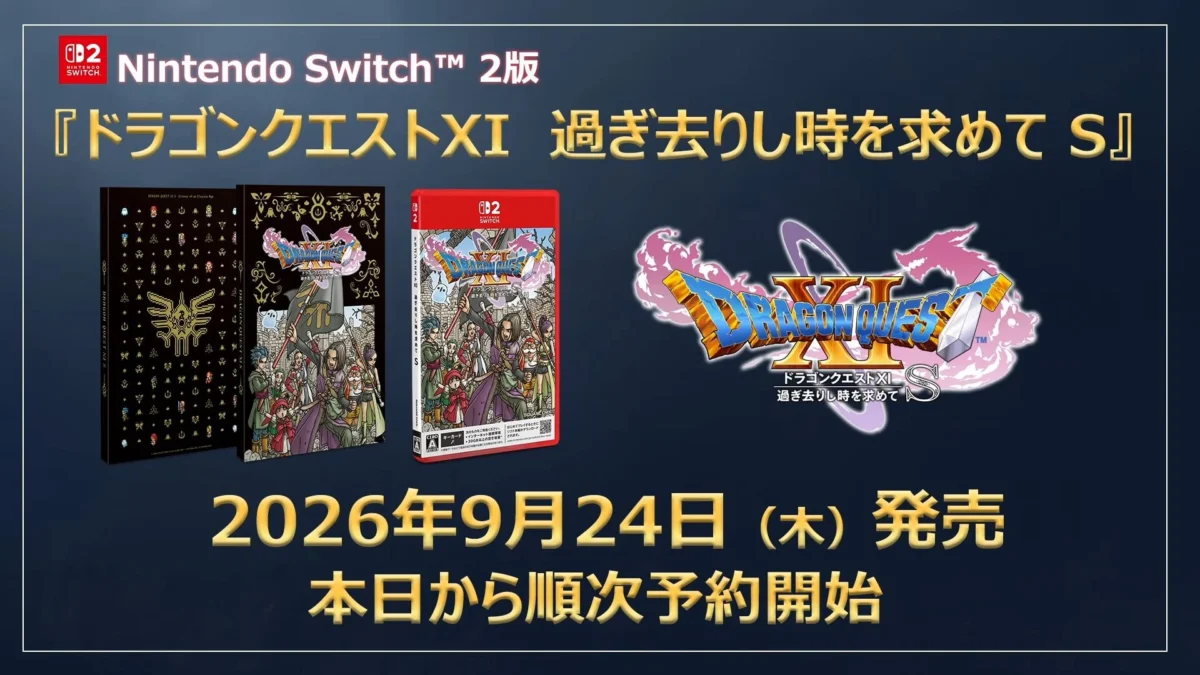
TOKYO, Japan – Square Enix has officially announced that Dragon Quest XI S: Echoes of an Elusive Age – Definitive Edition, the critically acclaimed role-playing game, is slated for release on a platform referred to as "Switch 2" on September 24. This revelation, made via an official trailer and accompanying statements, has sent ripples through the gaming community, not only for the highly anticipated re-release of a beloved title but also for its explicit mention of unconfirmed next-generation Nintendo hardware. Adding another layer of intrigue, the physical edition of the game will ship on a game-key card rather than a traditional cartridge.
The announcement positions a flagship RPG from one of Japan’s most celebrated developers as a potential early title for Nintendo’s rumored next console, igniting widespread discussion and speculation regarding the device’s impending reveal and launch.
Main Facts
Square Enix confirmed on [Date of Announcement – implicitly the date of the source article] that Dragon Quest XI S: Echoes of an Elusive Age – Definitive Edition will launch on a platform identified as "Switch 2" on September 24. This marks a significant re-entry for the beloved title into the Nintendo ecosystem, following its initial success on the original Switch.
A key detail accompanying this announcement is the format of the physical release: it will be distributed as a game-key card. This implies that while players will purchase a physical product, the actual game data will need to be downloaded digitally using the provided code, a departure from the traditional cartridge-based physical media common for Nintendo consoles.
The game itself is a comprehensive package, bundling all content from the original Dragon Quest XI with a host of enhancements. These include additional character-specific scenarios, the option to switch between the original soundtrack and a grand orchestral version, the flexibility to play in either 2D or 3D graphical modes, and the inclusion of a Japanese voice-acting option, among numerous other quality-of-life improvements. Players will once again step into the shoes of The Luminary, a chosen hero destined to fight dark forces and save the world of Erdrea alongside a unique band of companions.
Chronology of a Definitive Journey
Dragon Quest XI S: Echoes of an Elusive Age – Definitive Edition has a rich release history, making its upcoming "Switch 2" launch the latest chapter in its journey across various platforms.
The game first captivated audiences when it launched for the original Nintendo Switch on September 27, 2019. This version was already an enhanced iteration of the base Dragon Quest XI: Echoes of an Elusive Age, which had initially released on PlayStation 4 and Nintendo 3DS in Japan in 2017, and then globally on PS4 and PC in 2018. The "S" designation for the Switch version denoted the inclusion of expanded content and quality-of-life features that would later define the Definitive Edition.
Following its successful debut on the Switch, Square Enix brought this enhanced Definitive Edition to a broader audience. On December 4, 2020, the game was released for PlayStation 4, Xbox One, and PC via Steam. This multi-platform rollout ensured that a wider array of players could experience the ultimate version of the acclaimed RPG, regardless of their preferred gaming ecosystem.
The decision to re-release the Definitive Edition on a new Nintendo console four years after its initial Switch launch, and nearly seven years after the original game’s debut, underscores the title’s enduring popularity and Square Enix’s confidence in its appeal. This chronological progression highlights the game’s evolution from a single-platform release to a widely available, feature-rich experience, now poised to potentially usher in a new era of Nintendo gaming.
Supporting Data and Context
The announcement carries significant weight, not only for Dragon Quest enthusiasts but for the broader gaming industry, particularly concerning the implications of the "Switch 2" mention and the game-key card format.
The "Switch 2" Conundrum
The most striking aspect of Square Enix’s announcement is the explicit naming of "Switch 2" as the target platform. For months, the gaming world has been rife with rumors and leaks concerning Nintendo’s next-generation console, often referred to speculatively as "Switch 2" or "Switch Pro 2." However, Nintendo itself has maintained strict silence, neither confirming nor denying the existence or development of such hardware.
Square Enix’s proactive naming of the platform, especially through an official trailer in Japanese explicitly stating "Nintendo Switch™ 2", suggests one of several possibilities:
- A Premature Reveal: Square Enix may have inadvertently or intentionally jumped the gun, announcing the platform before Nintendo’s official unveiling. This would be a significant gaffe or a calculated move to build early hype from a key third-party partner.
- Developer Insight: As a major publisher, Square Enix would undoubtedly be privy to Nintendo’s hardware plans, potentially having development kits for the new console. Their use of the "Switch 2" moniker could be based on official communications or documentation they’ve received from Nintendo, even if those details haven’t been made public yet.
- Strategic Leak: In a highly competitive market, sometimes publishers and platform holders coordinate "leaks" or early announcements to gauge public reaction or build anticipation ahead of a formal reveal.
- Placeholder Name: While less likely given the explicit nature of the announcement, it’s conceivable that "Switch 2" is an internal development name that has been prematurely shared, though the use of the trademark symbol suggests a more finalized designation.
Regardless of the exact reason, this announcement provides the most concrete external "confirmation" yet from a third-party developer about the existence of a successor to the highly successful Nintendo Switch. It also implies that the new hardware is close enough to launch for major titles to be announced for it, potentially indicating a release window within the coming year. For Dragon Quest XI S, a "Switch 2" release could mean enhanced performance, higher resolutions, faster loading times, and potentially even new graphical flourishes that were not feasible on the original Switch’s hardware.
The Game-Key Card: A Shift in Physical Media
The decision to release the physical edition of Dragon Quest XI S on a game-key card rather than a traditional cartridge raises several points of discussion regarding the evolving nature of physical media in gaming.
Traditionally, physical console games come on cartridges or discs that contain the full game data, allowing for offline installation and play. A game-key card, however, provides only a download code, essentially transforming a physical purchase into a digital license.
Implications for Consumers:
- Internet Dependency: Players will require a stable internet connection to download the game, even after purchasing a "physical" copy. This could be a barrier for those with limited internet access or data caps.
- Digital Ownership: The concept of "owning" a physical game becomes blurred. The player technically owns a key to a digital license, subject to the terms and conditions of the platform’s digital storefront.
- Resale Value: Game-key cards typically have no resale value once the code is redeemed, eliminating a common practice for gamers to recoup costs or trade games.
- Storage: While the card itself is small, the downloaded game will still occupy significant storage space on the console, necessitating external storage for many players.
- Environmental Impact: From a manufacturing perspective, a smaller card might reduce plastic waste compared to larger cartridges, though the overall environmental footprint includes servers and data transmission.
Implications for Publishers:
- Cost Reduction: Manufacturing and distributing game-key cards can be significantly cheaper than producing complex game cartridges, especially for a re-release where the game assets are already finalized.
- Inventory Management: Digital codes are easier to manage and distribute than physical cartridges, reducing logistical complexities and potential for unsold inventory.
- DRM (Digital Rights Management): This model inherently strengthens DRM, as the game is tied to a user account rather than a physical medium, potentially reducing piracy and unauthorized sharing.
- Future-Proofing: As digital distribution continues to dominate, this format could be seen as a bridge between traditional physical retail and an increasingly digital-only future for console gaming.
This move could signal a broader trend for the "Switch 2" era, where physical retail copies increasingly serve as mere gateways to digital downloads, particularly for re-releases or games with large file sizes.
The Enduring Appeal of Dragon Quest XI S
Beyond the hardware and distribution specifics, the game itself remains a significant draw. Dragon Quest XI S: Echoes of an Elusive Age – Definitive Edition is widely considered one of the finest modern JRPGs.
- Critical Acclaim: The game garnered widespread critical praise upon its various releases, lauded for its charming narrative, vibrant world, memorable characters, traditional turn-based combat, and Akira Toriyama’s iconic art style.
- Feature-Rich Content: The "Definitive Edition" lives up to its name by incorporating a wealth of content. The additional character-specific scenarios provide deeper insight into the party members, enriching the narrative and offering new perspectives. The choice between original and orchestral soundtracks caters to different preferences, with the orchestral score adding a layer of grandeur. The ability to switch between 2D (retro pixel-art style) and 3D graphics modes is a unique feature that appeals to both nostalgic fans and those who prefer modern visuals, effectively offering two distinct ways to experience the entire adventure. Japanese voice acting, which was a significant addition for Western audiences, further enhances immersion.
- Accessibility: The game’s traditional yet refined mechanics make it accessible to newcomers to the JRPG genre, while its depth and charm satisfy long-time fans of Dragon Quest. The engaging story of The Luminary, a hero branded as the "Darkspawn" and hunted by a kingdom, is a classic tale of destiny, friendship, and overcoming adversity.
The re-release on "Switch 2" ensures that a new generation of hardware users, and perhaps a new generation of gamers, will have the opportunity to experience this highly celebrated adventure in its most complete form.
Official Responses
The official responses surrounding this announcement are as intriguing as the announcement itself, largely due to what has been said and, crucially, what has not.
Square Enix’s Official Stance
Square Enix’s announcement is definitive regarding the game’s release and platform, as evidenced by their trailer and accompanying press materials. Their provided overview of the game highlights the comprehensive nature of the Definitive Edition:
"The ultimate edition of the latest major entry in the legendary RPG series! The Definitive Edition includes all the content from the original release of the acclaimed Dragon Quest XI, and adds extra character-specific scenarios, the choice of playing with the original soundtrack or a grand orchestral version of the music, the ability to switch between 2D and 3D graphic modes, a Japanese voice-acting option, and much more! Embark upon an an epic adventure as The Luminary: the chosen one in a world that vows to hunt him down. The Luminary and his unique band of loyal companions work together to survive an onslaught of ne’er-do-wells and overthrow the dark forces that plot to plunge the world of Erdrea into chaos. Explore the massive world of Dragon Quest and awaken your power in this can’t-miss adventure!"
This statement reinforces the game’s value proposition, emphasizing the breadth of content and the immersive experience awaiting players. However, Square Enix has not issued any further statements or clarifications regarding the "Switch 2" nomenclature beyond the initial announcement, leaving the broader implications to be interpreted by the public and media.
Nintendo’s Silence
Perhaps the most notable "official response" is the lack thereof from Nintendo. As of this report, Nintendo has not officially commented on Square Enix’s announcement of Dragon Quest XI S for "Switch 2." This silence is consistent with Nintendo’s historical approach to unannounced hardware; the company typically maintains extreme secrecy until it is ready for a full, official reveal on its own terms.
This silence, however, only amplifies the speculation. If "Switch 2" were merely a placeholder or an error, one might expect a swift clarification from either Nintendo or Square Enix. The absence of such a correction suggests that Square Enix’s announcement, while potentially premature from Nintendo’s perspective, is based on concrete information. Nintendo’s strategy often involves controlling the narrative around its hardware launches, making a third-party "leak" of this nature particularly noteworthy. The gaming community will undoubtedly be scrutinizing Nintendo’s future financial reports, direct presentations, and social media channels for any hint of an official acknowledgment of their next-generation console.
Implications
The announcement of Dragon Quest XI S: Echoes of an Elusive Age – Definitive Edition for "Switch 2" carries significant implications across several facets of the gaming industry.
For Square Enix and the Dragon Quest Franchise
This move demonstrates Square Enix’s continued commitment to the Nintendo platform, ensuring that one of its flagship RPG series has a presence on next-generation hardware. By positioning Dragon Quest XI S as an early title for "Switch 2," Square Enix aims to:
- Maximize Reach: Capitalize on the excitement surrounding new hardware to introduce Dragon Quest XI S to a fresh audience, potentially including those who missed it on previous platforms.
- Showcase Capabilities: If "Switch 2" offers improved performance, the game could serve as a visual and technical showcase for the new console’s capabilities, particularly in comparison to its original Switch counterpart.
- Strategic Partnership: Reinforce its strong relationship with Nintendo, ensuring that Dragon Quest remains a core part of the Nintendo ecosystem, which is particularly vital given the series’ immense popularity in Japan.
- Digital Strategy: The game-key card strategy might also be a test for future Square Enix releases, indicating a potential shift towards digital-first distribution even for physical copies.
For the Dragon Quest franchise, this re-release keeps the series relevant and visible ahead of potential new entries, maintaining momentum and engaging fans.
For Nintendo and the "Switch 2" Launch
For Nintendo, Square Enix’s announcement is a double-edged sword:
- Unintended Reveal: It represents a potential loss of control over the initial narrative surrounding their next console. Nintendo prides itself on carefully orchestrated reveals, and a third-party announcement, however well-intentioned, can disrupt that.
- Third-Party Support Confirmation: On the positive side, it serves as an early, strong indication of robust third-party support for the "Switch 2." Having a highly regarded title like Dragon Quest XI S ready for launch or an early release window signals confidence from major publishers, which is crucial for any new console’s success.
- Market Anticipation: The announcement will undoubtedly fuel market anticipation and consumer excitement for "Switch 2," potentially driving pre-orders and early adoption once the console is officially revealed.
- Performance Expectations: The game’s presence sets an early benchmark for performance expectations on "Switch 2," as players will naturally compare its visual fidelity and frame rate to previous versions.
The timing of Nintendo’s official "Switch 2" announcement will now be even more closely watched, as the company will likely want to reclaim the narrative and provide comprehensive details about its next-generation plans.
For Gamers and the Industry
The implications for gamers are multifaceted:
- Accessibility and Choice: For those who own or plan to purchase "Switch 2," Dragon Quest XI S offers a chance to experience a modern classic with potential enhancements. The choice between physical (game-key card) and digital purchase, while different from traditional physical media, still offers retail presence.
- Digital vs. Physical Debate: The game-key card format reignites the ongoing debate about the value of physical media in a digital age. It highlights the industry’s move towards digital distribution and raises questions about consumer ownership, game preservation, and the secondary market.
- Expectations for Next-Gen: The announcement sets a precedent for what to expect from "Switch 2" in terms of game support and potential graphical/performance improvements. It hints at a console capable of running demanding titles, albeit likely with optimizations tailored to Nintendo’s hardware philosophy.
- Re-release Trend: This re-release reinforces the industry trend of "Definitive Editions" and ports to new hardware generations. Publishers leverage existing popular titles to bridge gaps between consoles, attract new players, and generate revenue from proven successes.
In conclusion, Square Enix’s announcement of Dragon Quest XI S: Echoes of an Elusive Age – Definitive Edition for "Switch 2" on September 24 is more than just a game release; it’s a pivotal moment that has inadvertently pulled back the curtain on Nintendo’s next-generation plans, sparking widespread excitement and critical questions about the future of console gaming and physical media. The industry now awaits Nintendo’s official response with bated breath, as the pieces of the "Switch 2" puzzle slowly begin to fall into place.











No comments yet. Be the first to join the conversation!