Ammar Sabilarrohman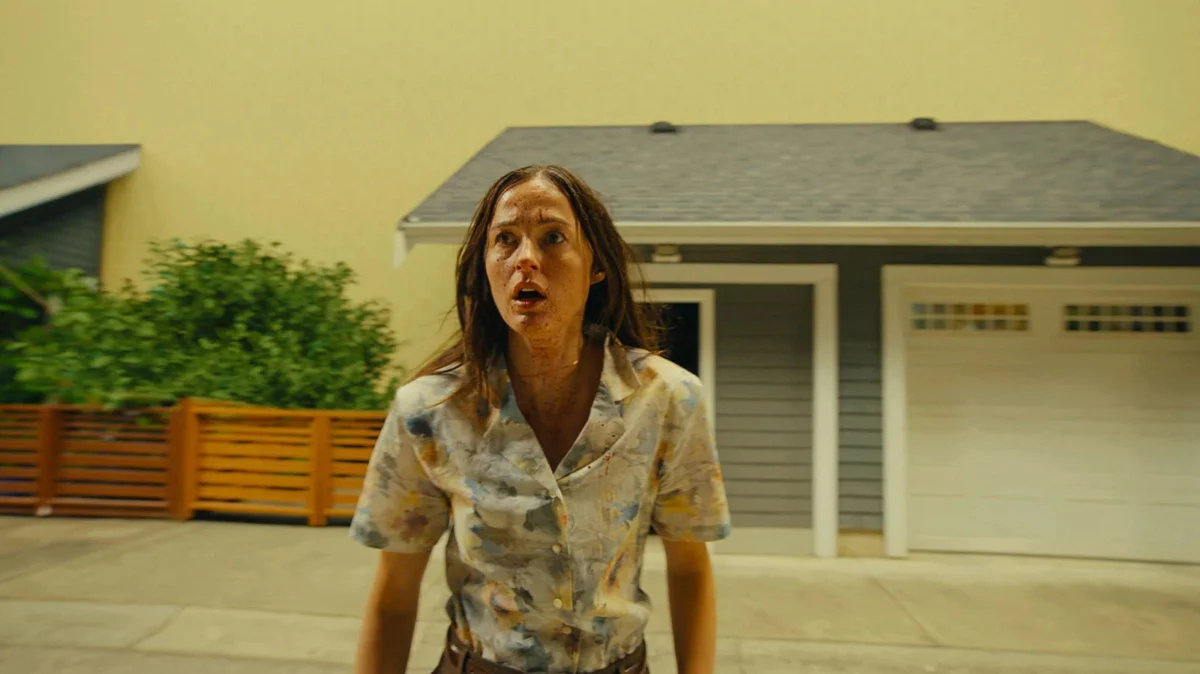
The emergence of Kane Parsons’ Backrooms—a feature-length expansion of his viral, lore-heavy web series—marks a watershed moment for "liminal horror." As the genre migrates from the flickering screens of internet-based creepypasta forums to the polished, unsettling aesthetic of an A24 production, audiences are left grappling with a film that defies traditional narrative closure. Directed by Parsons and penned by Will Soodik, the film functions as both a bridge between the series’ found-footage roots and a character-driven psychological descent. For the uninitiated, navigating the yellow-tinted, endless labyrinth of the Backrooms is a daunting task, yet the film invites viewers to move past the need for traditional answers and embrace the suffocating, uncanny dread that defines the subgenre.
The Core Narrative: A Descent into Liminality
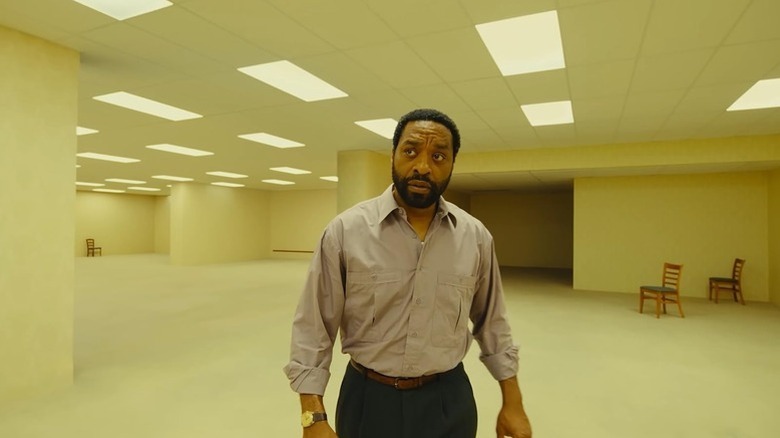
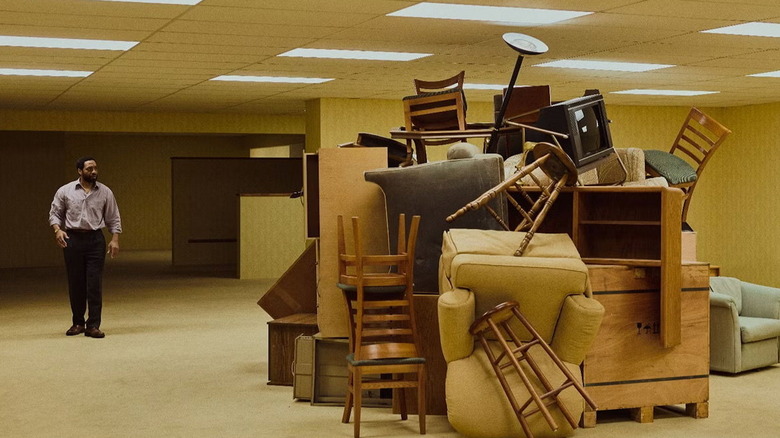
At its center, Backrooms is a study of fractured identity. The story follows Clark (Chiwetel Ejiofor), an architect burdened by professional failure and the debris of a toxic, abusive marriage. His search for meaning—or perhaps an escape from his own bitterness—leads him to discover a portal in the basement of his discount furniture store, a gateway to a dimensional plane that defies Euclidean geometry.
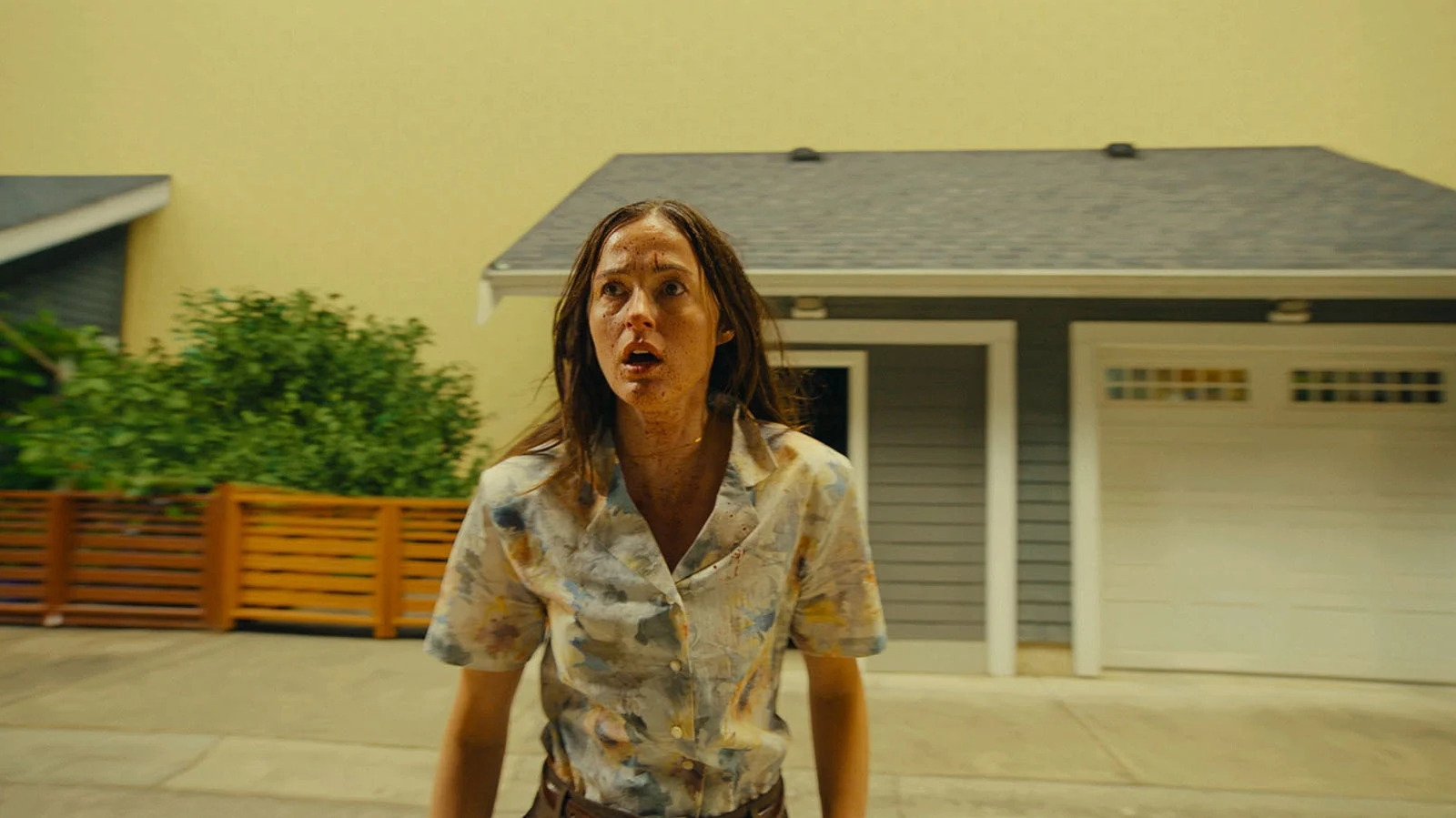
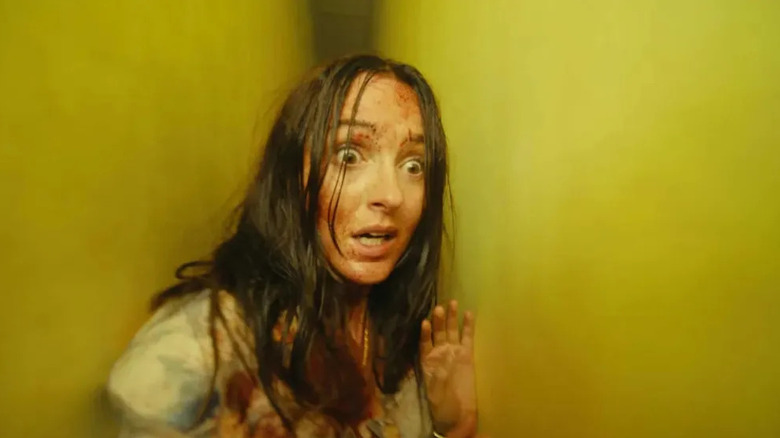
Dr. Mary Kline (Renate Reinsve), a therapist known for her experimental methods, becomes the audience’s proxy. When Clark disappears, Mary’s investigation is not merely a rescue mission but a confrontation with her own trauma. Flashbacks reveal a childhood defined by confinement; her mother, suffering from mental illness, kept them locked in an apartment for years. This history makes Mary uniquely susceptible to the Backrooms’ allure, as she finds herself navigating a space that literalizes the concept of "trapped."
The Chronology of Chaos
The narrative structure of Backrooms is intentionally disorienting, echoing the infinite, non-linear nature of the space itself.
- 1989: The Async corporation, initially a mundane manufacturer of medical imaging equipment, accidentally breaches the barrier to the Backrooms.
- 1990: The primary events of the film take place. Clark, accompanied by employees Bobby and Kat, ventures into the space.
- The Climax: The "Captain Clark" entity—a grotesque, monstrous manifestation of Clark’s own insecurities, wearing his humiliating store mascot costume—terminates his employees. The creature ultimately claims Clark, leaving Mary to face the fallout.
Who Dies and the Architecture of "The Copy"
One of the most chilling elements of the film is the concept of "native denizens." The Backrooms do not just house monsters; they manufacture facsimiles of the people who enter them.
Bobby and Kat are the first to succumb, serving as early casualties that establish the lethal nature of the environment. However, the death of Clark is particularly poignant. He attempts to reason with the "Captain Clark" creature—the physical manifestation of his darkness—only to be fatally bitten. This interaction confirms a grim rule of the franchise: the realm feeds on the unresolved emotional baggage of its inhabitants.
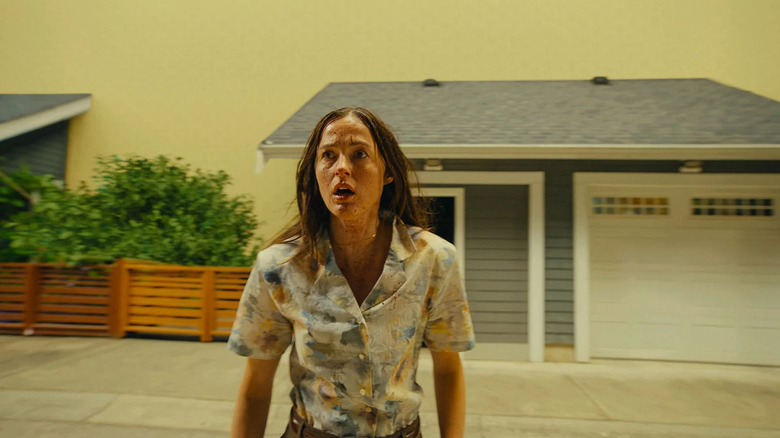
Mary’s survival remains a point of intense debate. While she is seemingly rescued by Async representatives, led by the enigmatic Phil (Mark Duplass), the film ends on a note of deep uncertainty. The final, haunting montage reveals a mirror version of Mary’s childhood home—the site of her original imprisonment—populated by a mutated, perhaps sentient, copy of herself. This leaves the viewer wondering: did the real Mary escape, or is she merely another iteration trapped within the infinite, shifting walls of the Backrooms?
Supporting Data: The Async Corporation’s Role
The Async Corporation functions as the primary antagonist of the bureaucratic world. Unlike the shadowy, all-knowing corporations of typical science fiction, Async is portrayed as remarkably ill-equipped to handle their discovery. Phil’s dialogue implies that the company’s transition from MRI manufacturing to interdimensional exploration was accidental and largely uncoordinated.
The presence of the corporation adds a layer of "existential corporate horror." Async is not necessarily trying to harness the Backrooms for global domination; they are merely observers, documenting the slow destruction of human subjects. The fact that the film opens with the death of an unnamed employee during a routine calibration sets a tone of expendability. Async is not the solution to the Backrooms; they are simply another layer of the trap.
Official Creative Intent and the "A24" Aesthetic
Kane Parsons has been vocal about his desire to maintain the "experiential" nature of his original YouTube series. In transitioning to a feature film, the challenge was to introduce narrative stakes without stripping away the ambiguity that made the series successful.
The film utilizes an early 2000s indie drama aesthetic to ground the initial scenes, making the eventual transition into the surreal, yellow-wallpapered purgatory all the more jarring. This shift in visual language is intentional; it forces the audience to feel the same disorientation as the characters. A24, known for its commitment to auteur-driven horror, has seemingly provided the space for this vision to breathe. Much like the handling of the Talk to Me franchise, there is a conscious effort here to avoid over-explaining the lore, which would inevitably dilute the terror.
Implications for the Future: Sequels and Anthologies
The box office success of Backrooms has all but guaranteed a sequel, yet the direction of such a project remains a point of speculation. There are two primary paths for the franchise:
1. The Direct Continuation
If Mary Kline returns, the sequel would likely delve deeper into the Async facility. With the discovery that the Backrooms can manifest reflections of reality, the corporation may attempt to "farm" these entities. Mary would effectively function as the "Final Girl," returning to the source of her trauma to dismantle the operation from the inside.
2. The Anthology Approach
Given the infinite nature of the Backrooms, an anthology format might be the most "authentic" path. The series could follow different people, at different times, finding their way into the void. This would allow Parsons to explore different manifestations of personal trauma—as seen with Clark and Mary—without being tethered to a single protagonist.
Conclusion: The Point is the Lack of an End
Ultimately, the most important takeaway from Backrooms is that the lack of resolution is the intended destination. The Backrooms are a metaphor for the human condition: a series of loops, recurring traumas, and spaces that feel familiar yet profoundly wrong. To ask for a "clear ending" is to miss the point of the horror.
Whether or not the characters escape, they are irrevocably changed. The film suggests that even if one walks out of the portal, they never truly leave the Backrooms behind. As we look toward future installments, we should expect more questions than answers. In the world of Kane Parsons, the door is always open, but the way back is never guaranteed. The Backrooms do not end; they only wait for the next person to lose their way.

 Nana Wu
 Jia Lissa