

The landscape of the puzzle-adventure genre has long been dominated by monolithic titles that prioritize atmosphere and spatial logic. For years, The Witness has stood as a polarizing yet undeniably influential pillar, celebrated for its ability to hide complex, brain-teasing challenges within the innocuous geometry of its island setting. However, a new contender has emerged from the shadows of the recent Thinky Direct showcase, promising to take that "puzzles in the wild" philosophy and infuse it with a sophisticated layer of temporal manipulation.
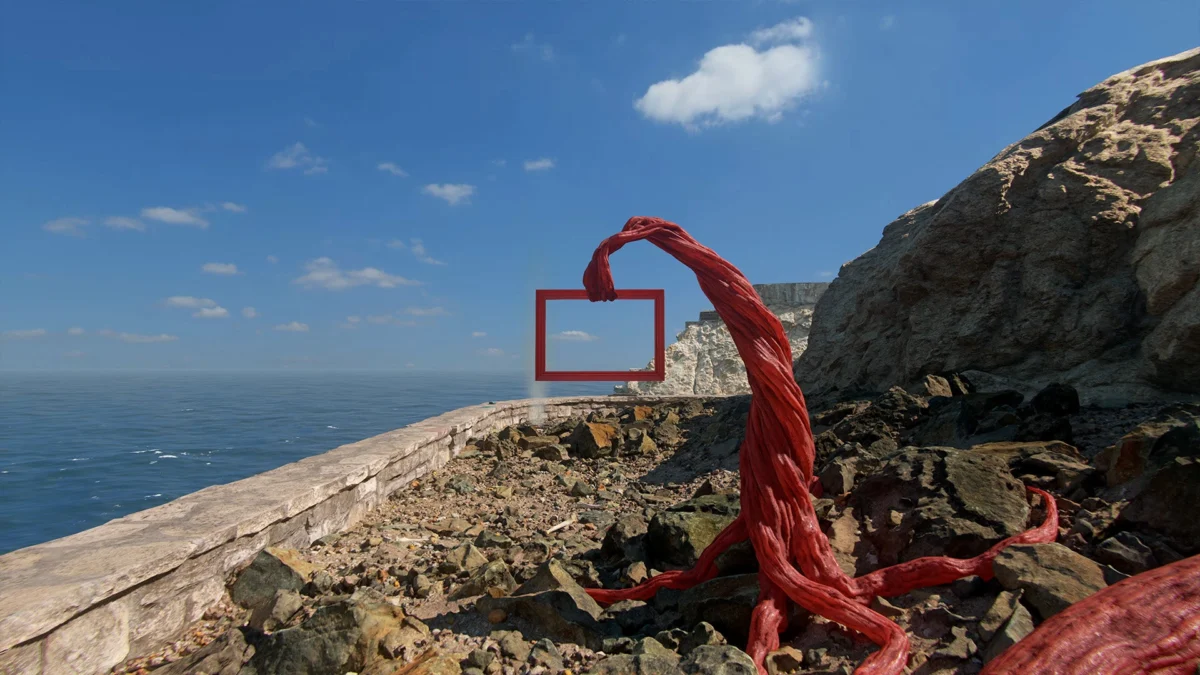
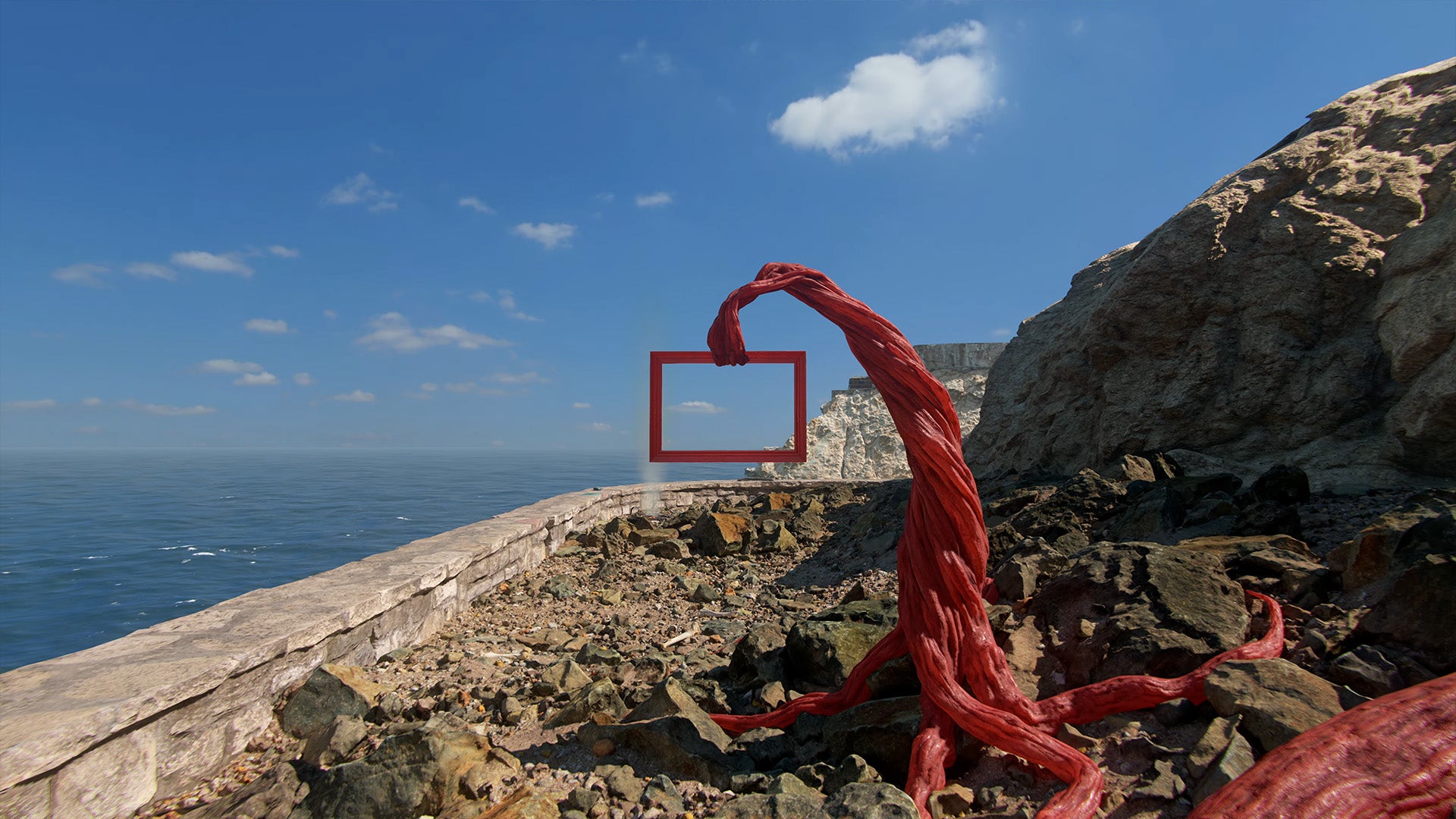
Titled Red Frame, this upcoming project centers on a mysterious, subterranean mansion. It is a game defined by its namesake: anywhere the player encounters a distinctive crimson border, they are guaranteed to find a challenge. As the developers prepare to bring this project to a wider audience, early previews suggest that Red Frame is not merely an homage to its predecessors, but a mechanical evolution that demands a deeper level of "thinkering" than we have seen in years.
Main Facts: A World Defined by Perspective
At its core, Red Frame is a first-person puzzle game that relies on the interaction between the player’s field of view and the environment. The premise is deceptively simple: throughout a sprawling, buried mansion, the player encounters various frames—some literal picture frames, others architectural thresholds—that act as portals to localized physics and logic puzzles.
The core gameplay loop involves navigating the mansion’s architecture, identifying these frames, and then manipulating the environment within them. The game distinguishes itself through its temporal mechanics. Players are not merely solving static riddles; they are tasked with manipulating time to replay specific scenarios, observing cause and effect, and uncovering hidden pathways that are invisible to the naked eye.
With over 100 bespoke puzzles promised at launch, the game intends to challenge the player’s ability to think laterally. Whether it is adjusting the angle of a sunbeam to nurture a path of flowers or manipulating physical objects to solve a spatial logic gate, the game forces players to consider the mansion as a living, breathing mechanism rather than a static map.
Chronology: The Road to the Thinky Direct
The development of Red Frame has been a journey of careful, measured reveal. While the project has been simmering in the background for some time, its official unveiling occurred during the 2026 Thinky Direct—a digital event curated to highlight the most innovative titles in the puzzle genre.
- Initial Concept Phase: The developers began prototyping the concept of "frame-based interaction" years ago, aiming to bridge the gap between abstract puzzle design and environmental storytelling.
- The "Thinky Direct" Reveal: During the 2026 presentation, the game received its first major public showing. The trailer demonstrated the core mechanics: moving a gate by interacting with it through a frame, and manipulating the flow of time to watch a marble navigate a track.
- Current Status: Following the positive reception at Thinky Direct, the developers have focused on refining the "historical legacy" narrative that weaves through the mansion’s rooms. While a release date remains unconfirmed, the game has been live on Steam for wishlisting, signaling that it has entered the final stages of polish and content integration.
Supporting Data: Complexity and Mechanical Depth
The strength of Red Frame lies in its mechanical versatility. Based on the documentation provided during its showcase, the game’s puzzles can be categorized into three primary pillars of complexity:
1. Spatial Manipulation
The simplest puzzles involve perspective. By looking through a red frame, the player can interact with elements that are physically separated by space. This mimics the "forced perspective" mechanics seen in games like Superliminal, but grounds it in the architectural constraints of the mansion.
2. Temporal Replay
This is the game’s "X-factor." Players can record and replay sequences within a frame. If a physical action—such as placing a gear—fails the first time, the player can "rewind" the local area, adjust the timing or placement, and observe the ripple effects. This system allows for complex multi-stage puzzles where the player must coordinate events across different moments in time.
3. Narrative Integration
The mansion is not just a setting; it is a repository of history. The game’s 100+ puzzles are reportedly linked to the "historical legacy" of the family that once occupied the estate. By solving these puzzles, players piece together fragments of a story, turning the act of solving a riddle into an act of archaeological discovery.
Official Responses and Developer Intent
While the developers have remained somewhat enigmatic regarding the game’s deeper narrative beats, the presentation at Thinky Direct provided significant insight into their design philosophy. The goal, according to the project’s lead, is to create a "tactile" puzzle experience.
"We wanted the player to feel the weight of their decisions," a representative noted during the showcase. "By using the Red Frame as a focal point, we force the player to slow down. You cannot solve these puzzles by rushing; you have to observe the frame, understand the temporal loop, and execute your strategy with precision."
The inclusion of former reviews editor Rachel Watts as a co-host of the Thinky Direct provided a layer of industry credibility to the reveal. Her involvement underscored that Red Frame is being positioned as a "prestige" puzzle title, aimed at a demographic that values intellectual stimulation over twitch-reflex gameplay.
Implications: The Future of the Puzzle Genre
Red Frame represents a pivotal moment for the puzzle genre, which has often found itself caught between the "open-world" design of The Witness and the "portal-based" mechanics of the Portal series.
The Shift Toward "Slow Gaming"
The success of games like The Witness and Baba Is You has proven that there is a massive, dedicated audience for "slow gaming"—titles that demand high levels of cognitive engagement. Red Frame leans into this trend by removing the pressure of combat or time-limited threats, replacing them with the inherent pressure of "I know I can solve this if I just look at it differently."
The "Red Frame" as a Design Language
By using a consistent visual motif—the red frame—to signify a puzzle, the developers have created an intuitive design language. Players do not need to guess if an object is interactive; the color and the geometry provide immediate feedback. This allows the game to escalate in difficulty without becoming frustrating, as the player always knows where the "work" is located.
Potential Challenges
The primary challenge for Red Frame will be maintaining player interest over 100+ puzzles. Many puzzle games suffer from "mechanical fatigue," where the player learns the solution to a puzzle type and finds subsequent iterations repetitive. To succeed, Red Frame must ensure that its temporal manipulation mechanics continue to surprise the player in the final hours of the game. If the "historical legacy" story can provide enough of a payoff, it may elevate the game from a simple collection of brain teasers to a cohesive, memorable experience.
Conclusion
Red Frame is shaping up to be one of the most intellectually stimulating games of the coming year. By blending the aesthetic sensibilities of a grand, mysterious estate with the rigorous demands of temporal and spatial puzzle design, it offers a refreshing take on the genre.
Whether it will truly unseat The Witness as the gold standard for "thinky" games remains to be seen. However, the early signs are promising. The game’s commitment to its core conceit, combined with a clear focus on player observation and logical deduction, positions Red Frame as a must-watch title for fans of the genre. As we await an official release date, the Steam wishlist button remains the best way for enthusiasts to stay informed about the secrets hidden within those crimson borders.
For now, the mansion remains silent, its doors locked, and its frames empty—waiting for a player to arrive and set time back in motion.












No comments yet. Be the first to join the conversation!