Dwi Wanna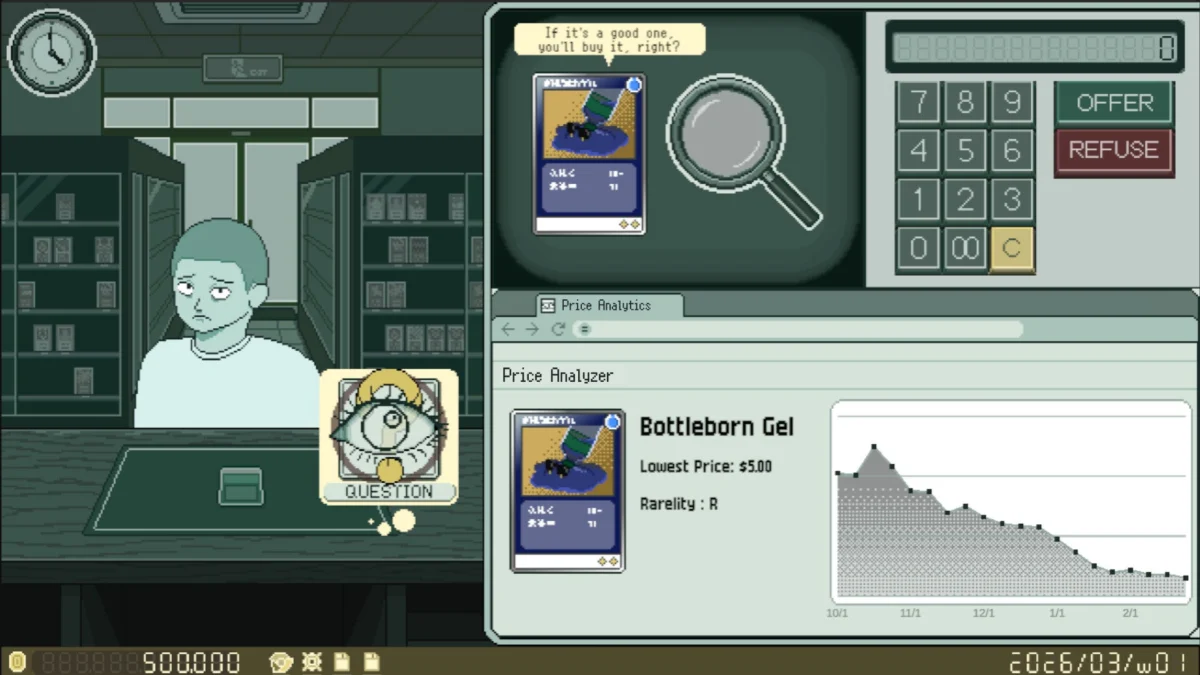
In the volatile ecosystem of collectible card games (CCGs), the tension between genuine enthusiasts and opportunistic resellers has reached a boiling point. It is a market defined by artificial scarcity, rapid price fluctuations, and a level of social friction that has now inspired a unique piece of interactive media. You’re A Scalper, Aren’t You?, a management simulation developed by MiyabiGames, has emerged not merely as a game, but as a cathartic examination of the dark underbelly of the trading card industry.
By positioning the player as a shopkeeper tasked with weeding out parasitic resellers, the game serves as a digital interrogation of a subculture that has become increasingly synonymous with greed and systemic exploitation.
The Anatomy of the Simulation: A "Papers, Please" for the Modern Era
At its core, You’re A Scalper, Aren’t You? is a game of deduction and moral compromise. Players manage a local card shop, but the primary gameplay loop is far removed from the cozy, retail-focused tropes of similar management sims. Instead, the game mirrors the high-stress, observational gameplay of Papers, Please, where every interaction at the counter is a potential trap.
As the proprietor, the player must stay informed about market trends, often scouring the fictional "WowTube" for clues regarding which cards are about to surge in value. When a customer approaches the counter to sell or trade, the player must analyze their behavior and the cards they are carrying. Are they a genuine collector looking to part with a duplicate, or are they a scalper attempting to dump stock that they purchased in bulk, looking to capitalize on a manufactured hype cycle?
The "forensic questioning" mechanic allows players to challenge these individuals. Successfully identifying a scalper provides a satisfying sense of justice, allowing the player to ban the offender from their shop. However, the game introduces a cynical layer of reality: the store must remain profitable. Sometimes, the only way to keep the lights on is to trade with the very people you despise.
Chronology: From Hobbyist Passion to Predatory Market
To understand why a game like this resonates so deeply, one must look at the trajectory of the card market over the last decade. Historically, CCGs were a niche hobby—a social pastime centered on local game stores (LGS) and community interaction.
- The Early 2010s: The market was stable, driven by players who engaged with the game’s mechanics rather than its secondary market value.
- The 2020 Surge: The global pandemic, combined with a massive influx of influencer interest and "pack-opening" content on social media, transformed cardboard into a high-yield asset class.
- 2022-2024: The era of "Prismatic Evolution" and other high-demand releases saw scalpers utilizing automated bots to clear retail shelves in seconds. This triggered a wave of public backlash, leading to scenes of mass frustration at big-box retailers.
- 2025-Present: The current climate is defined by defensive measures. From chainsaws being used in retail break-ins to the implementation of strict purchase limits, the industry has become a hostile environment, serving as the primary inspiration for MiyabiGames’ project.
The Economics of Scarcity and the "WowTube" Effect
The game’s focus on market trends is a direct reflection of real-world "influencer economics." In the contemporary CCG market, the value of a card is often untethered from its utility in the actual game. Instead, it is governed by the "WowTube" effect: a popular content creator showcases a rare card, a frenzy ensues, and scalpers move in to buy up existing supply, effectively creating a monopoly.
Players of You’re A Scalper, Aren’t You? must navigate this landscape by haggling with wholesalers. This is where the game’s mechanical depth truly shines. If the player builds a reputation as a "scalper-friendly" shop, they may find it easier to secure inventory, but they lose the respect of the local community. Conversely, maintaining an ethical shop attracts loyal customers but makes sourcing rare cards—and thus maintaining healthy margins—significantly more difficult.
Official Responses and Industry Backlash
The real-world implications of scalping have forced corporations to move beyond passive observation. The Pokémon Company, for instance, has reportedly considered the implementation of government-issued ID checks for large-scale TCG purchases to prevent the same individuals from clearing out inventory. While controversial due to privacy concerns, such measures highlight the severity of the crisis.
These retail headaches are not isolated. The infamous Florida incident, where an individual used a chainsaw to penetrate a store’s defenses to steal $12,000 worth of cards, illustrates that this is no longer a matter of simple "flipping." It has become a criminal enterprise.
Industry analysts suggest that the rise of such simulations is a symptom of a larger cultural fatigue. Players are not just looking for a game; they are looking for a venue to express their frustration with a system that feels increasingly rigged against the consumer. The developers of Scalper’s Spoils, a companion game that approaches the topic from a different, perhaps more celebratory perspective, suggest that scalping is a global phenomenon that transcends the gaming industry, touching everything from concert tickets to electronics.
The Ethical Dilemma: Can You Afford to be Good?
The most compelling aspect of You’re A Scalper, Aren’t You? is its refusal to let the player play the hero without consequence. In many management games, moral choices are binary and cost-free. Here, morality is a business expense.
If you ban every scalper that enters your shop, your bottom line will suffer. You will struggle to compete with rival shops that have no such scruples. The game forces the player to ask: "How much of my integrity am I willing to trade for a stable monthly profit?" This mirrors the actual experience of local card shop owners, who often exist in a state of constant tension, trying to foster a welcoming community while simultaneously managing a market that is inherently predatory.
Implications for the Future of Hobbyist Gaming
Is there a solution to the scalping crisis, or is it an inevitable feature of the modern collector’s market? Some argue that the industry must move toward a digital-first model, or perhaps a direct-to-consumer print-on-demand system that removes the scarcity incentive entirely. However, the collectability of cards is tied to their rarity, and removing that rarity often kills the secondary market that keeps many shops alive.
The popularity of You’re A Scalper, Aren’t You? suggests that there is a significant audience interested in the mechanics of the market. While the game itself may be scripted rather than a fully dynamic CCG economy simulation, it succeeds as a cultural artifact. It captures the anxiety of the current era—the feeling that someone is always trying to jump the queue, inflate the price, and extract value from a hobby meant for enjoyment.
Conclusion
As we look toward the future of the trading card hobby, it is clear that the divide between the "collector" and the "investor" will only widen. You’re A Scalper, Aren’t You? provides a vital, albeit biting, look at this struggle. Whether or not you are a fan of card games, the simulation offers a poignant reminder that in any market, when an item becomes more valuable than the community built around it, the human cost is usually the first thing to be sacrificed.
For those who wish to experience this digital gauntlet, the game is currently available on Steam. It is a must-play for anyone who has ever stood in a checkout line, watching a reseller clear the shelves, and wished they had the power to say, "Not on my watch."


 Asro
Asro
 Muslim