

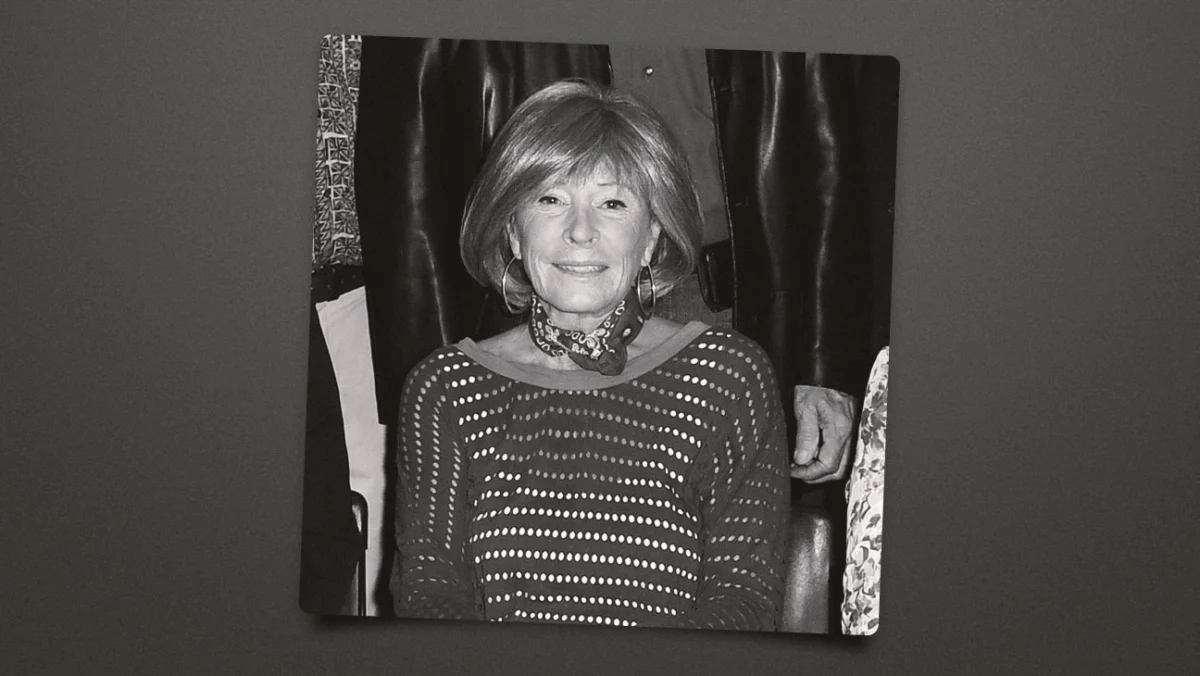
Marcia Lucas, the visionary film editor whose rhythmic precision helped shape the DNA of the modern blockbuster and defined the pulse of the Star Wars saga, has died. She was 80.
Her passing, confirmed by her family, occurred on Wednesday in Rancho Mirage, California, following a battle with cancer. While her name is forever intertwined with the meteoric rise of George Lucas and the cultural revolution of the 1970s, her legacy transcends her association with her former husband. She was a trailblazer in a male-dominated industry, a master of narrative structure, and a storyteller whose invisible hand helped transform the landscape of American cinema.
A Legacy of Rhythmic Perfection
In the annals of Hollywood history, the name Marcia Lucas stands as a testament to the essential, yet often overlooked, power of the editor’s chair. Her family, in a poignant statement released shortly after her death, captured the essence of her spirit:
“Marcia will be remembered as a brilliant storyteller, a trailblazer for women in film, a loving mother and grandmother, a generous host, and a loyal friend whose humor and sparkle filled every room she entered. Her influence on film is indelible, but those who knew her best will remember the way she made life feel more vivid, more beautiful, more fun, and more full of love.”
Her contributions were not merely technical; they were architectural. In an era where the “New Hollywood” movement was rewriting the rules of filmmaking, Marcia Lucas provided the connective tissue that allowed experimental visionaries like George Lucas and Martin Scorsese to reach mass audiences without sacrificing their artistic integrity.
Chronology: From Apprenticeship to Academy Gold
Born in California as Marcia Griffin, she entered the industry through the Motion Picture Editors Guild apprenticeship program. It was a rigorous initiation that demanded both technical mastery and an intuitive grasp of human emotion. Her early professional life saw her serving as an assistant to the legendary Verna Fields, a mentor who edited iconic films such as Jaws and Paper Moon. Under Fields’ tutelage, Lucas learned that editing was not just about cutting frames, but about pacing the audience’s heart rate.
The Collaborator
In 1969, she married George Lucas, marking the beginning of a creative partnership that would alter the course of science fiction. She served as an assistant editor on his feature directorial debut, THX 1138 (1971), a film that displayed the stylistic foundations George would later perfect.
Their collaboration blossomed on the nostalgic, breakthrough hit American Graffiti (1973). Alongside Fields, Marcia’s work on the film earned her first Academy Award nomination for Best Film Editing. Though the Oscar ultimately went to William Reynolds for The Sting, the industry had taken notice. Marcia Lucas was no longer an assistant; she was an essential voice in the editing room.
The "Secret Weapon" of Star Wars
The apex of her career arrived in 1977 with the release of Star Wars. The film, which many in the industry expected to be a catastrophic failure, was saved in the editing suite. As biographer Dale Pollock noted in Skywalking: The Life and Films of George Lucas, Marcia was often referred to as her husband’s “secret weapon.”
Her influence was profound. She helped shepherd the emotional arcs of Luke Skywalker, Han Solo, and Princess Leia through the frantic pacing of the film’s final act. The 1977 Hollywood Reporter review of Star Wars famously lauded the film’s pacing, describing it as “perfectly paced”—a direct result of the meticulous collaboration between Lucas, Paul Hirsch, and Richard Chew. Together, the trio accepted the Academy Award for Best Film Editing, cementing Marcia’s place in history.
Her work continued throughout the original trilogy, as she lent her expertise to Return of the Jedi (1983), ensuring the saga’s emotional climax landed with the weight required for such an epic conclusion.
Beyond the Galaxy: The Scorsese Connection
While Star Wars remains her most visible achievement, it would be a disservice to overlook her tenure with some of the most demanding directors in Hollywood. Marcia Lucas was a vital presence in the mid-70s New Hollywood movement, bridging the gap between the studio system and the auteur-driven style of Martin Scorsese.
She served as an editor on Scorsese’s Alice Doesn’t Live Here Anymore (1974), a film praised for its naturalistic dialogue and character-driven pacing. Her collaboration with Scorsese extended to Taxi Driver (1976) and New York, New York (1977). In these films, her editing style shifted from the breathless adventure of Star Wars to the gritty, uncomfortable, and introspective rhythms required by Scorsese’s dark exploration of urban decay. This versatility proved she was a master of genre, capable of finding the "truth" in any frame, whether it contained a starship or a lonely cab driver.
Official Responses and Industry Reflections
The film community has reacted to the news with an outpouring of grief and respect. Industry peers have highlighted her specific talent for the “invisible cut”—the ability to edit a film so seamlessly that the audience forgets they are watching a constructed sequence of events.
"Marcia understood that the audience’s emotional journey was the only thing that mattered," noted one longtime colleague in a recent tribute. "She didn’t edit to show off technical prowess; she edited to make you feel. She made us believe in the Force because she made us believe in the characters."
Her family’s statement reflects a woman who lived as vibrantly as the films she cut. She is survived by her daughters, Amanda Lucas and Amy Soper, and her beloved grandchildren, all of whom have expressed deep gratitude for the outpouring of support from fans and colleagues worldwide.
The Implications of a Trailblazing Career
The legacy of Marcia Lucas extends beyond the films themselves; it serves as a foundational chapter in the history of women in post-production. At a time when the technical departments of major studios were overwhelmingly male-dominated, Lucas rose to the top of her craft, winning the highest honor in the field.
Her life and work provide several key lessons for the industry today:
- The Editor as Storyteller: Lucas proved that editing is not a mechanical process, but a narrative one. Her ability to restructure scenes and alter the pacing of a film fundamentally changed how stories are told in modern cinema.
- The Power of Collaboration: Her career highlights the critical importance of a "second pair of eyes." In the case of Star Wars, her critiques of early, disjointed cuts were instrumental in creating the cohesive, fast-paced masterpiece that audiences fell in love with.
- Enduring Influence: The "Lucas cut"—a term sometimes used by historians to describe the tight, kinetic editing style of the original Star Wars trilogy—remains the gold standard for action-adventure filmmaking.
Her departure marks the end of an era for the group of filmmakers who emerged in the 1970s to redefine Hollywood. While she may have stepped away from the spotlight in her later years, her work remains the heartbeat of the most iconic moments in film history. Every time a lightsaber hums, every time a taxi pulls into a dark, rain-slicked street, and every time an audience is kept on the edge of their seat by the rhythm of a scene, the influence of Marcia Lucas is present.
She was more than an editor; she was an architect of the imagination. As the film industry looks back on her life, it is clear that while the stars of Star Wars captured the world’s attention, it was the steady, brilliant hand of Marcia Lucas that kept them on their trajectory. Her story, much like the films she polished, will endure for generations to come.











No comments yet. Be the first to join the conversation!