

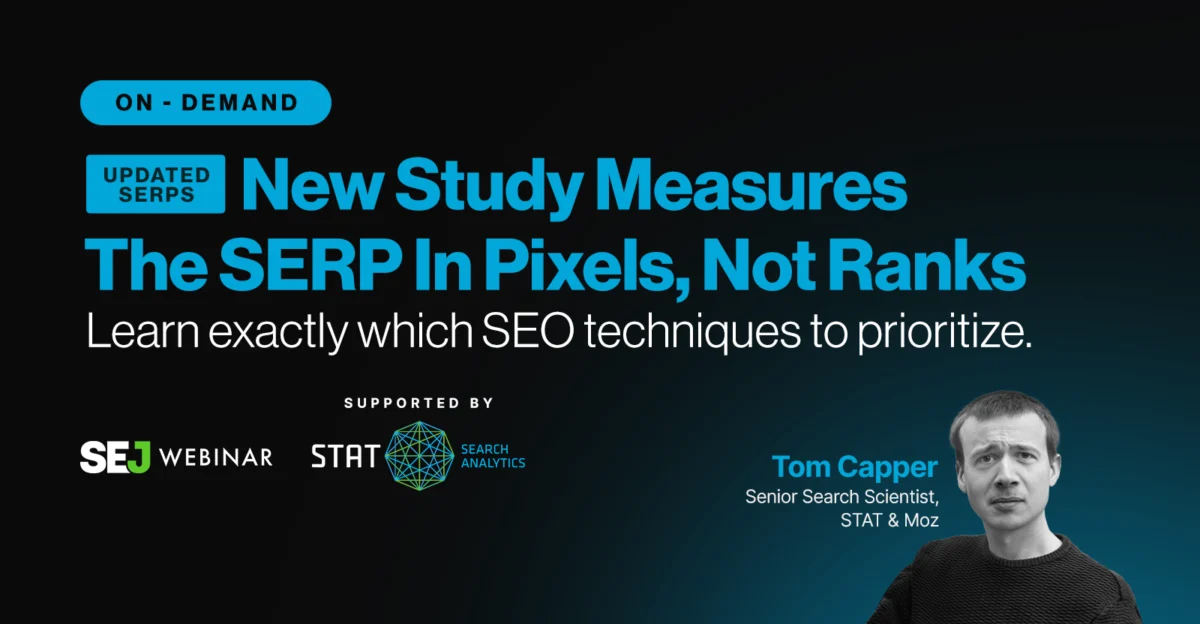
In the traditional playbook of Search Engine Optimization (SEO), the "holy grail" has always been the number one organic position. For decades, SEO professionals and business stakeholders alike chased the top spot, operating under the assumption that a top-ranking URL equated to guaranteed traffic, authority, and conversion.
However, the modern Search Engine Results Page (SERP) has evolved into a complex, crowded landscape where the number one position is increasingly becoming a vanity metric. According to recent data shared by industry experts, reaching the summit of the search results no longer guarantees visibility. In an era dominated by AI Overviews, rich snippets, and paid placements, SEOs must undergo a fundamental shift: moving from a focus on keyword rankings to a strategic obsession with "pixel real estate" and brand impressions.
The Shrinking Horizon: Why Position One is Often Invisible
The fundamental crisis facing modern SEO is the "fold." On desktop, a staggering 57% of organic position-one results appear above the fold. While that might sound acceptable, the situation on mobile—where the majority of global search traffic originates—is significantly worse. On a typical smartphone, only about 40% of top-ranking results are visible without scrolling.
"Nearly two-thirds of the time, the number one organic result is not visible at all, not even the first row of text on a typical smartphone," explains Tom Capper, a leading voice in SERP analytics. "It’s pretty horrendous, right?"
When a user performs a search, they are rarely greeted by a list of ten blue links. Instead, they are met with a wall of interactive, often aggressive content. On desktop, the median organic result sits roughly 635 pixels from the top of the viewport. Given that a standard laptop viewport is approximately 800 pixels tall, the top organic result is often hovering at the very bottom of the screen. Position two is, more often than not, pushed entirely into the "below-the-fold" territory, making it effectively invisible to a casual scroller.
The Displacement of Organic Traffic: AI and Paid Dominance
To understand why organic listings have been pushed into the shadows, one must look at what has taken their place. The replacement of organic space is not random; it is dictated by search intent.
Informational Queries
When a user searches for information, the SERP is increasingly dominated by AI Overviews and the Knowledge Graph. These features consume nearly a third of the above-the-fold visual space. When combined, these AI-driven elements and supplementary features can claim up to 41% of the user’s initial field of vision. The user is provided with an answer immediately, often removing the need to click through to an external website.
Commercial Queries
For those looking to purchase, the landscape is even more restrictive. Paid advertisements and shopping units regularly occupy more than 60% of the top-of-screen space. In specific product-heavy categories, "Popular Products" modules can push the organic results even further down, sometimes leaving organic listings with as little as 16% of the primary visual real estate.
Redefining Success: From Rank to Pixel Height
Given this shift, Capper argues that the industry’s reliance on rank-tracking software is fundamentally flawed. If a result occupies a tiny, text-only sliver of space at the bottom of the page, it is not "winning" in any meaningful sense.
The new tactical framework for SEOs should be the measurement of "pixel height." A standard text-only organic result typically takes up about 120 pixels. However, an organic listing enhanced with Images, Prices, and Ratings (IPR) schema can easily reach 240 pixels—doubling the visual footprint of its competitors.
Borrowing a metaphor from The Lord of the Rings, Capper notes that treating a massive, rich-snippet result as the same "rank" as a small, plain text link is akin to saying a tower-sized elephant "only counts as one" in combat. In the modern SERP, size is power.
Strategic Action Item: SEO teams should immediately conduct an audit of their top commercial keywords. Instead of prioritizing keywords based on search volume alone, prioritize them by "IPR eligibility." If a keyword allows for rich snippets, the focus should be on implementing the necessary schema to ensure that when you do appear, you dominate the visual space.
The Rise of Brand as the Ultimate Ranking Signal
Perhaps the most significant revelation in recent search trends is the resurgence of "Brand" as a primary indicator of performance. Nine years ago, data suggested that branded search volume was a stronger predictor of organic ranking than Domain Authority. Today, that signal has only intensified.
Visibility is no longer just an outcome of good SEO; it is the fuel for brand growth. This creates a "Visibility Flywheel":
- Strategic Visibility: By optimizing for pixels and rich results, you increase your brand’s presence.
- Brand Recognition: Increased presence leads to higher brand recall.
- Branded Search: Users begin searching for your brand by name.
- Ranking Boost: Search engines reward high-volume branded queries with higher organic rankings.
- Compounding Results: The cycle repeats, strengthening the brand’s hold on the SERP.
The takeaway is clear: SEO must stop treating "Brand" as a vague, top-of-funnel awareness goal and start treating it as a measurable, actionable input for organic success.
Expert Q&A: Navigating the Future of Search
During a recent industry webinar, several key questions arose regarding the future of this changing landscape.
Q: How do we sell this "pixel-first" approach to skeptical leadership?
Tom Capper’s response: "Pixels are an easier sell because they are visual. Show leadership a side-by-side comparison of a SERP where you hold the number one rank but are visually eclipsed by a competitor with rich snippets. When you show them that ‘ranking’ doesn’t mean ‘seeing,’ the argument becomes undeniable. Frame SEO as a massive ‘impressions’ channel—much like display advertising—and you’ll find a much more receptive audience in the C-suite."
Q: Is it time to abandon search and pivot entirely to AI Agents?
Tom Capper’s response: "Not yet. While AI agents are growing, they rely on ‘grounded’ LLMs that ingest data from the current web. To be part of the future, you still need to be in the SERPs today. Furthermore, the sheer volume of traffic flowing through traditional Google search still dwarfs AI-specific interfaces by a massive margin. The SERP is still the primary source of truth for the machines."
Q: How can we measure visibility in an AI/LLM-driven world?
Tom Capper’s response: "We must stop looking for a ‘Search Console for AI’ and start tracking differently. First, track prompt-level brand visibility using a representative sample size. Second, think in terms of ‘topic volume’ rather than specific prompt volume, as user queries in AI are highly variable. Finally, focus on ‘mentions and recommendations.’ Your goal isn’t just to be listed; it is to be the brand that the LLM explicitly suggests as a solution."
Q: Will AI fatigue bring back traditional search?
Tom Capper’s response: "We are unlikely to return to the ‘good old days.’ Users have shown a preference for having their questions answered directly. While the pace of change may slow as companies like Google manage the transition, the fundamental shift toward AI-assisted search is likely permanent. We are moving toward a future where the answer is more important than the link."
Implications for the Future of Marketing
The implications of these shifts are profound. For digital marketers, the era of "set it and forget it" keyword optimization is over. The future belongs to those who can master the technical requirements of rich media, provide authoritative content that satisfies AI grounding, and cultivate a brand that users search for by name.
As the SERP continues to evolve into a fragmented, multi-modal interface, the definition of a "win" will continue to shift. Success will no longer be measured by a single digit in a rank-tracking tool. Instead, it will be measured by the total amount of pixels commanded, the frequency of brand mentions in AI responses, and the ability to maintain visibility in an increasingly crowded, AI-automated landscape.
For those willing to adapt, the opportunity is significant. By focusing on pixel-level optimization and brand equity, businesses can secure their position in the search ecosystem, ensuring that when a user searches—whether via a traditional browser or a conversational agent—the brand remains impossible to ignore.












No comments yet. Be the first to join the conversation!