Lina Hope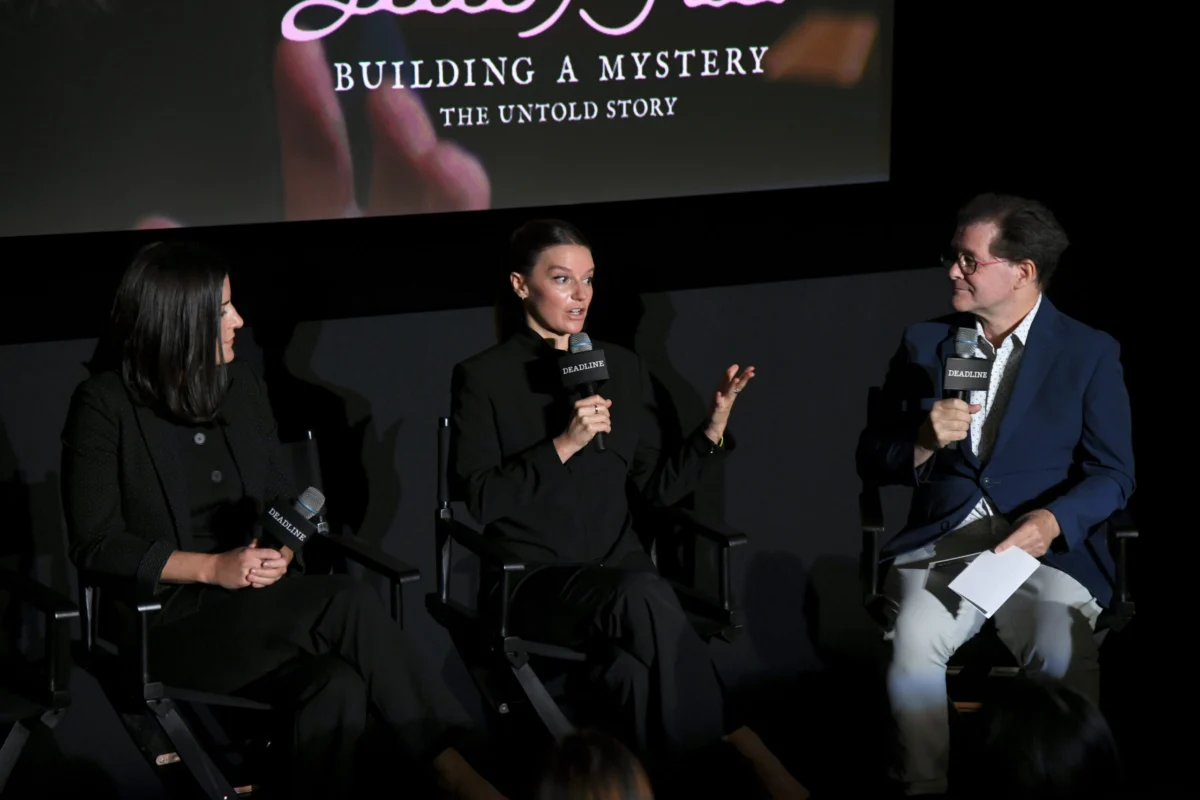
In the mid-1990s, the male-dominated machinery of the music industry operated under a rigid, often cynical set of assumptions. Promoters and radio executives frequently insisted that female artists were "non-viable" commodities, claiming that playing two women back-to-back on the airwaves would cause listeners to change the station. This systemic gatekeeping forced even the most successful female stars of the era to navigate a minefield of misogyny, where hiring a female opener was deemed a commercial risk and tours led by women were viewed with skepticism.
The Hulu documentary Lilith Fair: Building a Mystery, directed by Ally Pankiw, serves as both a historical excavation and a contemporary call to action. During Deadline’s Contenders Television: Documentary panel, Pankiw illuminated how Sarah McLachlan and her contemporaries didn’t just create a festival; they systematically dismantled a foundation of myths designed to keep women on the margins.
The Myth of the "Non-Viable" Female Artist
For decades, the music industry was governed by an unspoken—and largely unfounded—rulebook. As Pankiw explained, the narrative was clear: "Even if you’re Sheryl Crow, you can’t decide to have a female opener because of the tour promoters and people funding the tours… they wouldn’t buy tickets."
This wasn’t just a localized industry superstition; it was a global infrastructure built on the assumption that female voices were mutually exclusive in the eyes of the consumer. Sarah McLachlan, however, looked at this landscape and recognized it for what it was: a lie. By conceptualizing Lilith Fair, McLachlan sought to prove that the audience for female-led music was not only present but massive.
"Anytime a power-system structure is proven wrong, it’s an important thing to document," Pankiw noted. The success of the festival was not merely artistic; it was a logistical rebuke to the gatekeepers who insisted that the market for female talent was inherently limited.
Chronology: The Rise, Trivialization, and Legacy of Lilith Fair
The Genesis (1997)
Launched in 1997, Lilith Fair was born out of frustration. McLachlan, having experienced the difficulty of being booked alongside other female acts, decided to create her own touring platform. The inaugural run was an immediate, resounding success, selling out venues across North America and generating millions of dollars—a significant portion of which was donated to charity.
The Peak and the Backlash (1998–1999)
At its height, Lilith Fair became a cultural touchstone. It provided a platform for established icons like Tracy Chapman, Jewel, and the Indigo Girls to share stages with emerging talent. However, as the festival grew, so did the backlash. In the early 2000s, as the industry shifted, the media began to mock the earnestness of the movement. The "Lilith Fair" brand was frequently trivialized in pop culture, labeled as "lame" or "too earnest," reflecting a broader cultural shift that sought to diminish the contributions of women as the decade turned.
The "Unlearning" (The Modern Perspective)
For director Ally Pankiw, the documentary was a personal journey. "A big reason I wanted to make this doc was because I was doing a lot of unlearning in my own life about what that specific era of misogyny and homophobia and racism of the ’90s and early 2000s taught me about myself," she said. The documentary seeks to reframe the era, moving away from the condescending lens of the early 2000s and toward a more appreciative, historical analysis of the festival’s radical impact.
Supporting Data: Economic Success vs. Systemic Bias
The most damning evidence against the industry’s "anti-female" narrative was the bottom line. Lilith Fair was a financial juggernaut. It did not just "survive"; it outperformed many male-led tours of the time.
- Audience Demand: The festival consistently sold out across diverse geographic regions, proving that the supposed "risk" of female-led lineups was entirely manufactured by promoters.
- Charitable Impact: The festival raised millions of dollars for local and national charities, establishing a model for socially conscious touring that has since been adopted by many modern artists.
- Talent Incubation: Beyond the headliners, the festival acted as an essential incubator for talent. The most famous anecdote involves a young, then-unknown Christina Aguilera. During an early performance on a side stage—famously located near the porta-potties—Aguilera’s vocal power was so undeniable that it caused a stir among the production staff. Word spread via walkie-talkies, and crews abandoned their posts to witness the performance. This event underscored the festival’s role in breaking new talent, a function that the traditional industry machine had failed to provide for women.
Official Responses and Industry Implications
The documentary has sparked a renewed dialogue regarding the state of gender parity in music today. Pankiw draws a parallel between the climate of the 1990s and the current "contraction period" in the music industry.
"We are kind of in a moment like that right now, too," Pankiw observed. "A contraction period in our industry where people are thinking again, it’s like a silly risk to invest in women’s stories and diverse stories."
This perspective is underscored by the complex relationship between the documentary and its subject. Notably, Sarah McLachlan recently opted out of performing at the ABC News premiere of the documentary, citing a commitment to "free speech." This highlights the ongoing, complex evolution of the Lilith Fair brand and the women who built it—they are no longer merely "earnest" participants in a music festival but architects of a legacy that continues to spark debate.
The Case for a Revival
Given the current cultural appetite for nostalgia and the continued fight for representation in the music industry, Pankiw believes the time is ripe for a Lilith Fair revival. While she admits that coordinating the schedules of global superstars like Taylor Swift, Beyoncé, and Blackpink would be a logistical Herculean task, the core mission of the original festival—discovery—remains more relevant than ever.
"What was so beautiful about the original Lilith was there were these massive headliners, sure, but there were so many amazing discoveries," Pankiw said. A modern iteration would not necessarily need the biggest names in the world to be successful; it would simply need to provide a space for the "one level below" talent—the next generation of artists who are currently struggling against the same digital-age gatekeeping that plagued the ’90s.
Implications: A Lesson for the Future
The story of Lilith Fair is a cautionary tale for those who underestimate the power of female audiences and the ingenuity of female artists. By documenting the struggle and ultimate triumph of the festival, Lilith Fair: Building a Mystery challenges the modern industry to look beyond the "silly risk" narrative.
As the industry faces a new era of economic uncertainty, the lessons of the late ’90s remain clear: exclusion is an expensive policy. The success of Lilith Fair was not a "miracle," as some critics at the time suggested; it was the result of recognizing an underserved market and giving it the platform it deserved.
For today’s executives, promoters, and artists, the documentary serves as a reminder that when systems of power are proven wrong, the result is not just a shift in the charts—it is a cultural evolution. As Pankiw concluded, the success of the festival should not be viewed as a relic of the past, but as a blueprint for an industry that has yet to fully realize the potential of its most diverse voices.
The festival proved that there is, and always has been, a space for women to lead. The only question that remains is whether the industry will continue to fight that reality, or finally, fully embrace it.


 Rifan Muazin
 Ali Ikhwan