

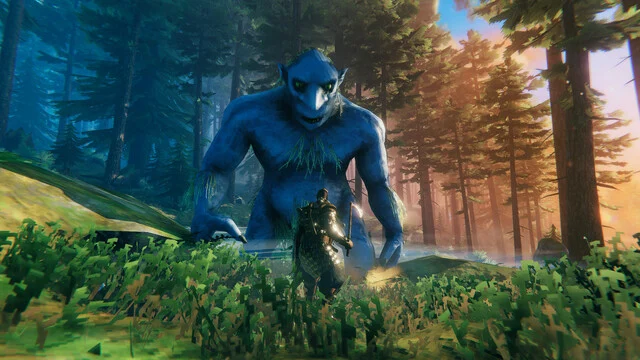
The survival-crafting genre is defined by a select few titles that manage to capture the collective imagination of the gaming public, and among these, few have left a mark as indelible as Valheim. Developed by the Swedish indie studio Iron Gate, the brutal Viking-inspired purgatory has been a mainstay of the Steam charts since its explosive debut in early 2021. Now, after years of incremental expansions and community-driven development, the game is finally approaching the horizon of its official Version 1.0 launch.
With the development of the final biome, the "Deep North," nearing completion, the excitement surrounding the title has reached a fever pitch. In a recent update on Steam, the developers hinted at significant announcements scheduled for the PC Gaming Show on June 7, 2026. For millions of players who have spent hundreds of hours building, sailing, and surviving in this procedurally generated Norse realm, the end of the Early Access journey is no longer a distant hope—it is an imminent reality.
The Long Road: A Chronology of Survival
To understand the significance of the upcoming 1.0 release, one must look back at the meteoric rise of Valheim. The game first entered Early Access on February 2, 2021. Its launch was nothing short of a cultural phenomenon; within weeks, the title had mobilized over 500,000 concurrent players on Steam, a staggering achievement for a small independent team.
Unlike many survival games that languished in development hell, Iron Gate maintained a steady, if deliberate, cadence of updates. The timeline of Valheim’s evolution serves as a masterclass in community-managed development:
- February 2021: Valheim launches into Early Access, taking the gaming world by storm.
- September 2021: The "Hearth & Home" update introduces significant changes to building mechanics and food systems, setting the stage for more complex survival elements.
- March 2022: The "Mistlands" update introduces the first major post-launch biome, adding a layer of verticality and dark, atmospheric challenge to the endgame.
- May 2023: The "Ashlands" update brings a volcanic, high-difficulty endgame region, testing the mettle of even the most seasoned Viking warriors.
- 2025–2026: Development shifts focus toward the final biome, the "Deep North," and the technical polish required to transition from a long-running Early Access project to a fully realized 1.0 product.
The PC Gaming Show: A Turning Point
The upcoming PC Gaming Show, slated for June 7, 2026, at 9:00 PM CET, represents more than just a marketing event. It serves as the formal stage for Iron Gate to address the future of the franchise. In their latest blog post, the developers were cryptic yet optimistic, noting that "pretty exciting things regarding Valheim" are on the docket.
While the studio has not officially leaked the specific contents of the presentation, the industry consensus points toward a firm release window for the "Deep North" expansion and, crucially, a roadmap for the official 1.0 transition. For players who have been following the game’s development for over half a decade, this event acts as the bridge between the experimental "Early Access" era and the "Full Release" era.
Deep North and the Final Expansion
The "Deep North" has been a fixture of the Valheim map since day one—a mysterious, icy expanse located at the top of the world. For years, it remained a largely barren placeholder, a tantalizing blank space on the map. Its completion is widely considered the final piece of the puzzle for the game’s core progression loop.
By finalizing the Deep North, Iron Gate is effectively closing the loop on the game’s environmental narrative. The transition to 1.0 is not merely about content completion; it is about ensuring that the progression from the Meadows to the final frozen wastes feels balanced, cohesive, and rewarding. The integration of this final biome will likely introduce new crafting tiers, unique boss encounters, and legendary materials that have been teased by the developers throughout the years.
Achievements: A Long-Awaited Community Request
One of the most requested features in the history of Valheim has been the implementation of a formal achievement system. For a game that encourages exploration, mastery of combat, and architectural ingenuity, the absence of milestones has been a notable omission.
Iron Gate has officially confirmed that Version 1.0 will launch with over 50 distinct achievements. This addition is expected to provide a fresh layer of replayability for veteran players. To whet the community’s appetite, the studio released images of five achievement icons, ranging from a simple Viking tent and a thatched-roof cottage to a longboat cutting through icy waves. These achievements are expected to track everything from exploration milestones to survival feats, rewarding the specific behaviors that make the Valheim experience unique.
Technical Foundations: The New Save System
While the "Deep North" captures the imagination, the technical underpinnings of the game remain a top priority. A crucial part of the transition to 1.0 is the overhaul of the game’s saving architecture. Currently, players can test a new save system via the Public Test Build (PTB).
This update specifically targets the way "World Saves" are handled. Iron Gate has emphasized that while character data remains untouched, the world data architecture is being revamped to ensure stability and performance, particularly for long-term worlds that have been active for years. By requesting community feedback through official support channels, the developers are signaling that the 1.0 launch will prioritize stability, addressing the common network and save-file issues that have occasionally plagued high-traffic servers.
Implications for the Survival Genre
The impending departure of Valheim from Early Access marks a significant shift in the gaming landscape. Valheim proved that a low-poly, art-directed aesthetic could compete with hyper-realistic AAA graphics, provided the "fun factor" and the "loop" were executed with precision.
The move to 1.0 has several implications:
- Standardization of Quality: By transitioning to a full release, Iron Gate sets a higher bar for the "finished" state of survival games, potentially pressuring other titles in the genre to improve their content delivery timelines.
- Modding Ecosystem: With the game finalized, the modding community—which has already produced thousands of quality-of-life improvements and content additions—will have a stable foundation to build upon without the fear of frequent updates breaking their work.
- Long-term Support: A 1.0 status often signals a shift from "feature development" to "long-term maintenance and expansion." This suggests that even after the official release, the world of Valheim could continue to evolve through post-launch DLC or additional content patches.
Conclusion: A Saga Worthy of Odin
"A brutal 1-10 player multiplayer exploration and survival game in a procedurally generated purgatory inspired by Viking culture," reads the Steam description of Valheim. "Write a saga worthy of Odin’s favor."
For over five years, the community has done exactly that. Whether through the construction of sprawling mountain fortresses or the coordination of daring sea raids, the players have been as vital to the game’s success as the developers themselves. As June 7 approaches, the anticipation is palpable. The transition to Version 1.0 is not just the end of a development cycle; it is the crowning of one of the most successful independent projects in recent memory.
As the fog clears over the Deep North and the final pieces of the puzzle fall into place, one thing is certain: Valheim has already earned its place in the pantheon of great survival games. Now, with the final release on the horizon, it is preparing to cement that legacy for years to come. Whether you are a veteran of the meadows or a newcomer looking to set sail for the first time, the upcoming months promise to be the most exciting chapter yet in this epic Norse saga.











No comments yet. Be the first to join the conversation!