

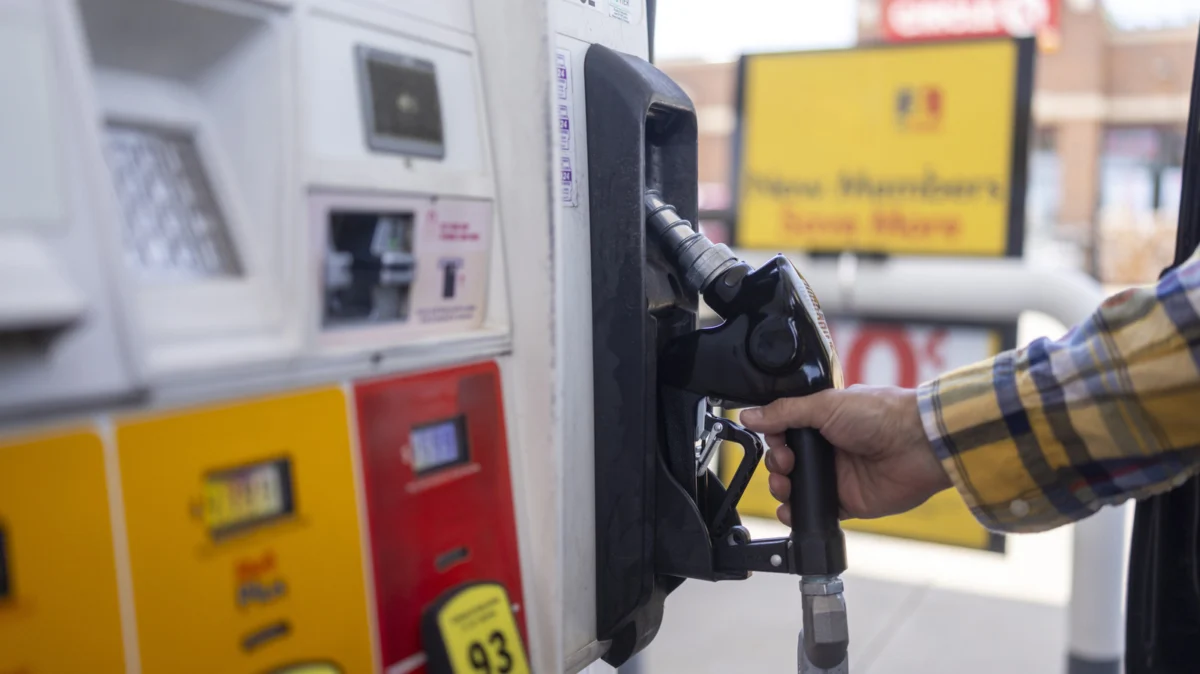
In the complex landscape of American environmental regulations, few rules are as perplexing to the average driver as the "4-Gallon Minimum" sticker found on certain gas pumps. While federal law typically governs broad industrial standards or tax codes, this specific requirement targets a granular interaction between modern fueling technology and the longevity of your vehicle’s engine.
Far from being a bureaucratic whim, the four-gallon rule is a calculated safety measure designed to mitigate the risks of cross-contamination in what the industry calls "blender pumps." To understand why you might occasionally be prevented from adding just a dollar’s worth of gas to your tank, one must delve into the chemistry of ethanol, the evolution of fuel infrastructure, and the delicate balance between renewable energy mandates and automotive engineering.
Main Facts: The Anatomy of the 4-Gallon Rule
The core of the issue lies in the proliferation of E15 fuel—a blend consisting of 15% ethanol and 85% gasoline. While E10 (10% ethanol) has been the standard for decades, E15 has gained significant traction as a cheaper, more renewable alternative.
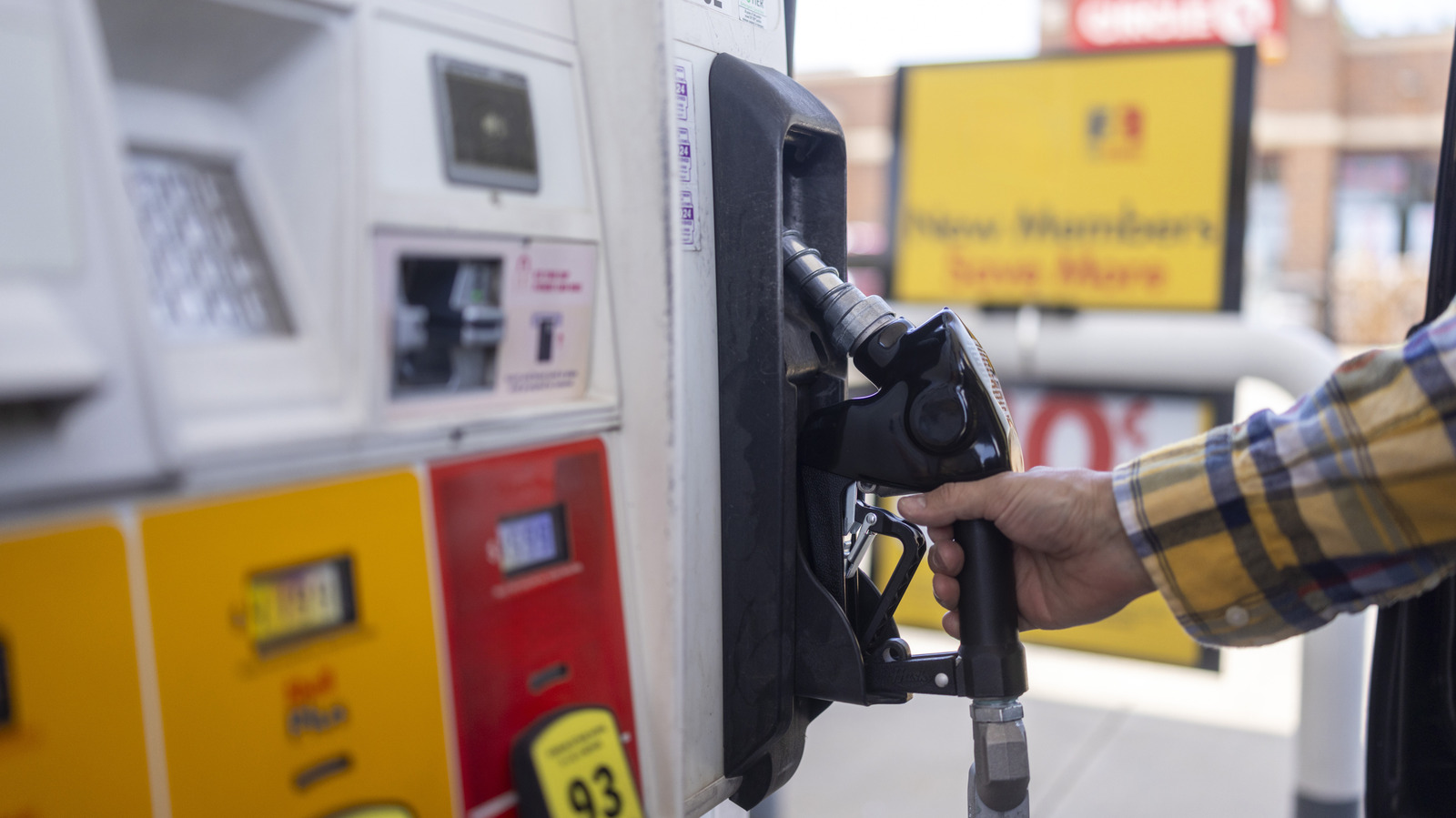
The 4-gallon mandate is not a universal law for every gas station in the United States; rather, it is a specific regulatory requirement for blender pumps. A blender pump is a single dispensing unit capable of delivering multiple grades of fuel—such as E10, E15, and sometimes even E85—through a single hose and nozzle.
Why the 4-Gallon Threshold?
When a driver fills their tank with E15, approximately one-third of a gallon of fuel remains trapped within the hose and nozzle assembly after the transaction is complete. If the next customer selects standard E10, the first third of a gallon that flows into their vehicle will actually be the "leftover" E15 from the previous user.
Because older vehicles and certain small engines are not engineered to handle ethanol concentrations higher than 10%, this "residual fuel" effect poses a mechanical risk. The Environmental Protection Agency (EPA) established the 4-gallon minimum to ensure that the E15 residue is sufficiently diluted by the incoming E10, bringing the total ethanol concentration in the customer’s tank down to a level that is safe for legacy engines.
Chronology: The Evolution of Ethanol Regulation
The journey to the 4-gallon rule began with the federal government’s push to integrate higher levels of renewable biofuels into the national energy supply.
- 2007: The Energy Independence and Security Act significantly expands the Renewable Fuel Standard (RFS), setting ambitious targets for ethanol production.
- 2010–2011: The EPA grants waivers allowing E15 for use in model year 2001 and newer light-duty motor vehicles. This creates an immediate need for infrastructure that can handle multiple fuel types without requiring gas stations to install a separate underground tank for every single blend.
- 2012: The EPA officially codifies the 4-gallon minimum rule for blender pumps. This move is met with immediate skepticism, as it represents a shift in consumer behavior at the pump.
- 2013: Following intense lobbying from the American Motorcyclist Association (AMA) and various outdoor power equipment manufacturers, the EPA adjusts its policy. It mandates that stations offering E15 must also provide a secondary, dedicated nozzle that exclusively dispenses E10 or lower, allowing owners of motorcycles, lawn mowers, and vintage cars to avoid the blender pump entirely.
- 2014–Present: The number of stations offering E15 continues to grow, currently surpassing 5,000 locations nationwide. As the transition to cleaner fuels accelerates, the regulation remains a cornerstone of the EPA’s consumer protection strategy.
Supporting Data: Infrastructure and Ethanol Trends
The U.S. fuel landscape is massive, consisting of over 150,000 retail fueling stations. While the 4-gallon rule applies only to a fraction of these, the growth trajectory is significant.
The Math of Dilution
The science behind the mandate is based on simple volumetric dilution. If a hose contains 0.33 gallons of E15, adding 4 gallons of E10 results in a total volume of 4.33 gallons. The mathematical calculation of the ethanol content in that mix ensures that the effective concentration remains well within the "safe" threshold for older vehicles, preventing the corrosive effects that higher ethanol concentrations can have on rubber seals, fuel lines, and gaskets in non-compliant engines.
Market Penetration
According to the Renewable Fuels Association, E15 availability has expanded from a novelty to a common utility. However, the geographic distribution is uneven, clustered heavily in the Midwest, where corn-based ethanol production is most prominent. As infrastructure investment continues, the EPA has focused on clear labeling requirements, ensuring that the "Passenger Vehicles Only" warnings are prominently displayed to guide consumers toward the correct nozzles.
Official Responses: Navigating the Controversy
When the regulation was first introduced, it sparked a firestorm of debate. Representative Jim Sensenbrenner (R-WI) famously criticized the rule as an "unacceptable intrusion into drivers’ lives." His argument, echoed by many in the automotive enthusiast community, was that the government should not dictate the minimum volume of a transaction, particularly when it forces consumers to buy more fuel than they might need or want.
The EPA’s Stance
The EPA has consistently maintained that the rule is a necessary trade-off. Their position is that without the 4-gallon floor, the potential for engine damage in millions of older vehicles would create a massive economic burden for consumers. By forcing a minimum purchase, the EPA essentially shifts the responsibility of dilution from the vehicle owner to the fueling process itself.
Industry Compromise
The Renewable Fuels Association (RFA) and other stakeholders worked closely with the EPA to develop the "dedicated nozzle" solution. This was a critical turning point; by ensuring that at least one nozzle on the property is guaranteed to be free of E15 residue, the government satisfied the concerns of motorcyclists and lawn equipment users who possess small fuel tanks that could never physically accommodate a 4-gallon fill-up.
Implications: What This Means for You
For the average daily commuter, the 4-gallon rule is largely invisible. Most drivers fill their tanks well beyond the 4-gallon mark, meaning they are already compliant with the dilution safety standards without even knowing they exist.
Key Takeaways for Drivers:
- Check the Pump Labeling: Always look for the "Passenger Vehicles Only" or "E10" label if you are driving a vintage car, a motorcycle, or operating small landscaping equipment.
- Avoid Blender Pumps for Small Tanks: If you are filling a gas can for a lawn mower, avoid the blender pump entirely. Use a pump that is explicitly designated for E10 or "Regular" unleaded to ensure you are not putting ethanol-heavy fuel into an engine that cannot handle it.
- Flex-Fuel Vehicles (FFVs): If you drive a designated Flex-Fuel vehicle, you do not need to worry about the 4-gallon limit. These vehicles are designed to handle high-ethanol blends, including E85, and their fuel systems are specifically built to resist the corrosive properties of ethanol.
- The "Residual" Risk is Real: For owners of vehicles made before 2001, the warning is not just a suggestion. While a single instance of cross-contamination might not destroy an engine, the cumulative effect of using high-ethanol fuel over time can lead to catastrophic fuel system failure.
Conclusion
The 4-gallon minimum law serves as a microcosm of the challenges facing the transition to renewable energy. It highlights the friction between legacy infrastructure and modern, greener technology. While the rule may seem like an inconvenient artifact of federal regulation, it serves as an essential safeguard. By requiring a minimum purchase to ensure dilution, the EPA provides a critical bridge, allowing the U.S. to integrate higher-ethanol fuels while protecting the tens of millions of older vehicles that still rely on the roads today. As the nation moves toward even higher blends of biofuels, such regulations—and the consumer education that accompanies them—will remain vital in maintaining the health of the American automotive fleet.












No comments yet. Be the first to join the conversation!