

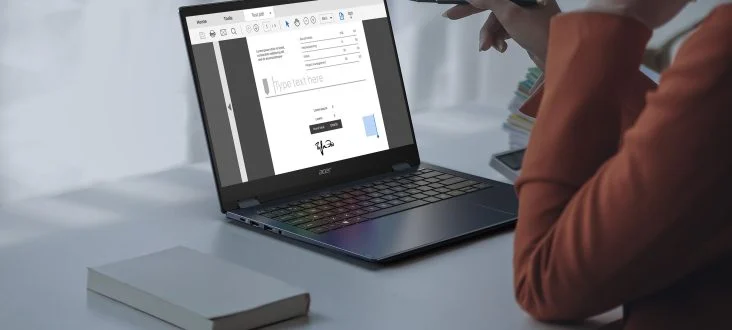
In a significant expansion of its mobile computing portfolio, Acer has unveiled two pivotal additions to its laptop lineup: the premium Swift Spin 14 AI and the entry-level Aspire Go 15. These machines mark a bold strategic pivot for the Taiwanese tech giant, as both devices eschew traditional x86 architecture in favor of Qualcomm’s Snapdragon platforms. By embracing the Snapdragon X2 Elite/Plus for its flagship convertible and the debut of the Snapdragon C platform for its budget-conscious series, Acer is signaling a clear intent to dominate the nascent Copilot+ PC market.
Main Facts: Architecture and Capabilities
The Swift Spin 14 AI stands as the jewel of this announcement, positioned as a high-performance, versatile tool for professionals and creative power users. At its heart lies the Snapdragon X2 series, a powerhouse capable of delivering 80 TOPS (Trillions of Operations Per Second) via its integrated Neural Processing Unit (NPU). This immense computational power is specifically engineered for local AI tasks, ensuring that generative AI, language processing, and real-time data analysis occur on-device, prioritizing both speed and user privacy.
Beyond AI, the Swift Spin 14 AI features a sophisticated Adreno GPU capable of DirectX 12.2 hardware-accelerated ray tracing, a rare feature in thin-and-light 14-inch convertibles. The hardware ecosystem supports up to 32GB of high-speed LPDDR5X RAM and a 1TB SSD, providing a robust foundation for multitasking.
In contrast, the Aspire Go 15 represents Acer’s vision for the "everyman" laptop. Utilizing the brand-new Snapdragon C architecture, this device is designed to handle daily productivity—web browsing, document editing, and media consumption—within a fanless, silent chassis. It focuses on sustainability and long-term usability, offering a simplified but highly efficient user experience.
Chronology of the Development and Launch
The shift toward ARM-based computing has been a long-gestating project for industry leaders, and Acer’s timeline reflects a measured, calculated rollout:
- Q1–Q2 2026: Acer finalized the integration of Qualcomm’s latest silicon, focusing on thermal management for the fanless Aspire Go and optimization for the NPU-heavy Swift Spin.
- May 2026: Initial public announcement of the hardware specifications and the strategic move toward Snapdragon-only mobile architectures.
- July 2026 (Upcoming): Official launch in EMEA (Europe, Middle East, and Africa) markets.
- August 2026 (Upcoming): Official launch in North American markets.
- Q3 2026 (Late): Expected rollout across Australian retail and enterprise channels.
Supporting Data: Technical Specifications
To understand the positioning of these devices, one must look at the hardware disparity and the deliberate choices made by Acer’s engineering team.
Swift Spin 14 AI Technical Profile
- Design: 360-degree hinge, cobalt blue aluminum casing.
- Display: 14-inch WUXGA IPS touch-enabled glass, bundled with Wacom AES 2.0-based Acer Active Stylus 420.
- Battery: Up to 23 hours of video playback; 100W fast charging via USB4 Type-C.
- Connectivity: Wi-Fi 7, Bluetooth 6.0, 2x USB-C, 2x USB-A, HDMI 2.1.
- AI/Security: 5MP IR webcam with Windows Hello, PurifiedView/PurifiedVoice AI, triple-microphone array.
Aspire Go 15 Technical Profile
- Design: Sustainable construction using post-consumer recycled (PCR) plastics.
- Display: 15.6-inch narrow-bezel display.
- Memory/Storage: Up to 8GB RAM, 512GB SSD.
- Connectivity: 2x USB-C, HDMI output, Wi-Fi 6E.
- Compliance: Energy Star and EPEAT certified.
Official Responses and Strategic Vision
While Acer has kept official executive commentary concise, the hardware choices speak volumes. By moving to the Snapdragon C platform for the entry-level market, Acer is effectively tackling the biggest pain point of budget laptops: heat and noise. The fanless design of the Aspire Go 15 is a direct response to consumer demands for "always-on" reliability that doesn’t compromise on a quiet workspace.
Furthermore, the integration of "AcerSense" and the "Acer My Key" hotkey reflects the company’s commitment to the Copilot+ PC ecosystem. Acer’s move suggests they are not just selling hardware, but a curated AI experience. By bundling the Active Stylus 420 in a dedicated "garage," they are signaling that the Swift Spin 14 AI is a tool for creators who need to switch from typing to sketching without latency.
Implications for the Laptop Market
The launch of these devices carries significant weight for the broader laptop industry, which has been historically tethered to x86 processors from Intel and AMD.
The Rise of the ARM Ecosystem
Acer’s commitment to the Snapdragon X2 Elite and the Snapdragon C platforms suggests a widening rift in the market. As Windows 11 on ARM matures, the performance gap between x86 and ARM is closing. With 23 hours of battery life, the Swift Spin 14 AI is a direct threat to ultrabooks that rely on power-hungry chips. If Acer can prove that these Snapdragon machines run legacy software seamlessly through emulation, they may catalyze a mass migration of enterprise users toward ARM-based laptops.
Sustainability as a Competitive Moat
The Aspire Go 15 is not merely a budget laptop; it is a declaration of corporate responsibility. By utilizing post-consumer recycled plastics and ensuring 100% recyclable packaging, Acer is meeting the increasingly stringent procurement requirements of large corporations and government bodies. In 2026, the "green" credentials of a laptop are becoming as important as its clock speed.
The AI-First Paradigm
The inclusion of an 80 TOPS NPU in the Swift Spin 14 AI changes the nature of the "Laptop / Mobile" category. By moving AI processing to the local level, Acer is addressing the latency issues associated with cloud-based AI. Users can perform real-time video background blurring, voice noise cancellation, and automated system monitoring without taxing the CPU or GPU, leading to a much smoother user experience.
Conclusion: A New Era for Acer
Acer’s 2026 lineup represents a sophisticated gamble. By diversifying their hardware architecture—leaning heavily into the high-performance AI capabilities of the Snapdragon X2 and the efficient, sustainable nature of the Snapdragon C—they are positioning themselves to capture both the high-end creative market and the volume-driven budget sector.
For the consumer, this means more choice. Whether one is a digital artist requiring the precision of the Wacom-enabled Swift Spin 14 AI or a student looking for a reliable, silent machine for long study sessions with the Aspire Go 15, Acer’s latest offerings provide a compelling look into the future of mobile computing. The transition to Snapdragon is not just a change in processor; it is a fundamental shift in how we interact with our devices—making them smarter, more efficient, and undeniably more connected to the AI-driven world of tomorrow.
As the launch dates in EMEA, the US, and Australia approach, the industry will be watching closely. If these machines deliver on the promise of the Snapdragon architecture, Acer may well set the standard for the next generation of Windows laptops.









No comments yet. Be the first to join the conversation!