

For any student embarking on the journey of learning the Japanese language, the mastery of the writing systems—Hiragana, Katakana, and Kanji—is the essential threshold. While Hiragana is the foundational script for native Japanese words and grammatical particles, Katakana serves a distinct and vital role in the modern linguistic landscape. Often described as the "alphabet" of loanwords, foreign names, and onomatopoeia, Katakana is the key to unlocking the vast array of English-derived vocabulary in Japan.

Learning Katakana immediately after mastering Hiragana is widely considered the most effective pedagogical strategy. Because the two systems share similar phonological foundations, the cognitive momentum gained from studying Hiragana allows students to leverage their existing knowledge to internalize the sharper, more angular strokes of Katakana.
The Mechanics of the System: Understanding the Chart
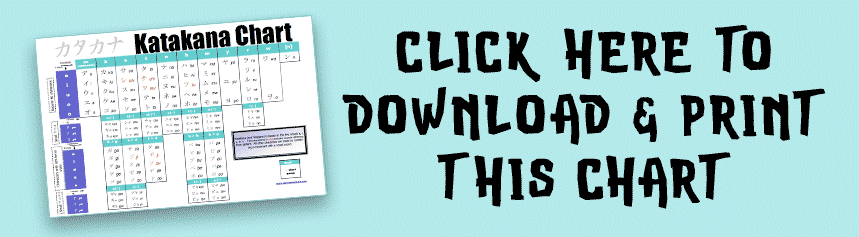
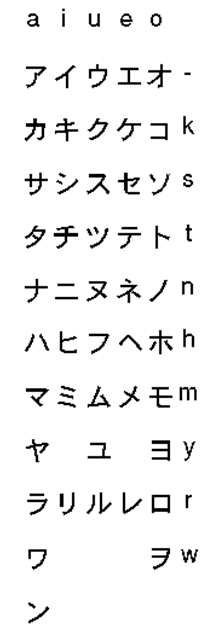
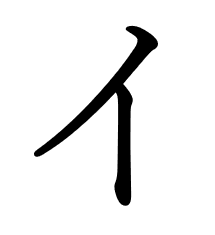
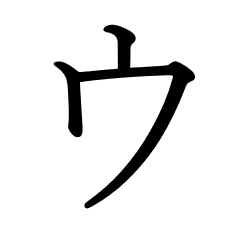
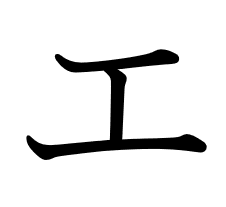
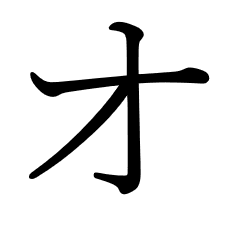
At its core, the Japanese writing system is phonetic. The Katakana chart operates on a grid of rows and columns, where columns represent vowels and rows represent consonants. For instance, the first row (A, I, U, E, O) provides the base vowel sounds, while the subsequent rows (K, S, T, N, H, M, Y, R, W) follow a systematic pattern of adding a consonant to those base vowels.

The Structural Patterns
When analyzing the chart, students should observe the clear, logical progression. The "K" row consists of KA, KI, KU, KE, and KO. This predictable structure is consistent throughout most of the table. However, as with any language, there are nuances and "irregular" characters that require focused attention. For example, the character for the "SI" sound is actually pronounced "SHI," and the character for "TU" is phonetically "TSU." Understanding these slight deviations early on is critical to achieving accurate pronunciation.
The Challenge of Similar Characters
One of the most common hurdles for beginners is distinguishing between characters that bear a visual resemblance to one another. A prime example is the distinction between "SO" and "N." While they appear nearly identical to the untrained eye, their stroke order and slight tilt differentiate them. "SO" is typically written with a downward eye-like stroke, whereas "N" features a horizontal tilt. As a student, practicing these in context—rather than in isolation—is the most reliable way to cement these distinctions.
Chronological Development: From Hiragana to Katakana
The acquisition of Japanese literacy is a multi-stage process.

- Phase One (Foundations): Before approaching Katakana, it is essential to have a solid grasp of the basic sounds of Hiragana. If a student is still struggling to recall basic Hiragana syllables, transitioning to Katakana may cause unnecessary confusion.
- Phase Two (The Transition): Once the basic Hiragana sounds are locked into muscle memory, the transition to Katakana should begin. This phase involves mapping the familiar sounds to the new, angular characters.
- Phase Three (Integration): The final stage involves applying these characters to real-world scenarios, such as identifying loanwords on restaurant menus or recognizing foreign proper nouns in text.
Supporting Data: Why Katakana Matters
Data regarding foreign loanwords (gairaigo) in the Japanese language underscores the necessity of Katakana. Studies suggest that nearly 10% to 15% of the modern Japanese vocabulary is derived from foreign languages, primarily English. Without the ability to read Katakana, a student remains blind to a significant portion of daily signage, product packaging, and technological terminology.
Furthermore, the pedagogical benefit of learning Katakana while the brain is still "primed" for script acquisition cannot be overstated. By treating Katakana as an extension of the phonetic awareness developed during the Hiragana phase, learners can achieve fluency in the writing system in a fraction of the time it would take if approached as a completely new, disconnected language component.

Expert Perspectives and Best Practices
Language experts emphasize that rote memorization is rarely the most effective path to mastery. Instead, they recommend the use of mnemonics and active recall. For example, associating the character for "NI" with the number two, or "MI" with the three lines of the kanji for three, creates cognitive "hooks" that make retention easier.
The Importance of Stroke Order
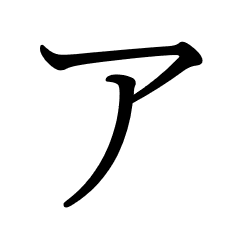
While the script may look like simple geometric shapes, adherence to correct stroke order is paramount. Not only does it improve the legibility of one’s handwriting, but it also creates a fluid, rhythmic movement that makes writing more natural over time. "Always follow the stroke order," experts advise. "It is the difference between drawing a character and actually writing it."

The "Ten-Ten" and "Maru" Modifiers
A crucial aspect of Katakana is the use of diacritical marks. The ten-ten (a double quote mark: ") acts as a voice-modifier, transforming unvoiced consonants into voiced ones. For example, "KA" becomes "GA," and "SA" becomes "ZA." The maru (a small circle: °) is specific to the "H" row, turning "H" sounds into "P" sounds. Understanding these modifiers effectively doubles the utility of the basic chart, allowing for a much broader range of sounds.
Implications for Language Proficiency
The implications of mastering Katakana extend far beyond simply being able to read a menu. It acts as a bridge between basic literacy and higher-level fluency. Once a student can read Katakana, they can begin to engage with "real" Japanese—media, social interaction, and literature—rather than relying solely on romanized text (romaji).

The Role of Compound Sounds
Finally, students must grapple with small "YA," "YU," and "YO" characters. These act as modifiers to the preceding syllable, allowing for sounds like "KYA," "RYO," or "NYU." Mastering these combinations is the final step in the Katakana curriculum. By learning to combine these sounds into single, fluid pronunciations, the student moves from reading individual characters to reading syllables and, eventually, words.
Conclusion: The Path Forward
The journey to learning Katakana is not a sprint, but a steady, deliberate process of recognition and practice. By following the logical structure of the chart, utilizing mnemonic devices, and focusing on the nuances of stroke order and modifiers, any dedicated student can achieve mastery.

For those looking to accelerate their learning, there are numerous digital resources, such as the Beri-Beri-Shoshinsha Beginner’s Bundle, which offer structured practice, quizzes, and supplemental reading material. However, the most important tool remains the student’s own consistency.
As you progress, remember that every character you learn is a building block. Start with the basics, respect the structure of the chart, and do not be afraid to revisit the fundamentals. Once the 50-odd characters of the Katakana syllabary are under your belt, the world of modern Japanese will become significantly more accessible. The script is the gateway; all that remains is to walk through it.
Quick Reference Checklist for Learners
- Prioritize Hiragana: Do not start Katakana until you can comfortably read Hiragana.
- Focus on Problem Areas: Dedicate extra time to similar characters like "SO" and "N."
- Utilize Mnemonics: Create personal associations for each character to aid memory.
- Practice Strokes: Use grid paper and follow the official stroke order strictly.
- Master the Modifiers: Spend time learning how the ten-ten and maru change the phonetic output of the base characters.
- Consistent Testing: Utilize online quizzes to check your progress against your goals.
By following this systematic approach, you will find that what initially seemed like an intimidating, foreign script quickly becomes a familiar and useful tool in your linguistic arsenal. Keep practicing, and you will be reading Japanese fluently in no time.












No comments yet. Be the first to join the conversation!