

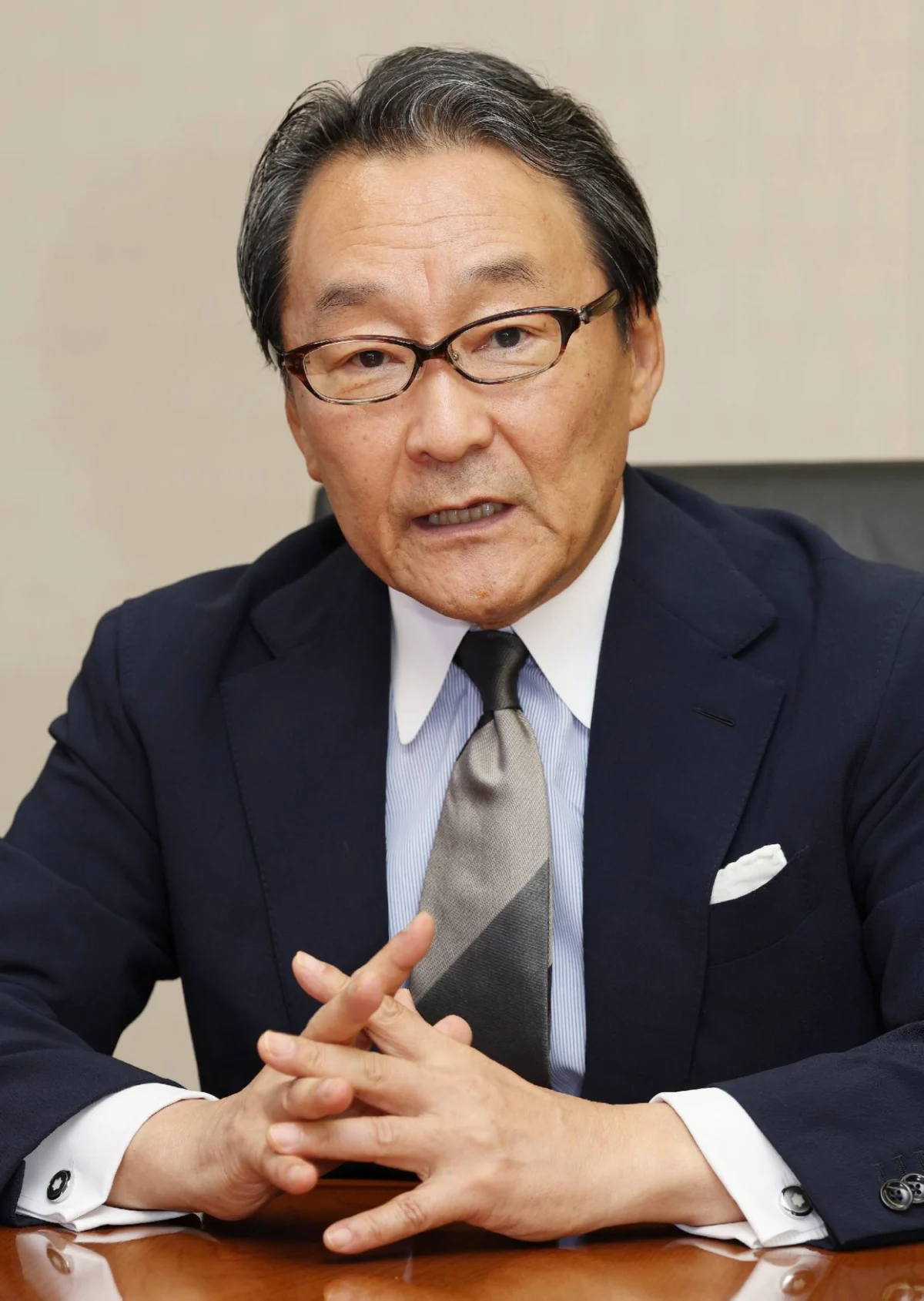
KYOTO – In a significant pivot for one of Japan’s most aggressive corporate expansionists, Nidec Corporation has announced a formal moratorium on business acquisitions. President Mitsuya Kishida confirmed on Friday that the Kyoto-based motor manufacturer—a global titan in the precision electronics and automotive component sectors—will pause its long-standing strategy of aggressive inorganic growth to prioritize a top-to-bottom internal restructuring.
The decision comes as Nidec grapples with the fallout of systemic accounting irregularities and lapses in product quality control, challenges that have forced the company to reckon with the very corporate culture that fueled its rise to global prominence.
The Core Mandate: Rebuilding Trust from Within
For decades, Nidec’s growth engine was synonymous with its founder, Shigenobu Nagamori, and his penchant for high-speed acquisitions. However, under the stewardship of President Mitsuya Kishida, the firm is signaling a retreat from this high-octane growth model to address fundamental governance deficits.
"I will work on rebuilding our company’s governance system," Kishida stated during a press interview on Friday. The company has unveiled an ambitious ¥130 billion ($860 million) investment plan spanning the next five years, specifically earmarked for strengthening internal controls, audit mechanisms, and quality assurance protocols designed to prevent future irregularities.
This capital commitment is not merely a budgetary line item; it represents a fundamental shift in the company’s strategic DNA. By prioritizing structural integrity over market share expansion, Nidec is attempting to stabilize its reputation among investors and clients who have been unsettled by recent revelations.
Chronology of a Corporate Crisis
The path to the current restructuring effort is marked by a series of investigations and findings that have painted a sobering picture of Nidec’s internal environment.
- Early Detection of Irregularities: Nidec first flagged internal accounting discrepancies that necessitated a deep dive into the financial reporting processes of its subsidiaries.
- The Independent Panel Investigation: An external committee of legal and financial experts was commissioned to determine the root cause of the fraudulent activity.
- The 2023–2024 Governance Review: Throughout the past year, findings surfaced indicating that the pressure to meet aggressive financial targets had inadvertently created an environment where corners were cut—both in accounting and in product quality certifications.
- Friday’s Strategic Pivot: President Kishida’s announcement effectively draws a line in the sand, closing the chapter on the previous era of unchecked growth and initiating a period of institutional consolidation.
Supporting Data: The Cost of Ambition
The investigations conducted by the expert panel revealed a direct correlation between Nidec’s intense performance management and the emergence of fraudulent behaviors. The panel’s report highlighted that the "excessive pressure" exerted by founder Shigenobu Nagamori to hit ambitious performance targets was a primary catalyst for the irregularities.
The following data points outline the scale of the challenge:
- Governance Budget: ¥130 billion committed over five years for compliance infrastructure.
- Performance Targets: The panel identified that top-down pressure on quarterly performance often overrode the long-term caution required for rigorous product safety testing.
- Corporate Culture: The panel described a firm that historically prioritized "short-term profits" above all else, creating a systemic risk that the current administration is now tasked with dismantling.
Official Responses and the Path Forward
President Kishida’s response to these findings is nuanced. He acknowledges the weight of the company’s history while advocating for a necessary departure from the status quo.
"We had a corporate culture to pursue short-term profits," Kishida admitted. "We will build a system that makes it impossible to commit irregularities regarding accounting and product quality control."
Re-evaluating the Portfolio
Beyond internal controls, the leadership is contemplating a rationalization of its existing assets. Kishida suggested that Nidec might divest or partner out certain non-core operations. "We will review our operations, including the possibility of ceding what we have in our group to partner entities," he said, hinting that the sprawling nature of Nidec’s previous acquisitions might be streamlined to improve operational focus.
The Vision for Future Growth
Despite the current austerity, Kishida did not rule out future growth. Once the governance framework is restored and investor confidence is regained, the company intends to pivot toward high-growth sectors. "If we could regain trust, we want to consider strategies such as conducting business acquisitions in new sectors," he noted.
The sectors of interest for a post-restructuring Nidec include:
- Data Centers: Leveraging Nidec’s expertise in cooling and high-efficiency motors to support the massive infrastructure requirements of global cloud providers.
- Humanoid Robotics: A frontier that requires the precise motor control technology for which Nidec is world-renowned.
- AI-Driven Components: Capitalizing on the "tremendous growth" expected in artificial intelligence-related industries, where Nidec’s hardware remains a critical component.
Implications for the Global Motor Industry
The implications of Nidec’s move are twofold: they serve as a cautionary tale for high-growth conglomerates and as a potential template for Japanese corporate reform.
The End of the "Nagamori Era" Style?
Shigenobu Nagamori has long been a legendary figure in Japanese business, known for his relentless work ethic and "get it done" attitude. However, the expert panel’s critique suggests that the very traits that saved Nidec from bankruptcy decades ago may have become a liability in a modern, highly regulated global economy. The transition from a founder-centric, high-pressure environment to a decentralized, governance-first model is a significant challenge for any company, particularly one as large and diverse as Nidec.
Market Confidence and Investor Sentiment
Investors have reacted with a mix of caution and optimism. While the freeze on acquisitions may slow the top-line revenue growth in the short term, the market has historically rewarded companies that demonstrate a commitment to transparency and sustainable governance. If Kishida can successfully implement the proposed controls, Nidec may emerge as a more resilient, albeit slower-growing, entity.
The Challenge of Cultural Transformation
Changing a corporate culture that has been molded by a singular, dominant personality for decades is a monumental task. Kishida must balance the need for rigorous compliance with the need to retain the agility and competitive spirit that made Nidec an industry leader. The success of the ¥130 billion investment will be measured not just in new systems, but in the behavior of employees at every level of the organization.
Conclusion: A Turning Point
Nidec stands at a precarious juncture. The company’s decision to pause its acquisition engine is a tacit admission that the pursuit of size has come at the expense of stability. By acknowledging the failures in its corporate culture and committing significant capital to rectify them, Nidec is demonstrating a willingness to evolve.
The next five years will be defined by whether Nidec can successfully navigate the "Governance Gap." For the global manufacturing sector, all eyes will be on Kyoto. If Nidec succeeds in reforming its culture without losing its technological edge, it could set a new standard for how large-scale Japanese corporations manage the transition from founder-led expansion to sustainable, systems-based governance.
As Kishida noted, the company is looking toward a future dominated by AI, robotics, and data infrastructure. Whether Nidec is the company to lead that future will depend entirely on its ability to prove that it has finally traded the pursuit of short-term quarterly gains for the enduring value of corporate integrity.












No comments yet. Be the first to join the conversation!