

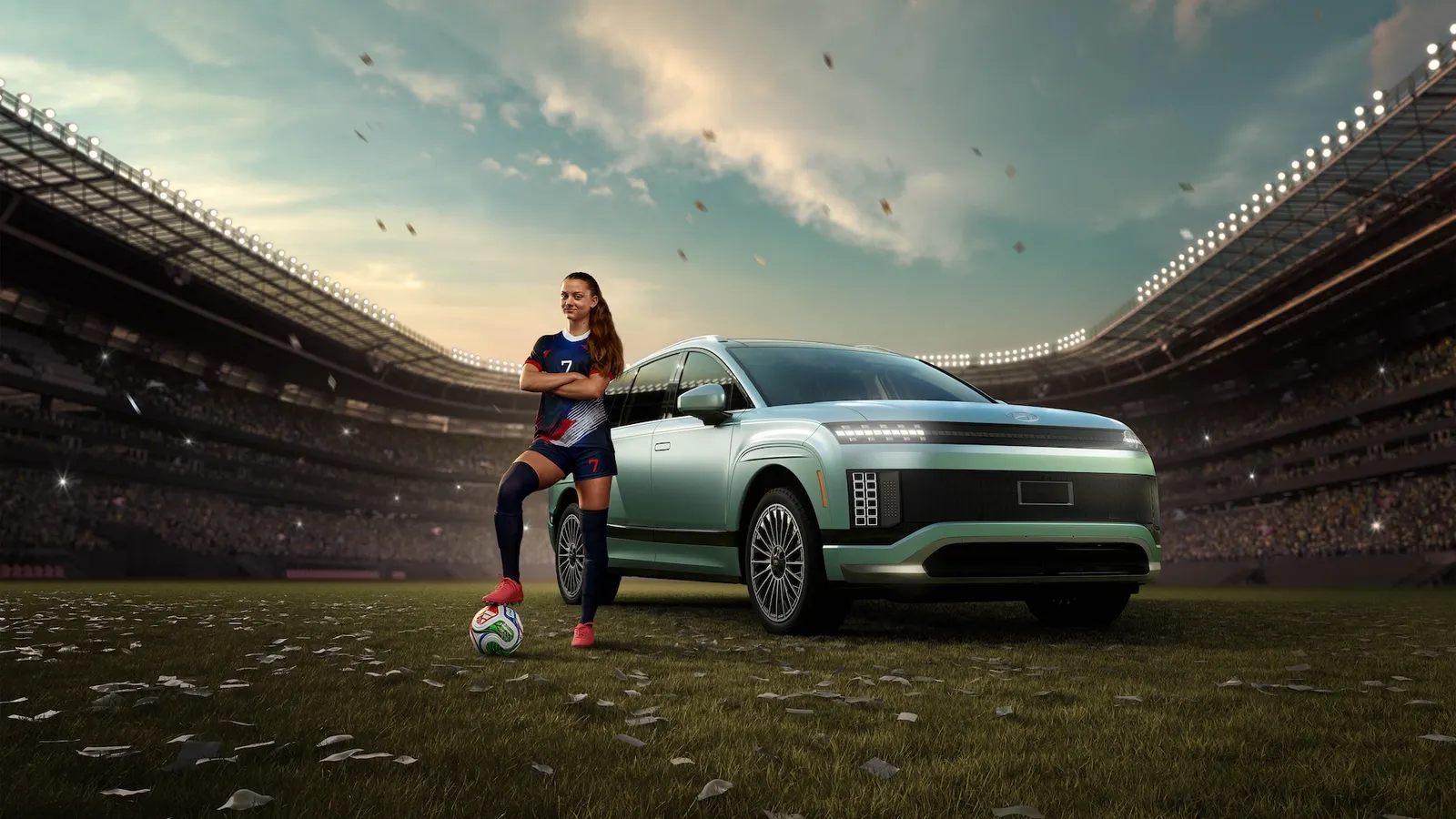
In an era defined by economic headwinds and a rapidly shifting automotive landscape, Hyundai is doubling down on one of the most powerful cultural currencies on the planet: football. As the official mobility partner of the 2026 FIFA World Cup, the South Korean automotive giant has officially launched its U.S. marketing offensive, titled "Next Starts Now."
The campaign serves as a strategic bridge, drawing a direct parallel between the brand’s cutting-edge automotive and robotic technologies and the ascent of the next generation of global football icons. By aligning itself with the rising stars of the sport, Hyundai is attempting to solidify its position not just as a car manufacturer, but as a lifestyle brand deeply woven into the fabric of global culture.
Main Facts: A Strategic Alignment of Tech and Talent
The "Next Starts Now" campaign, which kicked off on June 1, is designed to be a comprehensive, multi-channel effort. At its core is a 60-second "hero" film featuring five of the world’s most promising young football talents, juxtaposed with the advanced capabilities of the Atlas robot. The robot, a product of Boston Dynamics—the robotics firm under the Hyundai Motor Group umbrella—symbolizes the company’s vision for the future of mobility and artificial intelligence.
Hyundai’s decision to integrate robotics into its football-centric marketing is a calculated move to showcase its technical prowess. While other automotive competitors focus on traditional vehicle performance, Hyundai is highlighting the "humanity" of its technology, reinforcing its 2019 brand philosophy: "Progress for Humanity."
The campaign’s rollout includes two 30-second cutdowns slated for broadcast during FIFA programming beginning June 11, the opening day of the tournament. These ads will serve as the anchor for a modular content strategy that spans television, digital streaming, social media, influencer partnerships, and physical experiential activations.
Chronology: From Global Vision to U.S. Execution
Hyundai’s journey toward the 2026 World Cup has been a staged, methodical process:
- 2019: The brand officially adopts "Progress for Humanity" as its overarching corporate philosophy, shifting its marketing focus toward sustainability and future-forward innovation.
- April 2024: Hyundai launches the global "Next Starts Now" initiative, setting the stage for its international World Cup messaging.
- May 2024: The brand announces South Korean football captain and global icon Son Heung-min as its lead brand ambassador. Shortly after, it unveils a social film series documenting the Atlas robot learning the fundamentals of soccer, effectively creating a "digital character" for the brand.
- May 2024 (Pre-Launch): Hyundai hosts a series of youth soccer camps in major U.S. hubs, including Atlanta, Miami, Los Angeles, and New Jersey. These events, headlined by U.S. legends Tim Howard and Mia Hamm, aim to foster grassroots connections.
- June 1, 2024: The official U.S. marketing campaign goes live, signaling the start of the heavy media spend and the deployment of "always-on" digital content.
- June 11, 2024: The formal start of the World Cup tournament, marking the debut of the broadcast-level advertising push.
Supporting Data: Why Soccer? Why Now?
The automotive industry is currently navigating a period of profound turbulence. High inflation, fluctuating gas prices, and elevated interest rates have cooled the consumer market significantly. Recent data from the Wall Street Journal suggests that a million potential new car buyers have exited the market, with little indication of a short-term return.
In this climate, traditional transactional advertising—simply showing a car’s features and price—is losing its efficacy. Hyundai’s pivot to "fandom marketing" is a response to this data. By investing in a long-term, high-visibility partnership like the FIFA World Cup, Hyundai is focusing on brand equity and long-term loyalty rather than immediate, short-term sales spikes.
The choice of soccer in the U.S. is also data-driven. The sport is reaching a "critical mass" in the American market, bolstered by the 2026 hosting duties. For a brand looking to capture the "next generation" of consumers—Gen Z and Gen Alpha—soccer provides a captive, highly engaged audience that indexes higher on social media usage and digital interaction than almost any other demographic.
Official Responses: The Philosophy Behind the Spend
Sean Gilpin, CMO of Hyundai Motor America, has been transparent about the intensity of this campaign. Rejecting the term "360-degree marketing" as an industry cliché, he nonetheless acknowledges that the scale of this project is unprecedented for the company.
"When you spend the money it takes to be a global partner, you have to have the activation to really get the full value out of programs like this," Gilpin stated. He emphasized that the goal is not to force commercial content into a viewer’s feed, but to provide genuine cultural value.
Addressing the brand’s focus on the human experience, Gilpin noted: "Social is so important with sports because people are watching, interacting, and reacting. We’re not trying to insert an overcommercialized piece of content. What we’re trying to do is bring them into something, either culturally about the game or about what’s happening in the tournament, that maybe they wouldn’t have access to if it weren’t for our official global partnership."
Regarding the return to physical, "in-person" marketing, Gilpin observed: "These physical experiences are really having a renaissance right now. I think there’s a little bit of digital fatigue, so immersive, rich experiences with real interactions with people and brands are really important."
Implications: The Future of Automotive Fandom
The implications of Hyundai’s strategy extend far beyond the duration of the tournament. By embedding itself in the cultural narrative of the World Cup, Hyundai is attempting to secure a seat at the table for the next decade of automotive consumerism.
1. The Rise of "Always-On" Media
Hyundai is moving away from the "burst" model of advertising (where ads appear only during major games) toward an "always-on" model. By leveraging TikTok, Meta, and YouTube, the brand is ensuring that it remains relevant even when no match is being played. Using the Palisade’s dash-cam technology to capture real-life celebrations and fan moments is a clever way to integrate the product into the authentic, user-generated content cycle.
2. Identifying Talent Early
Hyundai’s partnership with young, up-and-coming players—facilitated by its agency partners—shows a shift in sponsorship strategy. Rather than paying a premium for an aging superstar, the brand is betting on the future superstar. With the rise of Name, Image, and Likeness (NIL) deals, the roadmap for identifying future talent is more transparent than ever, allowing brands to secure talent before their market value reaches its zenith.
3. Bridging Digital and Physical Worlds
The campaign’s reliance on "FIFA Fan Fests" and local dealer activations highlights the importance of the "omnichannel" approach. Even as the digital landscape dominates, Hyundai believes that physical, immersive brand experiences are essential for building trust. By creating a physical presence in host cities, the brand is providing a tangible touchpoint for consumers who are increasingly overwhelmed by digital ads.
4. A Template for Economic Resilience
Perhaps the most significant implication is how Hyundai is handling the current economic downturn. Instead of retreating, the brand is doubling down on its identity. By framing the purchase of a Hyundai as part of a forward-thinking, "next-gen" lifestyle, the company is attempting to insulate itself from price-sensitive competition. It is telling the consumer: "We are not just a car; we are a partner in your future."
Conclusion: A Game of Long-Term Strategy
Hyundai’s "Next Starts Now" campaign is a testament to the fact that, in a volatile market, brand strength is the ultimate hedge. By leveraging the immense reach of the 2026 FIFA World Cup and marrying it with the technological appeal of its robotics and future-focused mobility, Hyundai is playing a long game. Whether through its social media algorithms, youth soccer initiatives, or high-concept hero films, the brand is clearly signaling that it intends to define the next generation of the automotive industry, one match at a time. As Gilpin noted, "Building brand fandom, whether that is improving business today or in the future, it’s not really a choice of doing one or the other. We’re doing all of it all the time."












No comments yet. Be the first to join the conversation!