

Published: June 3, 2026, 8:01 AM EDT
By Aimee Hart
The TV show can surpass the limitations of tabletop play by showing different perspectives
Critical Role Reveals the True Genius Behind Adapting a D&D Campaign into a Show
The aspiration of nearly every Dungeons & Dragons enthusiast is to witness their meticulously crafted worlds, intricate narratives, and beloved characters transcend the tabletop and materialize in another medium. For the cast and crew of Critical Role, this dream has not only become a reality but has evolved into a groundbreaking exploration of storytelling itself. With the impending premiere of The Legend of Vox Machina Season 4, Critical Role is poised to redefine the very essence of D&D adaptation, addressing the inherent narrative limitations of live tabletop play by strategically leveraging the expansive capabilities of animated television. This innovative approach promises to deliver a deeper, more nuanced, and ultimately more compelling experience for both long-time fans and new audiences.
At its core, the revelation from Critical Role’s creative team, as detailed in an exclusive interview with Polygon, centers on the profound opportunity presented by animation: the ability to shift perspective. While tabletop role-playing games inherently confine the narrative to the immediate experiences and perceptions of the player characters, an animated series can transcend this singular viewpoint, offering an omniscient lens into the wider world. This shift, made possible by nearly a decade of hindsight since the original campaign’s conclusion, is not merely an aesthetic choice but a deliberate narrative strategy to enrich the beloved world of Exandria and its inhabitants.
Main Facts: Redefining Adaptation Through Perspective
Critical Role, the pioneering force behind the wildly popular Dungeons & Dragons actual play series, is set to launch the highly anticipated fourth season of its animated adaptation, The Legend of Vox Machina, on Prime Video today, June 3, 2026. This new season promises to delve into uncharted narrative territory, specifically by moving beyond the player characters’ immediate perspectives to explore the motivations, strategies, and hidden machinations of the antagonists and the broader world.
Sam Riegel, executive producer of The Legend of Vox Machina and the voice of the iconic bard Scanlan Shorthalt, articulated this transformative approach in a recent interview. "When we played it through originally, the audience was really only seeing the perspective of Vox Machina," Riegel explained. "But now we get to cut away and show you what was going on with the bad guys, the intrigue, planning, and deceit." This statement encapsulates the core innovation: an animated series, unlike a live stream, is not bound by the single "camera angle" of the player party. It can fluidly transition between scenes, revealing concurrent events, hidden agendas, and the inner workings of antagonist factions, thereby adding layers of depth previously impossible in the original format.
A significant focus for Season 4 will be the burgeoning evil cult spreading across Exandria, directly tied to the formidable Whispered One. While "Critters" (Critical Role fans) familiar with Campaign 1 are well aware of this overarching threat, the animated series aims to provide an unprecedented exploration of its origins, reach, and the diverse individuals it ensnares. Riegel further elaborated that the series would reveal that the cult’s followers are not merely archetypal villains but include "good, everyday folk who want something to believe in." This nuanced portrayal challenges simplistic notions of good versus evil, enriching the narrative tapestry and elevating the stakes for Vox Machina.
Chronology: From Humble Beginnings to Animated Zenith
The journey of Critical Role from a private D&D game among friends to a global entertainment phenomenon is a testament to the power of shared storytelling and community. Its evolution provides crucial context for understanding the significance of this latest narrative leap.
The Genesis (2012-2015): The story of Vox Machina began years before its public debut, as a home game played by a group of professional voice actors. This foundational period allowed the characters, world, and intricate relationships to organically develop, fostering a deep connection among the players. In March 2015, Critical Role launched on Geek & Sundry, presenting their ongoing D&D campaign, "Vox Machina," to a live audience. The raw, unscripted nature of actual play, combined with the actors’ improvisational prowess and emotional investment, quickly captivated viewers. The success was immediate and profound, establishing a dedicated fanbase that resonated with the genuine camaraderie and epic scope of the narrative.
The Kickstarter Phenomenon (2019): In March 2019, Critical Role launched a Kickstarter campaign to fund a two-episode animated special based on the Vox Machina campaign. The response was historic. The initial goal of $750,000 was shattered within minutes, ultimately raising over $11.3 million, making it one of the most successful film and television projects in Kickstarter history. This overwhelming support underscored the immense demand for animated adaptations and proved the viability of translating their unique storytelling style to a visual medium. Amazon Prime Video subsequently picked up the series, commissioning additional episodes and ensuring a high-quality production under the guidance of animation studio Titmouse.
The Rise of The Legend of Vox Machina (2022-2024): The first season of The Legend of Vox Machina premiered in January 2022, receiving critical acclaim for its faithful yet refined adaptation of the original campaign’s early arcs. It successfully distilled hundreds of hours of gameplay into a concise, action-packed narrative, bringing the vibrant world and beloved characters to life with stunning animation and stellar voice acting. Subsequent seasons continued this trend, tackling major story arcs like the Briarwood saga and the Chroma Conclave. Each season demonstrated a growing sophistication in adapting the material, learning how to balance fan expectations with the demands of episodic television.

The "Decade of Hindsight" and Season 4 (2026): The creative team’s current approach for Season 4 is heavily influenced by the "decade of hindsight" mentioned by Sam Riegel. The original Campaign 1 concluded in 2017, nearly nine years before Season 4’s premiere. This significant temporal distance has afforded the Critical Role team, now acting as executive producers, an invaluable opportunity for reflection and refinement. They possess a complete understanding of the campaign’s trajectory, character arcs, and thematic underpinnings. This allows them to revisit the narrative with a holistic view, identifying areas that could be enriched, elaborated upon, or viewed from a fresh perspective – precisely what the animated format now enables them to do. The decision to deepen the antagonist’s narrative is a direct outcome of this retrospective analysis, ensuring that the adaptation not only retells the story but enhances it.
Supporting Data: Bridging the Gap Between Tabletop and Television Narrative
The distinction between a Dungeons & Dragons campaign and a scripted television series, while both forms of storytelling, lies primarily in their narrative mechanisms and perspectives. Critical Role’s strategy for The Legend of Vox Machina Season 4 ingeniously exploits these differences.
Limitations of Tabletop Actual Play:
- Player-Centric Viewpoint: In a D&D game, the narrative is almost exclusively experienced through the eyes of the player characters. The Dungeon Master (DM) describes the world and the actions of Non-Player Characters (NPCs), but players only know what their characters perceive or are told. This creates a thrilling sense of immediacy and discovery but limits the audience’s access to concurrent events happening elsewhere.
- DM as Narrator: While a skilled DM like Matthew Mercer can vividly describe antagonist motivations, internal struggles, or secret plans, these are always filtered through the DM’s narration. The audience doesn’t see these events unfold directly; they are told about them or infer them from the villains’ actions.
- Improvisation and Unpredictability: The beauty of actual play lies in its improvisational nature. Player choices can dramatically alter the narrative, leading to unexpected outcomes. While this is exciting, it means pre-planned villainous subplots or intricate background machinations might be cut short, completely circumvented, or simply not fully explored due to the party’s focus or actions.
- Simultaneous Events: Showing multiple, simultaneous events (e.g., Vox Machina battling a monster while, unbeknownst to them, the Whispered One’s cultists are performing a ritual in a different location) is difficult to convey effectively in a live, single-perspective format without resorting to lengthy DM exposition.
Advantages of Animated Television:
- Omniscient Perspective: An animated series enjoys an omniscient narrative perspective. It can cut away from the protagonists at any moment to show events unfolding elsewhere, providing crucial context, building suspense, or revealing hidden truths. This allows for parallel narratives and a richer, more complex world depiction.
- Visual Storytelling: Animation allows for direct visual representation of antagonist actions, internal monologues (through visual cues or voice-overs), and the scale of their influence. Instead of merely being told about a cult, viewers can witness its spread, its recruitment tactics, and the varied faces of its followers.
- Controlled Pacing and Revelation: Unlike the unpredictable nature of TTRPGs, a scripted series allows for precise control over pacing and information delivery. The creative team can meticulously plan when and how to reveal antagonist motivations, ensuring maximum narrative impact and thematic resonance.
- Deepening Characterization (Antagonists): By showing the villains’ perspectives, their fears, their rationalizations, or even their moments of doubt, the series can transform them from one-dimensional obstacles into complex characters. This makes their defeat more meaningful and the heroes’ struggle more profound.
The specific example of the Whispered One’s cult in Season 4 perfectly illustrates this. In Campaign 1, the cult’s activities were primarily experienced as obstacles Vox Machina encountered. The players reacted to the effects of the cult, but the inner workings, the recruitment of "good, everyday folk," and the intricate web of deceit were largely implicit or conveyed through brief DM descriptions. Now, the animated series can dedicate entire scenes to these elements, showing how seemingly ordinary people are drawn into the cult’s ideology, driven by desires for belonging, power, or even misguided hope. This transformation makes the cult a more insidious and believable threat, highlighting the fragility of morality in a world teetering on the brink of disaster.
This approach is not unprecedented in media adaptation, but it is particularly groundbreaking for a D&D actual play series. It moves beyond merely animating the existing narrative to actively enhance it, adding layers of meaning that were previously inaccessible. It ensures that The Legend of Vox Machina is not just a visual retelling but a complementary narrative experience that deepens the entire Exandrian lore.
Official Responses: The Vision of the Creative Team
The strategic shift in narrative focus for The Legend of Vox Machina Season 4 is a direct reflection of the creative vision shared by Critical Role’s executive producers, who are also the primary cast members. Their collective experience, both as players and now as story architects for the animated series, positions them uniquely to understand and exploit the strengths of each medium.
Sam Riegel’s statement regarding the ability to "cut away and show you what was going on with the bad guys" is not just a casual observation but a key directive for the season’s storytelling. It speaks to a desire to elevate the narrative beyond a simple hero’s journey. While Riegel is often known for his comedic character Scanlan, his role as an executive producer highlights a keen understanding of narrative structure and audience engagement. His insights suggest a deliberate effort to humanize (or demonize, as the case may be) the antagonists in a way that the original format, by its very nature, could only hint at.
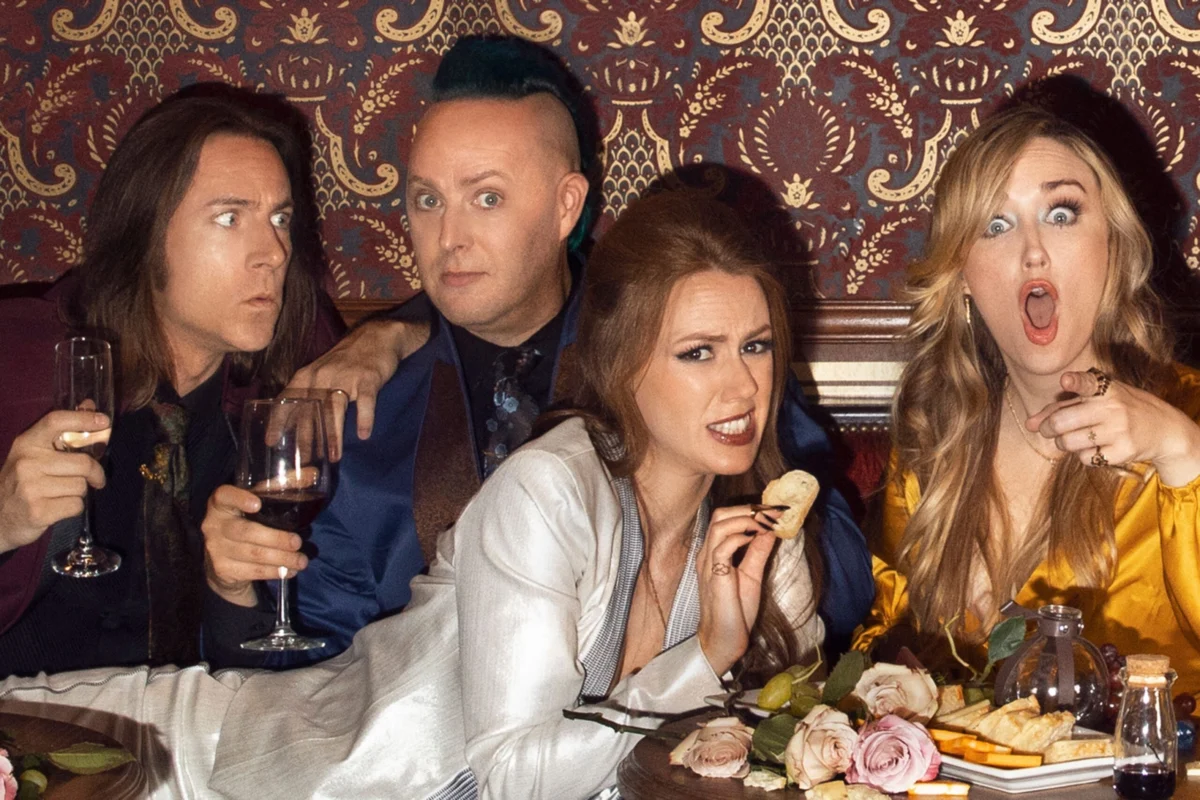
While specific quotes from other Critical Role members regarding this particular narrative choice were not detailed in the original article, their collective involvement as executive producers — including Matthew Mercer (DM, creative lead), Marisha Ray (Keyleth), Travis Willingham (Grog), Laura Bailey (Vex’ahlia), Liam O’Brien (Vax’ildan), and Ashley Johnson (Pike) — implies a unanimous buy-in to this creative direction. Matthew Mercer, as the original Dungeon Master, holds an unparalleled understanding of the campaign’s antagonists and the world of Exandria. His input would be invaluable in crafting these expanded villainous perspectives, ensuring they align with the established lore and thematic underpinnings of Campaign 1.
Marisha Ray, as Critical Role’s Creative Director, has consistently championed innovative approaches to storytelling and community engagement. Her influence would likely push for narrative choices that offer fresh insights and deepen the emotional impact for the audience. Similarly, the entire cast, having lived through the original campaign for years, would possess a unique perspective on moments that, in hindsight, could have benefited from a broader narrative lens.
The collaboration with Prime Video and animation studio Titmouse has been crucial in realizing this ambitious vision. These partners provide the technical expertise and resources necessary to translate complex narrative ideas into compelling animation. The trust placed in Critical Role’s creative team by Amazon indicates a recognition of their deep understanding of the source material and their ability to innovate within the adaptation space. This level of creative control allows the team to make bold choices, like the expanded antagonist perspective, that might otherwise be diluted in a more traditional studio adaptation. The synergy between Critical Role’s narrative insight and the animation team’s visual prowess is what makes this season’s approach genuinely "genius."

Implications: Setting a New Standard for Fantasy Adaptation
The narrative strategy employed by Critical Role for The Legend of Vox Machina Season 4 carries significant implications, not only for the series itself but for the broader landscape of fantasy adaptations, Dungeons & Dragons, and the future of TTRPG-inspired media.
1. Elevating Critical Role’s Legacy: By proactively addressing the inherent limitations of its original format, Critical Role solidifies its position not just as a pioneer in actual play but as a sophisticated multimedia storytelling entity. This move demonstrates a commitment to narrative excellence that transcends direct transcription, proving that adaptations can and should enhance their source material. It positions The Legend of Vox Machina as a benchmark for how TTRPGs can be translated into other mediums, moving beyond mere fan service to deliver genuinely enriched narratives.
2. Redefining TTRPG Adaptations: The success of this approach could inspire a paradigm shift in how other D&D campaigns or TTRPGs are adapted. Future projects might move away from strictly adhering to the player perspective, instead embracing the omniscient capabilities of film and television to build more complex worlds and compelling antagonist arcs. This could open the door for a wave of adaptations that are more narratively ambitious and engaging for a wider audience, including those unfamiliar with the source game. It legitimizes the idea that the "gaps" in actual play — the unseen moments, the untold perspectives — are not weaknesses but opportunities for expansion in adaptation.
3. Deeper Fan Engagement and Accessibility: For existing Critters, Season 4 offers a thrilling new perspective on a beloved story. It provides fresh insights into characters and events they thought they knew intimately, fostering renewed discussion and appreciation for the original campaign. For new viewers, this expanded narrative makes the world of Exandria more accessible and intriguing, providing a richer context for Vox Machina’s heroic struggles. The complexity of the antagonists, particularly the portrayal of "everyday folk" being drawn into evil, makes the narrative more relatable and thought-provoking, potentially attracting a broader demographic beyond traditional D&D fans.
4. The Evolution of Storytelling Across Mediums: Critical Role’s method highlights a crucial lesson in transmedia storytelling: each medium possesses unique strengths and weaknesses. A truly successful adaptation doesn’t just copy; it translates, transforms, and leverages the new medium’s capabilities to tell the story in the most effective way possible. This project serves as a masterclass in understanding how a narrative can evolve and deepen as it moves from an improvisational, player-driven game to a tightly scripted, visually rich animated series.
5. Commercial Success and Industry Investment: The critical and commercial success of The Legend of Vox Machina, especially with its innovative narrative approach in Season 4, will undoubtedly reinforce Amazon’s investment in fantasy and TTRPG-adjacent content. It signals to other streaming platforms and production houses that there is a significant, hungry audience for well-produced, intelligently adapted fantasy stories. This could lead to more opportunities for other TTRPG properties to receive high-quality adaptations, fostering a vibrant ecosystem of fantasy entertainment.
6. Future Critical Role Projects: This successful narrative experimentation in The Legend of Vox Machina paves the way for future animated adaptations of Critical Role’s other campaigns, such as The Mighty Nein and Bells Hells. The lessons learned in Season 4 will undoubtedly inform the creative decisions for these future projects, potentially allowing for even more sophisticated and layered storytelling from their inception. The "decade of hindsight" will only grow for these campaigns, offering even greater opportunities for narrative enrichment.
In conclusion, The Legend of Vox Machina Season 4 is more than just another season of an animated show; it represents a bold leap forward in the art of adaptation. By embracing the omniscient narrative power of animation, Critical Role is not merely retelling a story but reimagining it, adding depth, complexity, and nuance that will resonate with audiences for years to come. It’s a testament to the enduring power of Dungeons & Dragons and the visionary talent behind Critical Role that their adventures continue to inspire and innovate across all forms of media.
The Legend of Vox Machina season 4 premieres June 3 on Prime Video.











No comments yet. Be the first to join the conversation!