

In the ever-shifting landscape of modern cinema, where tentpole blockbusters often dominate the cultural conversation, the "specialized" sector—the lifeblood of independent film—remains a vital, if volatile, arena. As part of a new, recurring feature, IndieWire is partnering with Comscore to provide an exclusive, deep-dive look at the Top 10 releases in the specialized box office. This report analyzes the data, tracks the trajectories of breakout hits, and examines the strategic maneuvering required for indie films to find an audience in an increasingly crowded marketplace.
This week’s focus is on the auspicious debut of Time and Water, the latest documentary from acclaimed filmmaker Sara Dosa. By analyzing the opening weekend figures, we can discern the patterns that distinguish a fleeting indie curiosity from a sustainable, long-tail success story.
The Main Event: Sara Dosa’s Measured Debut
After the breakout success of her 2022 documentary Fire of Love, director Sara Dosa has cemented her reputation as a master of the contemplative, visually arresting non-fiction form. Neon’s handling of Fire of Love provided a roadmap for how to market "elevated" documentary filmmaking, turning a niche subject—volcanology—into a bona fide cultural moment. Now, the rising distribution house 1-2 Special is applying a similar, if not more refined, strategy to Dosa’s latest effort, Time and Water.
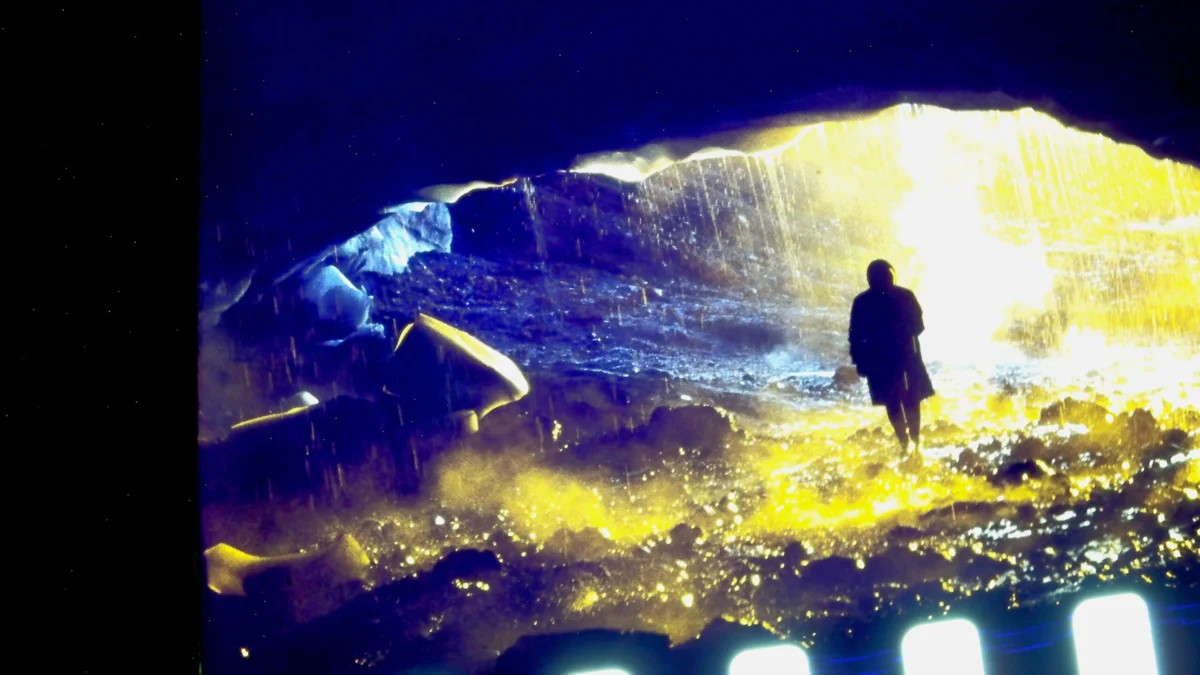
The premise of Time and Water is as ambitious as it is meditative. Described by critics as a poetic love letter to a glacier, the film eschews traditional narrative pacing for something more geological in its rhythm. Recognizing that this is not a film designed for a wide, multiplex rollout, 1-2 Special opted for a ultra-targeted release strategy, launching on a single screen in New York City.
The results are, by every metric, an encouraging start. The film grossed $8,048 over its opening weekend. While that figure might seem modest compared to the multi-million-dollar hauls of studio sequels, the per-screen average (PSA) tells a different story. It is a figure that signals intense interest from a focused, core audience.
Chronology of a Specialized Rollout
The strategy behind Time and Water is one of "slow-burn" theatrical expansion. Rather than flooding the market, the distributors are allowing the film to build word-of-mouth momentum.

- The Soft Launch (May 29–31): The film opened in a single New York City location. The goal was to generate critical buzz and build a "prestige" narrative before moving outward.
- The Upcoming Expansion (June 5): Following the success of the New York opening, the film is set to expand to key cultural hubs in Los Angeles and San Francisco. This tiered release is a classic hallmark of the specialized market, designed to maximize the per-screen average by ensuring that each venue has enough demand to support full, or near-full, auditoriums.
- The Long-Tail Outlook: Given the trajectory of Fire of Love—which opened on three screens with a $7,472 PSA and eventually hit $1.12 million domestically—analysts are bullish on Time and Water. If the film can maintain its current per-screen momentum as it hits the West Coast, it is well-positioned to mirror, or even exceed, the domestic performance of Dosa’s previous work.
Supporting Data: Comparative Metrics
To understand why Time and Water is considered a success, one must look at the comparative data. The film’s opening per-screen average of $8,048 actually outperforms the opening weekend PSA of Fire of Love ($7,472).
The specialized market is currently led by Black Bear’s Tuner, which is experiencing a significantly different lifecycle. Having moved past its initial platform release, Tuner expanded to 452 screens, resulting in a total weekend haul of $1.72 million and a cumulative domestic gross of $1.87 million. While the scale of Tuner is vastly different from that of Time and Water, both films highlight the dichotomy of the current indie market: the struggle between the high-volume expansion of more accessible dramas and the curated, prestige-focused rollout of arthouse documentaries.
Other notable performers in this week’s chart include 1-2 Special’s other powerhouse, Silent Friend. Now in its fourth week, the Ildikó Enyedi-directed film—starring cinematic heavyweights Tony Leung Chiu-wai and Léa Seydoux—has proven remarkably resilient, continuing to draw audiences for its evocative, tree-centric narrative. With a total domestic haul of $307,142, it serves as proof that "slow cinema" can sustain a healthy, multi-week theatrical run.
Official Industry Responses and Market Implications
The success of these films has sparked a renewed conversation within the industry regarding the viability of specialized releases.
"The specialized market is not dead; it is simply evolving," says one distribution strategist. "The ‘slow-rollout’ strategy is the only way to combat the rising costs of P&A (prints and advertising). By limiting the initial footprint, you lower your risk while simultaneously creating a sense of scarcity and ‘must-see’ urgency."
The implication for distributors is clear: the era of the wide-release indie is, for the moment, largely behind us. Instead, we are entering a period where distributors must be laser-focused on where their specific demographics congregate. For a film like Time and Water, which requires a certain level of viewer attention and patience, the traditional "wide" model would have been a financial catastrophe. By treating the film as a piece of "event" cinema—a rare, singular experience—the distributors are effectively leveraging the film’s own meditative nature as a marketing asset.

Future Outlook: The Role of the Specialized Chart
As IndieWire continues to track this sector, the criteria for inclusion remain strict to ensure the data reflects true "specialized" performance. The chart focuses on independent and mini-major distributors with films that maintain a maximum release of 500 screens at any point. This filters out the "noise" of event cinema, re-releases, and massive international imports that often distort box office statistics.
Looking ahead, the success of Time and Water serves as a litmus test for the summer season. If a documentary about a glacier can command such strong per-screen numbers, it suggests that there is a deep, untapped appetite for high-concept, non-fiction storytelling.
As we move toward the mid-year point, the industry will be watching closely to see if other distributors adopt the "1-2 Special model." The ability to scale a film based on genuine audience demand, rather than predetermined contractual obligations to theater chains, is becoming the gold standard for independent success.
Conclusion
The box office is no longer a monolith. While the global conversation is often dominated by the sheer volume of major studio franchises, the heartbeat of the industry remains in the dark, single-screen rooms where films like Time and Water are finding their voice.
Sara Dosa’s latest project is not just a triumph of filmmaking; it is a triumph of distribution strategy. By respecting the film’s pace, embracing its niche appeal, and carefully cultivating an audience in key urban centers, 1-2 Special has proven that the specialized market is not just surviving—it is thriving. For those who value the art of cinema over the volume of ticket sales, this is a trend worth celebrating.
As the calendar turns to June, the expansion of Time and Water into Los Angeles and San Francisco will provide the next chapter in this unfolding success story. If the current trajectory holds, we may be looking at one of the most successful independent documentaries of the year—a film that, much like the glaciers it documents, is moving slowly, but with a force that is impossible to ignore.










No comments yet. Be the first to join the conversation!