

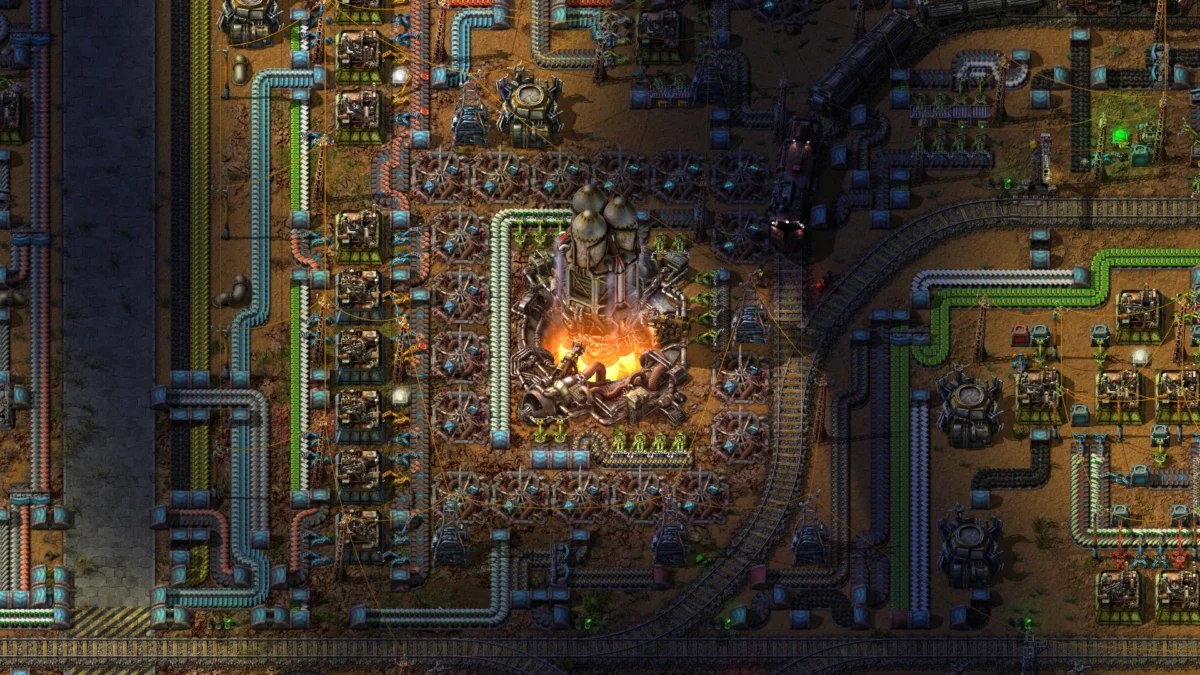
For over a decade, the industrial titan known as Factorio has served as the gold standard for automation and base-building games. Since its humble beginnings as an alpha build in 2012, the title has evolved from a niche project into a cultural phenomenon that has consumed millions of hours of players’ lives. However, all assembly lines must eventually reach their conclusion. Wube Software, the Czech developer behind the behemoth, has officially announced that the upcoming 2.1 update will serve as the final major content release for the game.
This decision marks a significant turning point for the studio, which is now pivoting its resources toward future, yet-to-be-announced projects. As the Factorio community prepares for this transition, it is worth examining the legacy of a game that defined a genre and the quiet, deliberate shift occurring within Wube Software.
The Final Blueprint: What to Expect in 2.1
In a recent "Factorio Friday Facts" (FFF #440) blog post, Wube Software clarified the scope of the final major update. Contrary to the massive expansion seen in previous updates—such as the introduction of new planets, complex tech trees, and alien threats—version 2.1 will be a refined, precision-engineered patch rather than a content explosion.
The developers have explicitly stated that there will be no new planets, no new enemy types, and no additional technology tiers. Instead, the focus is squarely on "quality of life" (QoL). This includes polishing existing systems, addressing long-standing technical debt, and further empowering the game’s vibrant modding community. By focusing on these elements, Wube aims to leave the game in a state of "perfection" that ensures it remains playable and enjoyable for years to come.
"We envision 2.1 as our last major update of Factorio," the developers wrote. "We will shift the focus onto long-term support. So things like bug fixes, platform support/compatibility, modding features, etc. Other than that, we feel we’ve reached a good place to conclude the active gameplay development."
A Chronology of Construction: From Alpha to Industry Giant
To understand the weight of this announcement, one must look at the immense timeline of Factorio’s development. The project has been a permanent fixture in the gaming landscape since the early 2010s, surviving the transition from a grassroots project to a commercial juggernaut.
The Early Days (2012–2014)
Factorio began in 2012, long before the modern wave of automation games hit the mainstream. It was a project born of pure mechanical curiosity, focusing on the logistical puzzles of resource extraction and assembly. By 2014, the team coalesced into Wube Software, establishing a formal structure to manage the growing demands of their burgeoning community.
Early Access and Global Recognition (2016–2020)
The game arrived on Steam Early Access in 2016. During this period, it became legendary not just for its gameplay, but for its development transparency. The "Factorio Friday Facts" became a ritual for fans, offering deep dives into game design, engine optimization, and the philosophy of "The Factory Must Grow." By the time it saw its full 1.0 release in 2020, Factorio had already established itself as a must-play title, boasting an unprecedented level of optimization that allowed players to manage tens of thousands of entities simultaneously without a hitch.
The Expansion Era (2020–Present)
Following the 1.0 release, the team continued to push boundaries, bringing the game to consoles, including the Nintendo Switch and the recent Switch 2. The Space Age expansion further solidified the game’s reputation, adding interstellar travel and complex inter-planetary logistics that extended the gameplay loop to a near-infinite scale.
The Data Behind the Success: Why Factorio Matters
The success of Factorio is not merely anecdotal; it is backed by staggering metrics. With over 100,000 "Overwhelmingly Positive" reviews on Steam, the game maintains a level of community approval that is statistically rare in the modern industry.

- Longevity: The game has maintained a consistent player base for over 12 years, a feat rarely achieved by non-service-based titles.
- Modding Ecosystem: The game’s modding API is widely considered one of the most robust in the industry, allowing for total conversions, new game modes, and massive graphical overhauls. This ecosystem is a key reason why Wube’s commitment to "long-term support" is so critical; the community will likely continue to expand the game for decades.
- Performance Engineering: Factorio is frequently cited in software engineering circles as an example of extreme optimization. The engine, written in C++, handles complex simulation logic with a level of efficiency that puts many AAA studios to shame.
Official Responses and the Road Ahead
While the news of the end of major content updates might be bittersweet for some, the mood at Wube Software is one of constructive transition. The studio is not shrinking; it is evolving.
The Pivot to New Prototypes
Wube has confirmed that they have already begun work on projects outside the Factorio universe. While details remain locked behind a veil of professional secrecy, the studio has been transparent about the process.
"Honestly, there will not be anything to share for a long time," the team stated. "But you might notice some of our team members less active in fixing bugs and working on Factorio as they spend their time on other game prototypes and experiments."
This "prototyping phase" suggests a studio that is not looking to simply replicate Factorio but is instead exploring new mechanical landscapes. Given the studio’s track record for deep, logic-based design, expectations for their next title are already sky-high.
Scaling Up
To support this ambition, Wube is currently in a hiring phase. They have explicitly mentioned bringing in "new humans" to assist with both the final maintenance of Factorio and the development of these secret new endeavors. This growth indicates a stable, profitable, and forward-looking organization that has successfully managed its resources to ensure long-term sustainability.
Implications for the Industry and the Community
The decision to stop major updates is a bold move that stands in stark contrast to the modern "Games as a Service" (GaaS) model, where developers are often pressured to keep games in perpetual, expanding states of development. By choosing to "finish" the game, Wube is prioritizing the integrity of the product over the pressure to constantly monetize new content.
A Masterclass in Studio Management
For many indie developers, Factorio serves as a blueprint for success. By focusing on deep, emergent gameplay and maintaining a consistent dialogue with the community through FFFs, Wube managed to grow organically without losing the core identity of their game.
What This Means for Players
For the dedicated Factorio player, the news is ultimately positive. The promise of "long-term support" ensures that the game will remain stable and compatible with modern hardware, preserving the "Factory" for future generations. The end of major content updates also allows the modding community to establish a definitive, "complete" version of the game upon which they can build their own expansions, effectively handing the creative keys over to the player base.
Conclusion: The Factory Reaches Its Final State
As Factorio moves into its final phase of development, it leaves behind a legacy that is rare in the gaming world. It is a game that respected its players’ time, offered endless complexity, and proved that a dedicated, transparent development team can achieve massive success by simply making a great game.
The factory, it seems, has grown as large as it needs to be. Now, the engineers at Wube Software are packing their gear, ready to begin construction on something entirely new. For the millions of players who have spent countless hours optimizing their belts, assemblers, and logistics, the game remains as vital as ever. The 2.1 update will not be a funeral for the game, but a final polish—the last touches on a masterpiece that has already cemented its place in the history of interactive entertainment.











No comments yet. Be the first to join the conversation!