

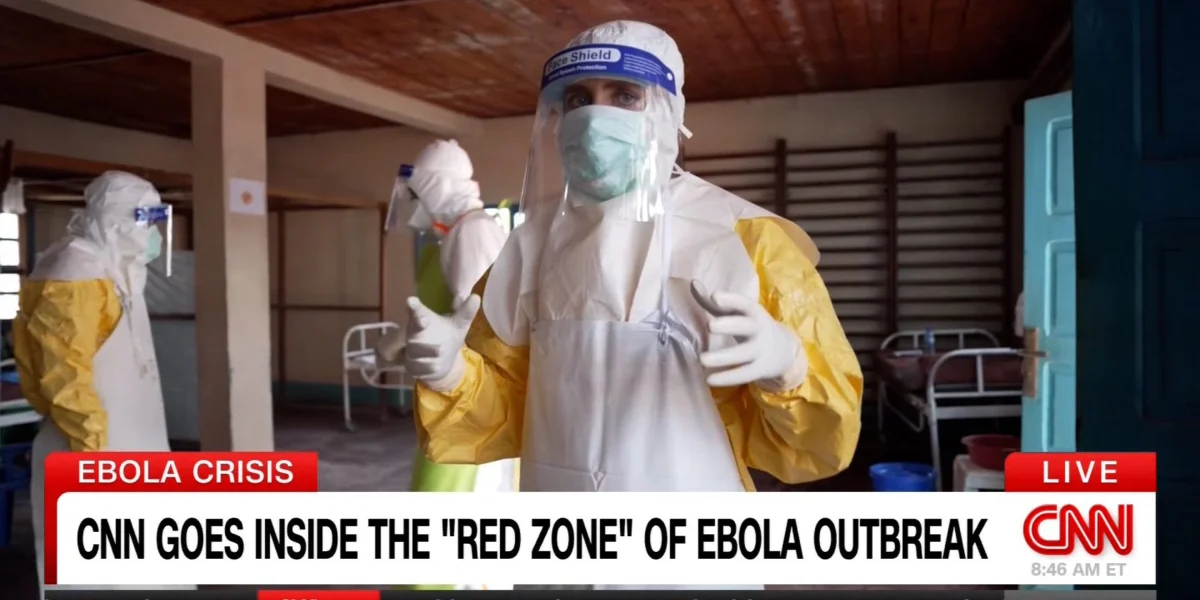
The Democratic Republic of Congo (DRC) is once again grappling with one of the most feared pathogens in human history. As the international community turns its attention to the Ituri Province, the epicenter of a burgeoning health crisis, CNN’s chief international correspondent, Clarissa Ward, has provided an exclusive, harrowing window into the frontlines of the battle against Ebola.
As the only television news organization with sustained access to the "red zone" in Bunia, the CNN team has documented a landscape defined by clinical exhaustion, deep-seated cultural friction, and the indomitable resilience of a population long hardened by instability. With the CDC confirming 363 cases and 62 deaths, the situation remains fluid, volatile, and profoundly challenging for global health authorities.
The Geography of Crisis: From Bunia to Mongbwalu
The latest outbreak, which traces its origin to the remote, rugged gold-mining town of Mongbwalu, represents a significant logistical nightmare for aid organizations. Unlike urban centers where infrastructure might facilitate rapid response, the geography of eastern Congo complicates every facet of containment.
Clarissa Ward’s reporting journey began with a grueling bureaucratic gauntlet. Securing access to the Ituri province required over a week of intensive coordination with the DRC’s Ministry of Communication and Ministry of Health. For the CNN crew, the journey involved a flight from London to Kinshasa, followed by a precarious UN-chartered flight into the heart of the conflict-ridden province.
In Mongbwalu, the source of the outbreak, the atmosphere is heavy with suspicion. Ward’s interactions with local journalists and the town’s mayor revealed a population that is increasingly skeptical of international aid workers. This mistrust is not born of malice, but of a long history of systemic neglect and the trauma of recurring crises. When the mayor finally confirmed the initial case, the information gap had already allowed the virus to gain a foothold, highlighting the persistent struggle between local knowledge and top-down health intervention.
Chronology of the Outbreak and Response
The current crisis follows a pattern familiar to the DRC, which has now endured its 17th outbreak of the Ebola virus. The timeline of the response has been dictated by the necessity of isolating the "red zones"—the high-risk areas within medical facilities where suspected patients are monitored under extreme biocontainment.
- Initial Detection: Health officials in Mongbwalu identified the first cluster of cases, though delayed reporting allowed for community transmission.
- The Bureaucratic Phase: International aid agencies and journalists faced a seven-day delay in securing accreditation from the Kinshasa-based ministries, stalling the early-stage response.
- The Medical Siege: By the time the CNN crew arrived in Bunia, the local General Hospital had transformed into a fortress of protective gear and strict sanitation protocols.
- The Ongoing Containment: Medical teams are currently working in 24-hour cycles, battling not just the virus, but the exhaustion of a healthcare system that is perpetually overstretched.
Supporting Data and the Challenges of Containment
The numbers, while tragic, only tell part of the story. According to the CDC, the 363 confirmed cases represent a significant burden on a healthcare system that lacks basic resources. However, the qualitative data—the stories gathered on the ground by Ward—paint a more complex picture of why containment is failing in certain sectors.
The Conflict of Custom
A primary obstacle to containment is the traditional approach to mourning. In many communities across Ituri, the act of touching and washing the body of the deceased is a sacred requirement for funeral rites. These traditions often involve large gatherings, which serve as perfect vectors for the Ebola virus.
"Authorities have struggled to explain to people that they cannot touch the body and have to mourn at a safe distance," Ward explained. This is not merely a matter of public health education; it is a fundamental collision between global medical protocols and deeply held cultural identities.
The Role of Radio in a Low-Tech Landscape
In the absence of widespread access to television, smartphones, or high-speed internet, the fight against the virus has moved to the airwaves. Ward noted the omnipresence of upbeat, catchy radio jingles being broadcast throughout the region. These songs serve a vital purpose: they distill complex instructions about handwashing, social distancing, and the avoidance of contact with potentially infected wildlife into accessible, memorable rhythms. For the rural population, the radio is the primary link to survival.
The Operational Reality: A View from the Red Zone
For the journalists and medical staff operating inside the red zone, every movement is calculated. The process of entering and exiting these areas is a lesson in extreme caution.
"From the moment you land here, you are asked to wash and sanitize your hands at every place you visit," Ward observed. "Your temperature is taken before you enter any location. Before you go into the actual red zone, you are given multiple layers of protective gear. And of course, when you leave the red zone, there is a whole process to remove the gear in order not to bring any contamination out."
This daily ritual underscores the fragility of the medical response. A single misstep in the removal of a gown or a glove can lead to infection, a reality that the medical staff face every time they clock in for their shift.
Implications: A Region of Resilience
As Clarissa Ward concludes her time in the region, the broader implications of the 17th Ebola outbreak in the DRC become clear. The crisis is not an isolated event; it is a recurring trauma for a population that has lived through decades of conflict.
The socioeconomic context of the DRC—where poverty is rampant and disease is an ever-present threat—means that each Ebola outbreak further erodes the country’s stability. Yet, it is the spirit of the Congolese people that remains the most striking element of this story.
"Despite the enormous suffering," Ward noted, "the courage and resilience that they have shown in the face of this crisis has humbled me profoundly."
The international community must recognize that aid in this region cannot be limited to medical supplies alone. It requires a nuanced understanding of local traditions, a commitment to bridging the trust gap, and a long-term investment in the infrastructure of a country that has been asked to endure far too much. The story of this outbreak is a testament to the fact that while the virus is a global threat, the burden of containment is being carried on the shoulders of the local population and the medical workers who refuse to abandon them.
As the situation in Ituri continues to unfold, the world watches. But for those in the red zone of Bunia, the work of survival continues—one radio broadcast, one temperature check, and one patient at a time. The battle against Ebola in the DRC is a grim reminder that in the face of the most deadly adversaries, the resilience of the human spirit is often the only defense left.












No comments yet. Be the first to join the conversation!