

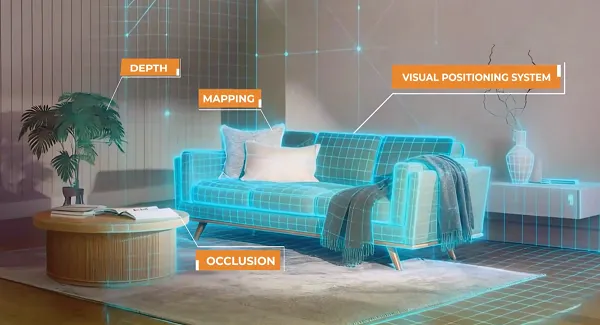
In a strategic maneuver aimed at bolstering its standing in the fiercely competitive augmented reality (AR) and artificial intelligence (AI) sectors, Snap Inc. has officially acquired Illumix, a boutique developer renowned for its proprietary spatial mapping and AI-driven localization technology. This acquisition represents a critical pivot for the social media giant as it prepares for the 2026 launch of its inaugural consumer-facing AR glasses. By integrating Illumix’s sophisticated “spatial stack,” Snap is attempting to bridge the gap between digital overlays and the physical environment, seeking to transform its hardware from a niche novelty into an essential computing platform.
The Core Facts: What Illumix Brings to the Table
Illumix, founded eight years ago by Kirin Sinha, has spent nearly a decade perfecting the science of spatial understanding. Unlike standard AR applications that rely on rudimentary surface detection, Illumix’s technology focuses on "persistent world anchoring." This allows digital objects to remain locked in specific real-world locations even after a user leaves and returns to that space.
The acquisition provides Snap with three specific technical advantages:
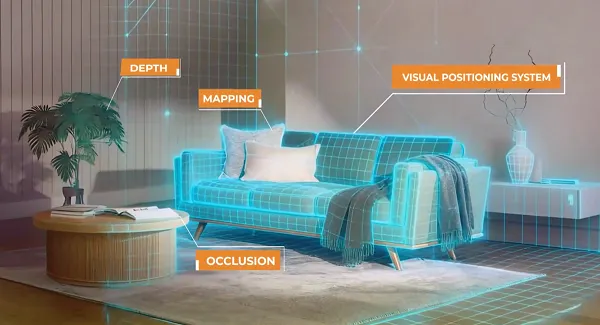
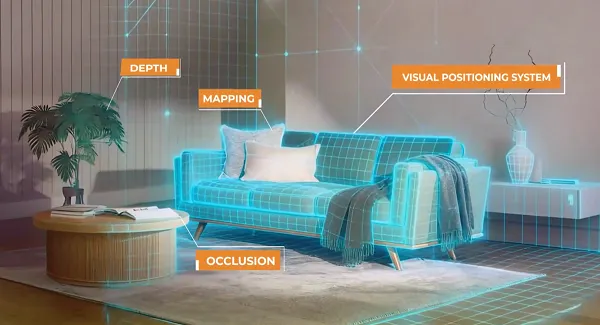
- Real-time 3D Mapping: A refined engine that allows devices to scan and interpret physical environments instantaneously.
- Centimeter-Accurate Localization: The ability for hardware to understand exactly where it is within a room, essential for maintaining the illusion of physical-digital integration.
- Context-Aware Memory: Illumix’s proprietary framework enables AI to create long-term user profiles that remember environmental and behavioral contexts, facilitating a more personalized, intuitive interaction between the user and their surroundings.
For Snap, these capabilities are not merely incremental upgrades; they are the fundamental building blocks for the next generation of wearable computing.
A Chronology of Snap’s AR Ambitions
Snap’s trajectory toward this acquisition has been a long, deliberate journey of hardware iteration and software refinement:
- 2016: Snap introduces "Spectacles," a wearable camera device that marked the company’s first major foray into hardware.
- 2017–2021: The company aggressively expands its AR developer ecosystem, launching Lens Studio and investing heavily in mobile-based AR. During this period, Snap becomes the industry leader in viral AR filters and interactive lenses.
- 2021: Snap unveils its first pair of AR-capable glasses for developers, signaling a clear shift from social media company to spatial computing innovator.
- 2024: Following rumors of internal pivots and hardware refinement, Snap officially confirms that it is preparing to launch a consumer-grade pair of AR glasses by 2026.
- Late 2024: Snap acquires Illumix to address persistent challenges in spatial tracking and AI integration, signaling that the company is in the "polishing" phase of its hardware roadmap.
Supporting Data: The Competitive Landscape
The wearable market is currently dominated by a "Big Tech" triumvirate—Meta, Apple, and now, an increasingly desperate Snap. While Apple’s Vision Pro occupies the high-end, "spatial computer" segment, the real battleground is the "AI Glasses" category, where Meta has surged ahead.
Current industry sentiment highlights a significant disparity:
- Meta’s Advantage: Meta’s Ray-Ban smart glasses have achieved surprising market penetration. They excel in form factor, battery life, and AI integration. Critics argue that Meta’s current offering is already more consumer-friendly than the prototypes Snap has demonstrated.
- The Hardware Gap: Snap’s forthcoming glasses are rumored to be significantly "chunkier" than Meta’s slim-frame AI glasses. This physical bulk poses a marketing hurdle; consumers are notoriously resistant to wearing obtrusive headgear, even if the technology inside is superior.
- Market Sentiment: According to recent retail data, Meta’s wearable segment is seeing consistent growth, while Snap must prove that its "Spectacles" can transcend the status of a developer tool to become a mainstream lifestyle device.
Official Responses and Strategic Vision
Kirin Sinha, the founder of Illumix, expressed a strong alignment with Snap’s mission, framing the acquisition as a homecoming for her team’s vision. "We started Illumix with an ambitious belief: that digital experiences would eventually become part of the physical world around us," Sinha stated in a public release. "Snap’s bold vision for AR and AI strongly aligns with what we have always believed: that the future of computing will be more immersive, more intuitive, and ultimately more human."
For Snap, the acquisition is an acknowledgment that they cannot build the future of AR in isolation. By bringing the Illumix team in-house, Snap is attempting to shorten the "time-to-market" for the software improvements required to make their 2026 hardware launch successful.
Implications: The High Stakes of the Wearables Race
The acquisition of Illumix raises as many questions as it answers. Is this a "rescue" move or an "expansion" move?
1. The Pivot to a Developer Platform
If Snap’s hardware struggles to gain mass-market adoption due to its form factor, the Illumix technology may serve a secondary purpose: the creation of an industry-standard AR operating system. If Snap can license or open-source a platform that makes spatial anchoring easy for third-party developers, they could become the "Android of AR," regardless of whether their own glasses become the primary hardware of choice.
2. The Pressure of "Human-Centric" Design
The biggest challenge remains the "human" element. Illumix emphasizes that their tech is designed to be "more human," which directly addresses the criticism that AR glasses often feel like invasive, sterile tools. Snap needs to prove that their glasses provide value—not just novelty. If the AI doesn’t feel like a helpful companion that understands your context, consumers will likely reject the technology, regardless of how good the 3D mapping is.
3. The "Meta" Problem
The acquisition highlights the existential threat Snap faces. Meta is currently winning the "AI glasses" race by focusing on utility—music, calling, and AI assistance—rather than full-blown AR. Snap’s insistence on "full" AR (where digital objects are anchored to the world) is a much harder technical problem to solve. Illumix gives them a fighting chance, but it does not guarantee victory.
Conclusion: A Gamble on the Next Phase of Computing
Snap Inc. is at a crossroads. Its legacy as an AR software leader is secure, but its future as a hardware powerhouse is far from certain. By acquiring Illumix, Snap has signaled that it is committed to solving the "spatial problem"—the technical hurdle of making digital information behave like physical matter.
Whether this acquisition is enough to overcome the hardware design advantages held by Meta and the ecosystem dominance of Apple remains the central question for investors and consumers alike. As we approach the 2026 launch window, the integration of Illumix will be the benchmark by which we measure Snap’s potential for survival. If they can make the digital world feel as persistent and natural as the physical one, they may yet define the next decade of human-computer interaction. If not, this acquisition may simply be a footnote in the history of a company that tried to turn a mobile app into a pair of glasses.












No comments yet. Be the first to join the conversation!