The landscape of modern comic book storytelling is often defined by its adherence to established continuity, but occasionally, a creator emerges to dismantle those foundations, crafting something visceral, haunting, and entirely unique. Rafael Grampá’s Batman: Gargoyle of Gotham has been a masterclass in psychological horror and stylized noir. As the series reaches its fourth and final issue, the stakes have shifted from the traditional battle of good versus evil to a harrowing exploration of the darkness inherent in the Dark Knight himself.
Main Facts: The End of an Era
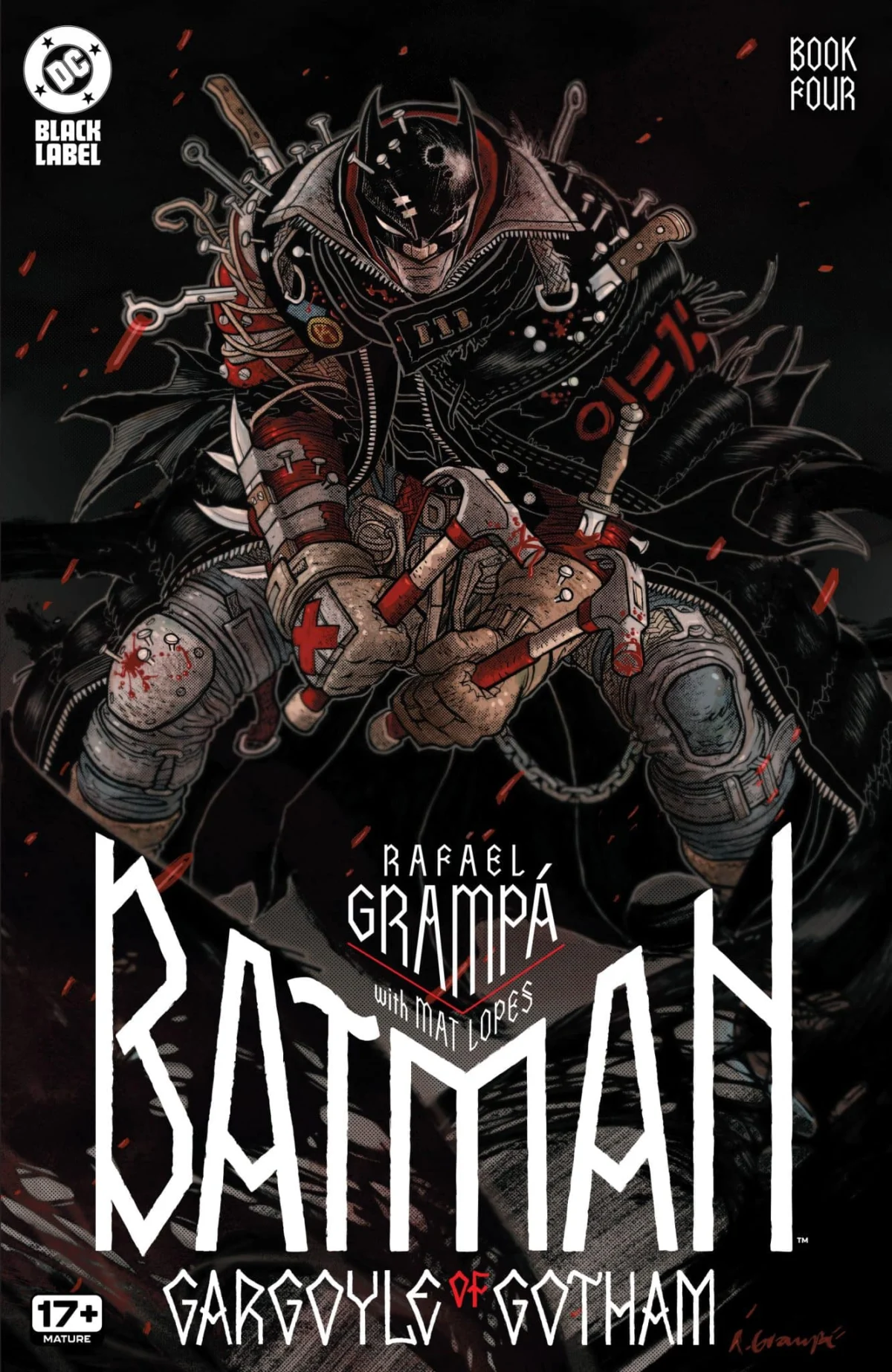
Batman: Gargoyle of Gotham #4 marks the definitive conclusion to the limited series written and illustrated by the visionary Rafael Grampá. Known for his hyper-detailed, gritty aesthetic and his ability to push the boundaries of comic book anatomy and expression, Grampá has used this series to redefine the visual language of the Caped Crusader.
The core premise of the finale centers on the full activation of Doctorgeist’s grand design. In the preceding chapters, Gotham City was pushed to the brink, but now, the city faces a total collapse of order. As the tolling of bells echoes through the streets—a morbid soundtrack to the city’s descent—blood becomes the common currency of the Gotham gutters. Doctorgeist, the primary antagonist, has succeeded in mobilizing his legion of followers, individuals whose internal rot has been weaponized into a chaotic force of destruction. They have been unleashed upon the citizenry, blurring the lines between neighbors and enemies.
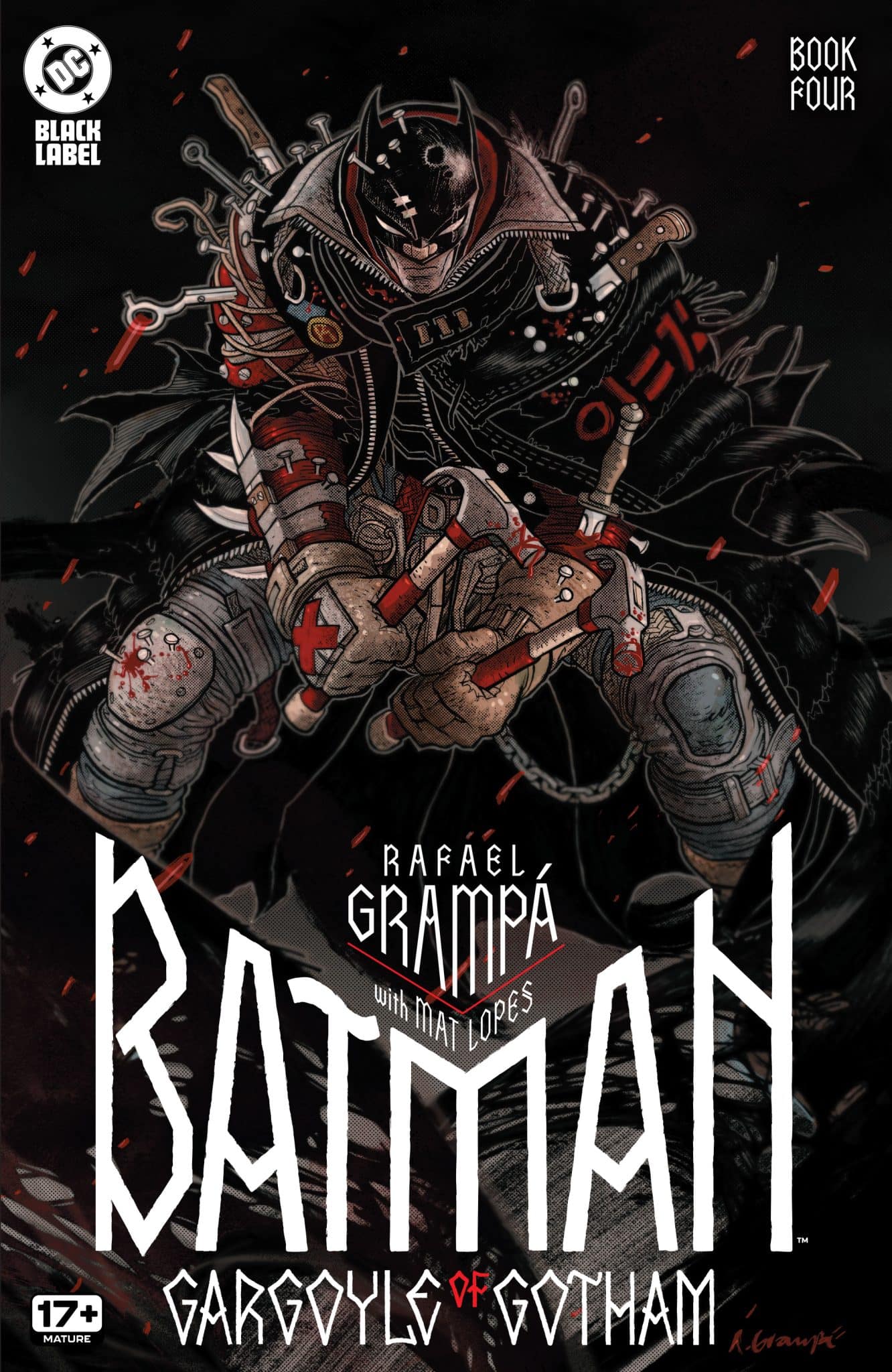
However, the most compelling aspect of this final installment is the revelation regarding Batman’s own internal conflict. The narrative posits that the evil threatening the city is not merely external; it is mirrored by a dormant, primal darkness deep within Bruce Wayne. This is not a new discovery—Doctorgeist uncovered this shadow long ago—but it is the central pivot upon which the entire conclusion turns. The ultimate question posed by Grampá is as uncomfortable as it is profound: To save a city that thrives on suffering, must the hero finally release the monster living within his own soul?
A Chronology of Chaos: The Rise of Doctorgeist
To understand the weight of the finale, one must look back at the trajectory of the series. The narrative arc of Gargoyle of Gotham has been one of increasing intensity and claustrophobia.
- Act I: The Discovery: The series opened with a Batman stripped of the standard tropes, operating in a Gotham that felt older, more decayed, and more dangerous. The initial investigation into a series of grotesque crimes introduced readers to the enigmatic Doctorgeist, a villain who operates not through brute strength, but through the psychological dismantling of his foes.
- Act II: The Escalation: Throughout the middle chapters, Batman’s pursuit of Doctorgeist led him into the deepest, darkest corners of his own psyche. The series transitioned from a standard procedural into a fever dream of surrealist horror. The reader witnessed Batman being pushed to his physical and mental limits, with each victory costing him a piece of his humanity.
- Act III: The Breaking Point: As the narrative approached the current finale, the "Gargoyle" metaphor became literalized. Batman, perched high above the city, became a silent witness to a Gotham that had moved beyond saving by conventional means. The "rotting hearts" of the citizenry, manipulated by Doctorgeist’s machinations, represent the culmination of the city’s long-standing decay.
- Act IV: The Conclusion: In issue #4, the cycle closes. The confrontation is no longer about stopping a bomb or saving a hostage; it is a metaphysical showdown. The bells of Gotham represent the final warning—a funeral knell for the status quo.
Supporting Data: The Visual and Narrative Weight
The impact of Batman: Gargoyle of Gotham cannot be discussed without addressing the sheer technical prowess of Rafael Grampá. His work on this series acts as a "supporting document" to the narrative; every line of ink serves as a testament to the psychological state of the protagonist.

The visual style—characterized by heavy shadows, grotesque character designs, and a sense of constant, underlying motion—mirrors the theme of corruption. In the preview images released for the fourth issue, we see a Batman whose suit feels less like armor and more like a biological extension of the gargoyles he perches upon. The use of scale in the artwork emphasizes the isolation of the hero, suggesting that while he is the protector of Gotham, he is also fundamentally separate from it.
Furthermore, the narrative structure relies on a dense, poetic internal monologue. Grampá avoids the standard expository dialogue typical of major comic events, opting instead for a haunting, rhythmic prose that forces the reader to inhabit Bruce Wayne’s fractured perspective. This narrative density adds to the "Gargoyle" metaphor: a guardian that is inherently immobile and silent, watching the corruption of the world below.
Official Perspectives and Creator Intent
While DC Comics has largely let the work speak for itself, the editorial decision to grant Grampá complete creative control over this project is a significant departure from standard publishing practices. In recent interviews, the creative team has highlighted that this is an "Elseworlds-style" project, allowing for a complete deconstruction of the Batman mythos without the constraints of a larger, shared universe.
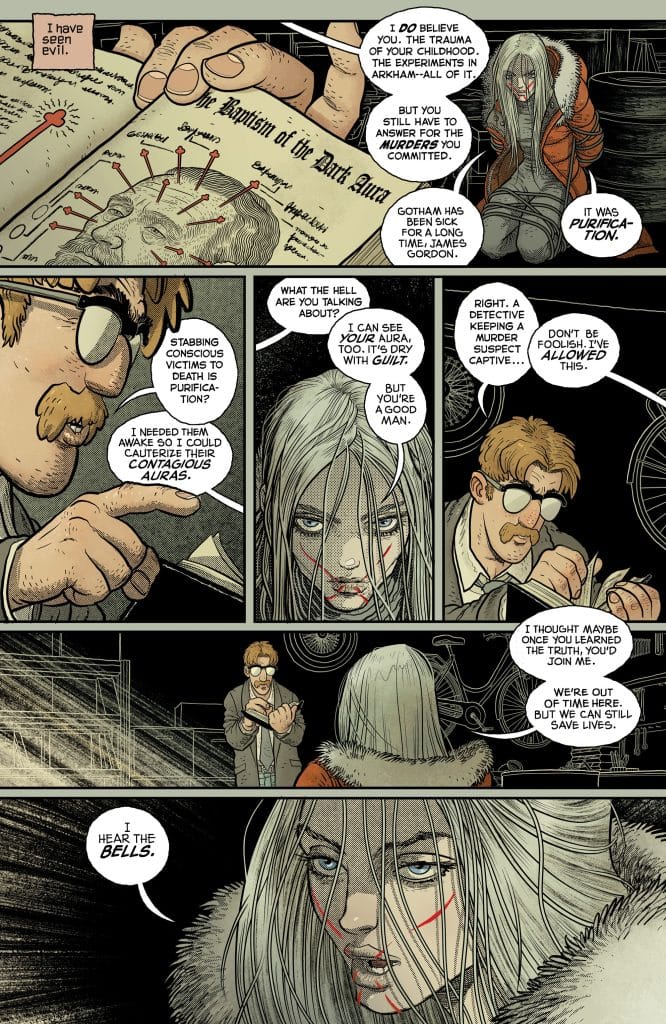
Rafael Grampá has described this project as his "love letter to the dark heart of Batman." By stripping away the Bat-family, the Justice League, and the bureaucratic constraints of the GCPD, Grampá has isolated the core concept of the character: a man who has sacrificed his humanity to become a symbol of fear. The "evil" that Doctorgeist discovers is, according to the creator, the logical conclusion of a man who spends his entire life staring into the abyss.
Implications: The Legacy of a Dark Masterpiece
The release of Batman: Gargoyle of Gotham #4 raises several questions about the future of Batman storytelling. If the protagonist is forced to "set free" the evil within his heart to save the city, what remains of the hero?
The Death of the Traditional Protector
For decades, Batman has operated under a strict moral code. Gargoyle of Gotham challenges the sustainability of this code. If the finale implies that the only way to defeat a truly radical evil is to adopt its methods, the series serves as a critique of the vigilante archetype itself.

The Evolution of the "Elseworlds" Format
This series has proven that there is a massive audience for high-concept, auteur-driven Batman stories. By allowing an artist as distinct as Grampá to take the reins, DC has effectively created a new blueprint for limited series that prioritize aesthetic and tonal consistency over long-term franchise integration.
The Psychological Threshold
The series concludes with a meditation on the cost of obsession. Gotham City has always been characterized as a place that breaks its heroes, but Gargoyle of Gotham takes this a step further by suggesting that the city and the hero are essentially the same organism. When the city bleeds, the hero bleeds; when the city rots, the hero’s heart reflects that decay.
Conclusion: A Final Word
As the final page of Batman: Gargoyle of Gotham #4 turns, readers are left not with a neat resolution, but with a lingering sense of unease. This is the hallmark of a masterpiece. Rafael Grampá has not just told a story about Batman; he has crafted a descent into the deepest, most uncomfortable aspects of the character’s psyche.
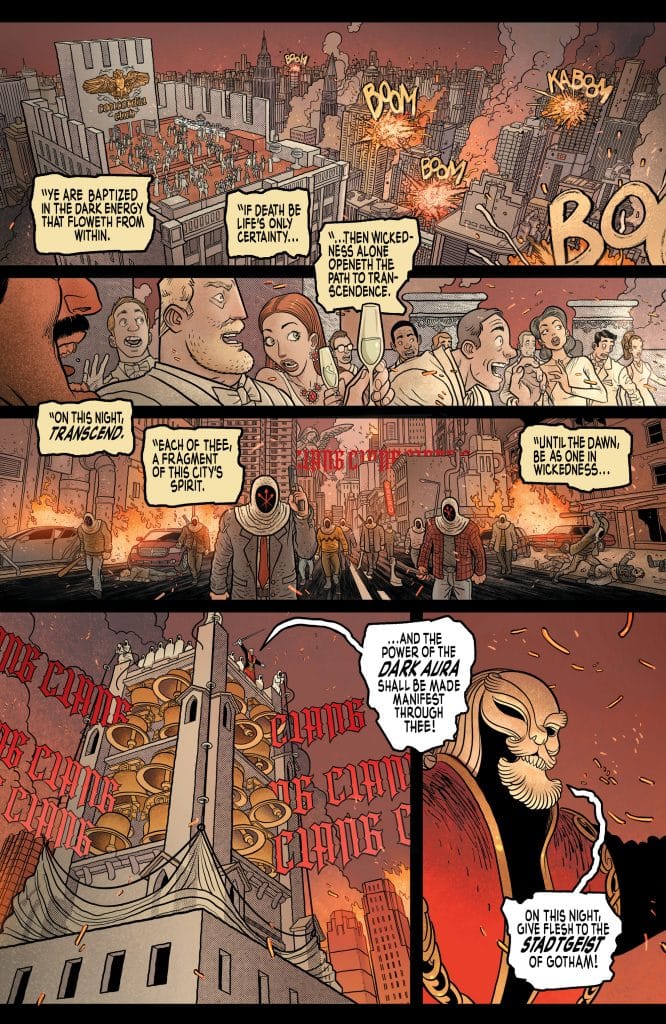
Whether or not one agrees with the final fate of the Dark Knight, the series succeeds as a visceral, haunting experience that will likely be studied for its visual innovation and narrative daring for years to come. In the heart-stopping conclusion to this twisted masterpiece, Gotham City finally learns that its greatest defender was also its most dangerous secret—and that sometimes, the only way to save a world is to let it see the monster beneath the cowl.