As Pride Month draws to a close, television narratives have gifted audiences with a trope that transcends genre, language, and medium: the "Wall Slam." Often referred to in pop culture parlance as Kabedon (a term popularized in Japanese media) or the "Wall Pin of Love," this maneuver—wherein one character forcefully shoves another against a vertical surface—has become the gold standard for portraying unresolved sexual tension.

In the fourth episode of AMC’s The Vampire Lestat, fans of the "Devil’s Minion" pairing—the complex, immortality-bound dynamic between Armand and Daniel—were treated to a masterclass in this trope. It serves as a poignant reminder that while special effects and plot twists define modern television, it is the visceral, physical language of desire that truly secures a ship’s place in the hallowed halls of fandom history.

The Anatomy of the Wall Slam
At its core, the Wall Slam is an exercise in forced proximity. It is a kinetic expression of an internal dam breaking. When a character is "overcome by rage," but fueled by the crushing weight of their own inability to process the intensity of their feelings, they resort to the wall. The maneuver is rarely about violence; it is about the sudden, jarring cessation of space between two individuals who have spent far too long maintaining a polite distance.

In most instances, the wall serves as an anchor. It forces the recipient to stop, listen, and confront the aggressor, often leading to a moment of heavy breathing, whispered confessions, or, for the truly fortunate audience, a climactic kiss.

Chronology: From Pulp Fiction to Prestige Television
The Wall Slam has evolved significantly since its inception in early romance dramas. Historically, it functioned as a way to establish dominance or heighten stakes in action-heavy sequences. However, in the modern era of "shipping" culture, it has been reclaimed as a shorthand for profound emotional intimacy.

- The Early Days: The trope found a home in 1990s and 2000s cult classics like Buffy: The Vampire Slayer. The "Spuffy" (Spike and Buffy) wall slam in the episode "Smashed" is widely regarded as a turning point in television romance. It shifted the narrative from simple physical attraction to a frenzied, chaotic acknowledgment of mutual obsession.
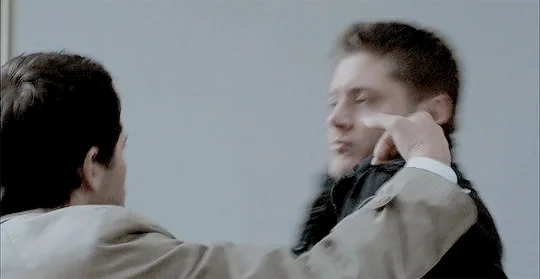
- The Peak Tension Years: Shows like Supernatural and Teen Wolf utilized the maneuver to define the "slow burn." For Destiel (Dean and Castiel) and Sterek (Stiles and Derek), the wall slam became a recurring motif, a way to punctuate years of subtext with a singular, high-octane moment of physical confrontation.
- The Modern Prestige Era: We are currently witnessing a sophisticated evolution of the trope. In The Vampire Lestat, the wall slam is no longer just a "one-and-done" motion. Daniel’s decision to pull Armand forward only to slam him back against the wall a second time elevates the scene from a simple trope to a nuanced character study of power dynamics, resentment, and lingering love.
Supporting Data: A Gallery of Iconic Slams
The ubiquity of the Wall Slam is evidenced by its presence across a diverse array of television universes. While some fans prefer the "happy" slam—often seen in the canonized romance of Our Flag Means Death—others gravitate toward the "danger" slam, which persists in shows featuring espionage or fantasy elements.

The "Danger" Category
- VillanEve (Killing Eve): This iteration is a "god-tier" example. It pairs the classic lack of personal space with a literal knife, underscoring the lethal nature of the characters’ attraction.
- BlackHands (Our Flag Means Death): Here, the trope is used as a form of manipulation. By baiting Blackbeard into a wall-slam scenario, Izzy attempts to force a return to a more violent, familiar version of their dynamic.
- Steddie (Stranger Things): A short-lived but intense moment where a broken beer bottle acts as the prop, cementing the tension between Eddie Munson and Steve Harrington.
The "Emotional" Category
- JohnLock (BBC Sherlock): In "The Lying Detective," the wall slam is birthed from grief and the helplessness of watching a loved one self-destruct. It is a desperate, frantic plea for change, rather than a romantic gesture, proving the trope’s versatility.
- Aziracrow (Good Omens): Crowley’s frustration at being called "nice" by Aziraphale manifests as a classic glower-and-pin, highlighting the bluster and defensive posturing that defined their early relationship.
Official Responses and Creative Intent
Showrunners and directors have often spoken to the importance of physical storytelling in building audience engagement. In recent interviews, the creative team behind The Vampire Lestat noted that the tension between Armand and Daniel is "inherently physical" due to their shared, eternal nature. The choice to utilize a wall slam in episode four was intentional; it was designed to mirror the two-year gap in their relationship and the pent-up frustration of their separation.

Similarly, in Our Flag Means Death, the showrunners have leaned into the "Happily Ever After" wall slam, proving that the trope doesn’t always have to end in angst. By allowing Stede and Blackbeard to express love through this physical language, the show provides a cathartic release for fans who are accustomed to seeing the trope used only for conflict.

Implications for Fandom Culture
The prevalence of the Wall Slam has profound implications for fan-created content. A quick search on archives like AO3 (Archive of Our Own) reveals thousands of fan fictions tagged with "Wall Slam" or "Unresolved Sexual Tension." The trope acts as a bridge between the show’s canon and the audience’s desires, providing a template that is both recognizable and endlessly customizable.

Furthermore, the "spiritual offshoots" of the trope—such as the "Floor Pin" seen in Star Trek or the "Ladder Scene" in Hannibal—show that the concept of the wall slam has expanded. It is no longer just about the wall; it is about the containment of a character within the space of another. Whether it is a hand to the throat or a gaze that holds someone in place, the implication remains the same: the world outside has ceased to matter.

Conclusion: Why We Can’t Look Away
The Wall Slam is a primal, effective piece of visual shorthand. In an age where digital communication and fast-paced editing dominate our screens, there is something deeply satisfying about the stillness of a wall slam. It forces the audience to slow down and observe the micro-expressions—the dilated pupils, the uneven breathing, the hesitation before a strike or a kiss.

As The Vampire Lestat continues its run, the "Devil’s Minion" wall slam will undoubtedly be analyzed, gif-set, and referenced for years to come. It serves as a reminder that the most enduring romances—and the most memorable fandom moments—are often built on the simplest foundations: two people, one wall, and a tension so thick it can only be resolved by the dramatic intersection of their bodies.

For now, fans wait with bated breath to see if these tense moments will eventually blossom into the long-awaited kiss. Until then, the wall slam remains the definitive, pulse-pounding punctuation mark of modern television romance.