Reynand Wu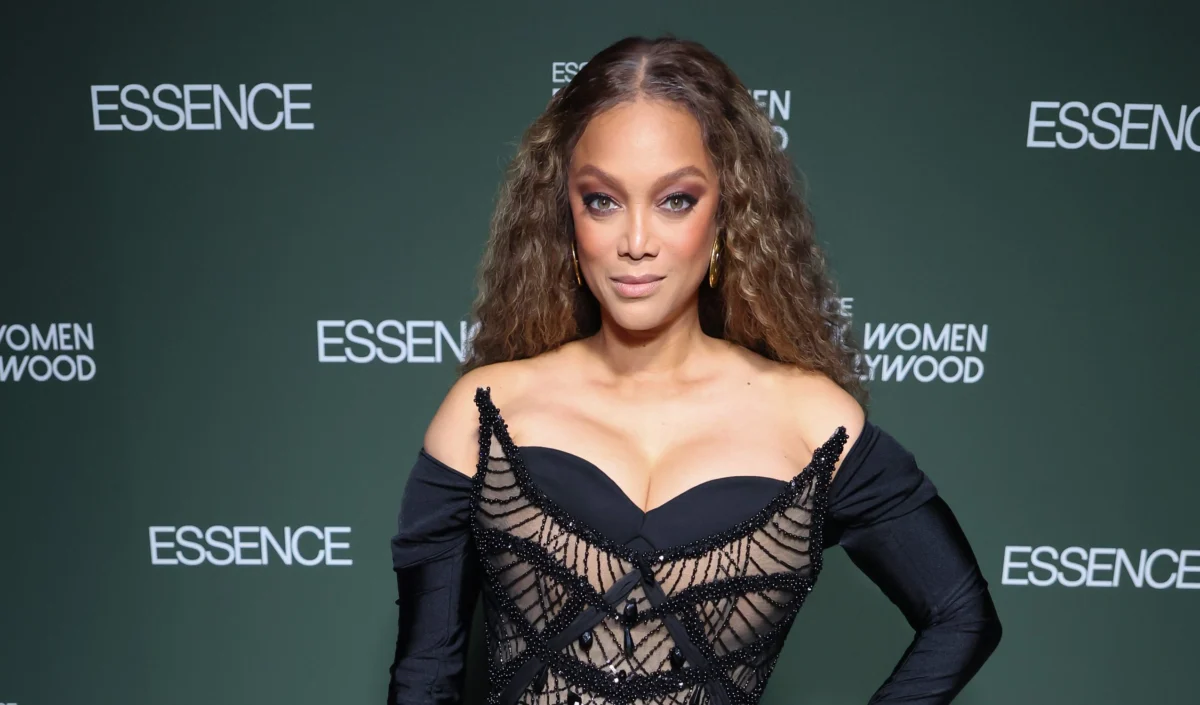
In a high-stakes legal confrontation that pits a global media icon against the world’s largest streaming platform, Tyra Banks has officially filed a defamation lawsuit against Netflix. The suit, filed on Saturday, centers on the streamer’s recent documentary series, Reality Check: Inside America’s Next Top Model. Banks, the legendary supermodel and creator of the reality television juggernaut, alleges that the production utilized "surgical manipulation" and "deliberate omission" to construct a false and damaging narrative surrounding her leadership and personal character.
The legal action, filed against Netflix, 89 Blocks Holdings, EverWonder Studio, Netflix Music, and directors Mor Loushy and Daniel Sivan, alleges counts of defamation by implication, false light, breach of contract, and false endorsement. Banks asserts that the documentary effectively weaponized her own testimony against her, stitching together a three-and-a-half-hour interview into a 16-minute segment designed to portray her as callous, forgetful, and complicit in the exploitation of contestants.
The Core Allegations: Manipulation of Testimony
At the heart of the litigation is the claim that the editorial choices made by the filmmakers did not merely condense the interview for time, but fundamentally altered the meaning of Banks’s statements to fit a pre-determined, negative arc. According to the complaint, Banks sat for a lengthy, comprehensive interview with the production team, during which she took accountability for various aspects of the show’s legacy. However, the lawsuit claims that these moments of introspection and accountability were discarded, leaving only clips that, when reassembled, suggested she was indifferent to the welfare of those she mentored.
The lawsuit argues that the resulting narrative—distributed to a global audience of millions—falsely implies that Banks knowingly allowed a contestant to be sexually assaulted on her show, profited from the resulting trauma for ratings, and subsequently suffered from a memory lapse so severe she could not recall the incident.
“That narrative about Ms. Banks is a complete fabrication,” the lawsuit states. “It is a story constructed through the selective editing and deliberate omission of the very evidence she provided during her interview.”
A Chronology of the Controversy
To understand the weight of these allegations, one must look at the timeline of both the show’s original production and the recent documentary’s development.
- 2003: America’s Next Top Model premieres on UPN, quickly becoming a cultural phenomenon and defining the reality competition genre for the next two decades.
- 2003–2015: Banks hosts 22 cycles of the show, overseeing the rise of numerous fashion models while facing intermittent criticism regarding the show’s treatment of contestants and beauty standards.
- 2024: Netflix releases Reality Check: Inside America’s Next Top Model, a docuseries intended to provide a retrospective look at the show’s cultural impact and its internal controversies.
- Late 2024: Following the release, legal teams for Tyra Banks begin a forensic review of the interview footage and the final edited product.
- November 2024: Banks files a formal lawsuit against Netflix and the production companies involved, citing defamation and breach of contract.
The "Shandi Sullivan" Case: An Egregious Example
The lawsuit highlights a specific, damning moment in the documentary regarding Shandi Sullivan, a contestant from the show’s second cycle. During the series, the producers highlight an incident where Sullivan, while intoxicated in Milan, engaged in a sexual encounter and subsequently confessed the infidelity to her boyfriend.
In the documentary, the producers present this event through a modern lens, framing it as an instance of sexual assault. However, the lawsuit alleges that this framing was withheld from Banks during her interview. The documentary then shows director Mor Loushy asking Banks, “You remember the story with Shandi?”
The edited footage shows Banks looking upward, pausing to say, “Um,” before the screen cuts to black. The implication presented to the audience is that Banks, the host of the show, was so detached from her own program that she could not recall an instance of sexual assault occurring on her set.
The lawsuit reveals that the unedited, raw footage tells a completely different story. In the full recording, Banks is seen nodding and clearly stating, “I do remember her story.” By omitting this affirmative response, the lawsuit argues, the directors deliberately engineered a "devastating" implication of incompetence and moral failure that did not exist in reality.
The Industry Perspective: Creative License vs. Defamation
This case touches on a growing tension in the documentary world: the line between artistic creative license and the responsibility to represent subjects accurately.
Documentary filmmakers often utilize "creative editing" to condense narratives and highlight themes. However, legal experts point out that when editing crosses the line into creating a false impression—particularly one that harms the subject’s reputation—it moves from the realm of "artistic choice" to "defamation by implication."
In the case of Banks, the lawsuit argues that the producers had a contractual and ethical obligation to represent her statements truthfully. By failing to include the context of her answers, the producers arguably stripped her of her right to speak on her own behalf, replacing her actual testimony with a scripted narrative of their own design.
Official Responses and Next Steps
As of this writing, representatives for Netflix have not issued a formal statement regarding the lawsuit. The silence from the streamer suggests that their legal team is likely preparing a defense rooted in First Amendment protections, arguing that the documentary constitutes protected speech and that the editing choices fall under editorial discretion.
However, the specificity of the claims—particularly the contrast between the edited cut and the "full footage"—places the production team in a difficult position. If the raw footage proves that Banks’s statements were indeed truncated to change their meaning, Netflix may find it difficult to argue that the portrayal was a fair representation of the interview.
Banks is seeking a jury trial to determine the appropriate amount of punitive damages. The goal, according to her legal counsel, is not only to seek redress for the harm caused to her professional reputation but to hold the production entities accountable for what they describe as a "calculated smear campaign."
Implications for the Streaming Era
The outcome of Banks v. Netflix could have significant implications for the future of documentary production in the streaming era. As platforms like Netflix continue to churn out high-volume "docuseries" and investigative pieces, the pressure to create compelling, high-stakes narratives is immense.
This lawsuit serves as a warning to producers and streamers alike: the power to edit is not absolute. When creators prioritize a sensationalized narrative over the factual accuracy of their subjects’ testimonies, they invite legal scrutiny that could result in substantial financial penalties and damage to the platform’s reputation.
For Tyra Banks, the lawsuit represents a defense of her legacy. After decades in the public eye, she is signaling that she will not allow her career-defining show to be reframed as a vehicle for her own alleged moral failings. Whether this legal battle results in a settlement or a landmark jury verdict, it has already succeeded in shifting the conversation from the content of the documentary to the integrity of its creators.
As the litigation proceeds, the public will likely be treated to a rare look behind the curtain of reality television production. For now, the case stands as a stark reminder that in the age of algorithmic content, the truth is often the first thing to be left on the cutting room floor.

 Jia Lissa
 Iffa Jayyana