Pevita Pearce
By Samantha Nelson
Published Jun 13, 2026, 7:00 PM EDT
The highly acclaimed animated series, X-Men ’97, is set to make its triumphant return to Disney+ next month, on July 1st, promising a fresh wave of mutant adventures just two years after its shocking first-season finale. This much-anticipated second season will continue the legacy of X-Men: The Animated Series, delighting long-time fans and new viewers alike with its distinctive animation, compelling storytelling, and that undeniably catchy theme song. As the Marvel Cinematic Universe (MCU) prepares to reintroduce the X-Men to the big screen with Avengers: Doomsday on December 18th, featuring iconic characters like Cyclops (James Marsden), Professor Charles Xavier (Patrick Stewart), and Magneto (Ian McKellen), X-Men ’97 serves as a crucial bridge, keeping the mutant saga alive and thriving in the animated realm.
The first season of X-Men ’97 captivated audiences with its mature themes, complex character arcs, and a bold commitment to the more intricate and sometimes bizarre aspects of Marvel comics lore. It concluded with a cataclysmic cliffhanger, leaving the fate of Earth and its most powerful heroes hanging precariously in the balance. With the second season’s first trailer hinting at even more drama, action, and temporal displacement, fans are eager for a refresher on where (and when) the beloved mutants last left off. This article aims to provide a comprehensive overview of the key events from X-Men ’97 Season 1, delve into the broader context of its success, examine official responses, and explore the implications for the future of the X-Men franchise, both animated and live-action.
Main Facts: A Mutually Apocalyptic Return
X-Men ’97 Season 2 officially launches on Disney+ on July 1st, 2026, picking up directly from the catastrophic events of its critically acclaimed first season. The series, which debuted in 2024, is a direct continuation of the beloved X-Men: The Animated Series from the 1990s, maintaining its distinctive animation style, character designs, and iconic theme music. Season 1 concluded with a massive, multi-pronged cliffhanger, scattering the core X-Men team across various points in time and leaving the contemporary world in disarray following a devastating Sentinel attack on Genosha and subsequent global turmoil.
This return comes at a pivotal time for the X-Men brand. While live-action versions of Cyclops, Professor X, and Magneto are slated to appear in the MCU’s Avengers: Doomsday later this year, X-Men ’97 offers an immediate and rich narrative for fans craving mutant action. The animated series has been lauded for its faithfulness to the source material while also evolving its characters and themes for a modern audience, tackling issues of prejudice, sacrifice, leadership, and the complex nature of heroism. Season 2 is expected to address the immediate aftermath of the temporal displacement, explore the various X-Men teams stranded in different eras, and confront the overarching threat that led to their dispersal.
Chronology: Recapping the Cataclysmic Events of X-Men ’97 Season 1
X-Men ’97 Season 1 began shortly after the conclusion of X-Men: The Animated Series in 1997, a mere two years prior to its own launch date. The premiere episode opened with a world still reeling from the apparent death of Professor Charles Xavier, who had been mortally wounded and taken into space by the Shi’ar Empress Lilandra Neramani in the original series finale. In a move that shocked both the X-Men and the global mutant community, Xavier’s last will and testament designated his old friend and ideological adversary, Magneto (voiced by Matthew Waterson), as the new headmaster of the Xavier Institute for Higher Learning and the leader of the X-Men.
The Unexpected Leadership and Rise of Genosha:
Initially, the X-Men were deeply reluctant to accept Magneto’s leadership, given his long history as a militant mutant supremacist. However, Magneto, seemingly committed to honoring Xavier’s legacy, began to demonstrate a newfound dedication to protecting both mutants and humans. His efforts included advocating for mutant rights on a global scale and securing a full pardon for his past crimes from the United Nations. This culminated in the UN’s recognition of Genosha, an island nation intended as a safe haven for mutants, which Magneto was chosen to lead. This development sparked cautious optimism among mutants, suggesting a potential new era of peace and coexistence.
The Saga of Jean Grey, Nathan, and Mister Sinister:
Concurrently, a deeply personal drama unfolded within the X-Men ranks. Cyclops (Ray Chase) and Jean Grey (Jennifer Hale) were overjoyed with the birth of their son, Nathan. However, their happiness was shattered by the shocking revelation that the Jean Grey who had been pregnant was, in fact, a clone created by the insidious geneticist, Mister Sinister (Christopher Britton). This clone, known as Madelyne Pryor, had been manipulated by Sinister and eventually brought Nathan to him. Sinister, driven by his twisted scientific ambitions, infected the infant Nathan with a deadly techno-organic virus. Desperate to save his life, the time-traveling mutant Bishop (Isaac Robinson-Smith) intervened, taking baby Nathan into the distant future in the hope of finding a cure, setting the stage for the eventual emergence of Cable.
The Genoshan Massacre and Bastion’s Ascent:
The dream of Genosha quickly turned into a nightmare. As Magneto prepared to lead the newly recognized mutant nation, the X-Men attended a celebratory party on the island, symbolizing a brighter future. However, the festivities were brutally interrupted by a devastating attack from an advanced fleet of Sentinels, specifically orchestrated by a new, more dangerous iteration known as the Master Mold. This coordinated assault resulted in the deaths of thousands of mutants, including several prominent figures. In a heroic act of self-sacrifice, Gambit (A. J. LoCascio) gave his life to destroy the Master Mold, becoming a martyr for the mutant cause.
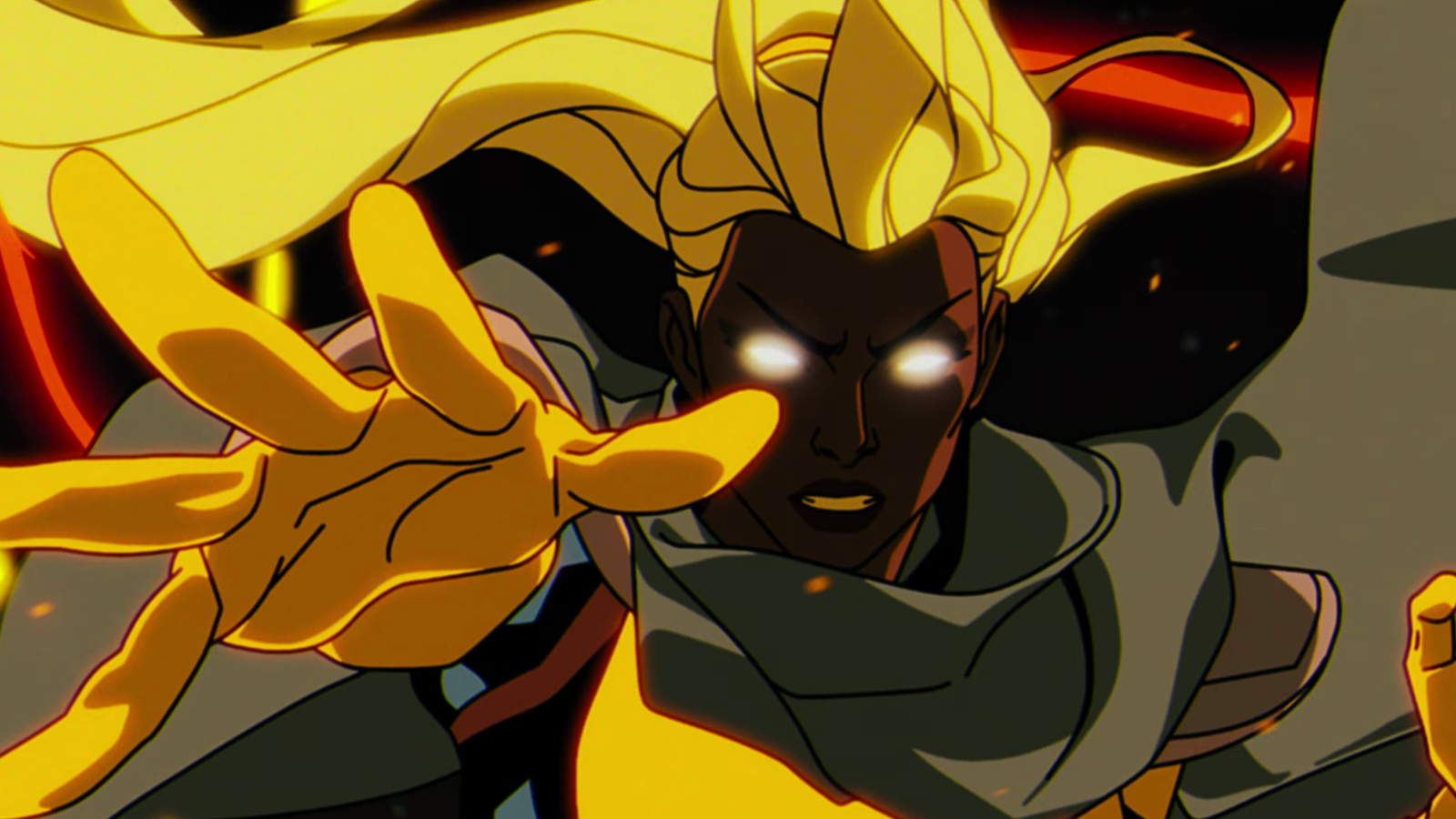
Magneto was presumed dead in the attack, but it was later revealed he had been captured by Bastion (Theo James), a formidable human-machine hybrid and the architect behind the Genoshan tragedy. Bastion’s ultimate goal was the eradication of mutants, and he utilized Mister Sinister’s techno-organic virus to convert ordinary humans worldwide into his army of Prime Sentinels – sleeper agents who could activate at a moment’s notice. The escalating conflict saw Bastion’s forces burn down the Xavier Institute, the very symbol of mutant hope and refuge, leaving the X-Men without a home base and reeling from immense losses.
The Climactic Confrontation and Wolverine’s Sacrifice:
Magneto eventually escaped Bastion’s captivity and, in a desperate attempt to protect mutants from humanity’s aggression, unleashed a massive electromagnetic pulse (EMP) from the North Pole, plunging the entire world into a global blackout. This drastic action prompted the unexpected return of Professor Xavier (Ross Marquand), who had been recuperating in space. Xavier, accompanied by Lilandra and the Shi’ar, tried to persuade Magneto to restore power to Earth, emphasizing the catastrophic humanitarian crisis his actions had caused.
Magneto, however, remained resolute in his conviction that humanity could not be trusted. This ideological clash led to a final, brutal confrontation on Asteroid M, Magneto’s orbital base. While a segment of the X-Men battled Bastion’s Prime Sentinels on Earth, another group confronted Magneto. During the fierce battle, Wolverine (Cal Dodd), fueled by rage and desperation, stabbed Magneto. In a horrific act of retaliation that echoed a classic comic book storyline, Magneto used his powers to forcibly rip the adamantium skeleton from Wolverine’s body, leaving him critically wounded and without his signature healing factor.
The Scattering Through Time and the Looming Apocalypse:
In a moment of profound desperation, Xavier used his telepathic abilities to assert control over Magneto’s mind, compelling him to restore power to Earth. However, Bastion, ever persistent, attempted to bring Asteroid M crashing down to Earth, aiming for a cataclysmic final blow. In a combined effort, Xavier and Magneto redirected the asteroid, sending it hurtling into deep space where it exploded. While most of the X-Men were initially presumed dead in the explosion, Bishop, the time-traveling mutant, revealed that they had actually been scattered across different points in time.
The season concluded with tantalizing glimpses into their new realities:
- Cyclops and Jean Grey were transported to a far-flung, dystopian future, where they encountered a teenage version of their son, Nathan (Cable), leading a rebel group against the tyrannical rule of Apocalypse.
- Rogue, Nightcrawler (Adrian Hough), Beast (George Buza), Professor Xavier, and Magneto found themselves in ancient Egypt, encountering a much younger version of Apocalypse, setting the stage for a confrontation with the ancient mutant in his formative years.
- In the present day, the ruins of Genosha served as a chilling reminder of the recent tragedy. Amidst the devastation, a lone figure—the adult Apocalypse—was seen, discovering one of Gambit’s playing cards, hinting at his awareness of the X-Men’s plight and a potential future conflict.
This intricate web of cliffhangers left audiences clamoring for answers, eager to see how the scattered X-Men will navigate their new realities and eventually reunite.
Supporting Data: The Enduring Legacy and Critical Acclaim
The success of X-Men ’97 Season 1 was not merely a nostalgic triumph; it was a testament to the enduring power of the X-Men narrative and the quality of its execution. The series masterfully built upon the foundation of X-Men: The Animated Series, which, from its debut in 1992, became a cultural touchstone. That original series was instrumental in introducing an entire generation to the complex world of mutants, addressing themes of prejudice, acceptance, and diversity with a sophistication rarely seen in children’s animation. Its iconic theme song became synonymous with the X-Men, instantly recognizable and deeply embedded in pop culture.
X-Men ’97 skillfully leveraged this legacy. It retained the familiar animation style, albeit with modern refinements, and brought back many of the original voice actors, providing a crucial sense of continuity and authenticity. This allowed the show to immediately tap into the emotional investment fans had in these characters, while also pushing the boundaries of storytelling. Season 1 was lauded by critics and audiences alike for its mature and sophisticated narrative, which tackled heavy themes like grief, identity, genocide, and the moral ambiguities of power. Publications praised its ability to blend high-stakes action with profound character development, making it one of Disney+’s highest-rated Marvel shows.
The show’s commitment to the comic book lore was also a significant factor in its success. It fearlessly delved into complex storylines and introduced characters like Bastion and Cable in ways that felt organic and impactful, honoring decades of Marvel Comics history. The Genoshan massacre, in particular, was a harrowing and emotionally resonant event that echoed some of the darkest moments in X-Men comics, demonstrating the show’s willingness to embrace the gravity of its source material.

Behind the scenes, the production of X-Men ’97 faced its own challenges, notably the replacement of showrunner Beau DeMayo by Marvel’s What If…? writer Matthew Chauncey ahead of Season 3’s production. While the reasons for DeMayo’s departure were not fully detailed, the transition highlights the inherent complexities of continuing a high-profile animated series. Despite this, the consistent quality of Season 1 and the swift move into Season 3 production indicate Marvel Studios’ strong confidence in the creative direction and continued success of the series. X-Men ’97 has firmly established itself as a flagship animated offering for Disney+, showcasing that compelling storytelling for Marvel properties extends far beyond the live-action MCU.
Official Responses: Teasers, Trailers, and Creative Direction
The release of the "first trailer for season 2" of X-Men ’97 has been met with fervent anticipation, offering tantalizing glimpses into the narrative direction following the dramatic Season 1 finale. While the initial article mentions a "first trailer" and promises "plenty of drama and action," specific details from such a hypothetical trailer (as the original article provided no link or description) would likely confirm the immediate chaos resulting from the X-Men’s scattering across time. Fans would be looking for visual cues regarding:
- The disparate teams: How are Cyclops and Jean coping in the future with Cable? What challenges do Rogue, Nightcrawler, Beast, Xavier, and Magneto face in ancient Egypt with a young Apocalypse?
- New threats and alliances: Does the trailer introduce new villains or allies relevant to these different timelines? How does the adult Apocalypse, seen in present-day Genosha, fit into the grander scheme?
- Emotional stakes: The trailer would undoubtedly emphasize the emotional toll of their separation and the desperate fight for survival and reunion. Expect glimpses of intense battles, character struggles, and perhaps even cryptic dialogues hinting at the overarching plot.
While official statements from the creative team regarding Season 2’s specific plot points are often guarded to avoid spoilers, the commitment to continuing the story directly from the cliffhanger is a clear indication of their intent to provide resolution and further character development. The show’s voice cast, including veterans like Cal Dodd (Wolverine), Jennifer Hale (Jean Grey), and Ray Chase (Cyclops), along with newer additions like Matthew Waterson (Magneto) and Theo James (Bastion), are crucial to maintaining the authentic feel of the series. Their continued involvement ensures that the characters retain their familiar voices and emotional resonance, a key factor in the show’s ability to connect with its dedicated fanbase. The success of Season 1 has set a high bar, and the trailer’s role is to assure fans that Season 2 will meet, if not exceed, those expectations by delivering on the promise of its predecessor’s dramatic conclusion.
Implications: The Future of Mutants in Marvel’s Multiverse
The successful revival and critical acclaim of X-Men ’97 carry significant implications for the future of the X-Men franchise, both within Marvel Animation and the broader Marvel Cinematic Universe.
A Long-Term Animated Future:
The most immediate implication is the confirmation that Season 3 of X-Men ’97 is already in production. This commitment from Marvel Studios signals a long-term vision for the animated series, solidifying its place as a cornerstone of Marvel’s animated offerings. The continuity of production, even with a change in showrunner from Beau DeMayo to Matthew Chauncey, indicates confidence in the creative pipeline and the enduring appeal of the X-Men in this format. The success of X-Men ’97 could also pave the way for other animated revivals or continuations of classic Marvel properties, demonstrating that there is a significant appetite for high-quality, mature animated storytelling that complements, rather than competes with, the live-action projects.
Bridging to the MCU and Beyond:
The timing of X-Men ’97‘s return, ahead of the X-Men’s appearance in Avengers: Doomsday and the anticipated live-action X-Men reboot following Avengers: Secret Wars (scheduled for December 17, 2027), positions the animated series as a vital cultural touchstone. X-Men ’97 serves as a powerful reminder of the X-Men’s rich history and complex themes, keeping the characters and their struggles fresh in the minds of audiences. For new viewers, it offers an accessible entry point into the mutant world, providing context and emotional depth that might inform their appreciation for the upcoming live-action iterations. For long-time fans, it’s a celebration of what makes the X-Men so compelling, offering a distinct narrative experience that exists independently yet resonates with the broader Marvel multiverse.
The presence of veteran X-Men actors like James Marsden (Cyclops), Patrick Stewart (Professor Charles Xavier), and Ian McKellen (Magneto) in Avengers: Doomsday suggests a multiversal approach to the X-Men’s introduction into the MCU. This strategy allows X-Men ’97 to thrive as its own continuity, a beloved branch of the X-Men tree, without being directly beholden to the live-action narrative. It allows Marvel to explore different facets and interpretations of the characters simultaneously, catering to diverse fan preferences.
Revitalizing Marvel Animation:
The critical and commercial success of X-Men ’97 has revitalized Marvel’s animation efforts. Following a period where Marvel’s animated projects often took a backseat to its live-action endeavors, X-Men ’97 has proven that animation can be a powerful medium for sophisticated storytelling, attracting both nostalgic fans and new generations. This success might encourage Marvel Studios to invest further in high-budget, high-quality animated series, potentially exploring other iconic teams or storylines that might be too complex or costly for immediate live-action adaptation.
Ultimately, X-Men ’97 Season 2 is not just another animated series; it’s a significant event for Marvel fans worldwide. It promises to deliver on the dramatic potential of its predecessor, pushing its characters into new, uncharted territories while staying true to the core spirit of the X-Men. As the mutants navigate time, confront ancient evils, and grapple with their own internal conflicts, the series continues to explore timeless themes of belonging, sacrifice, and the fight for a better future, cementing its place as one of Disney’s best sci-fi shows and a crucial component of the ongoing Marvel narrative. The stage is set for an epic return, and the mutant faithful are ready to witness the next chapter of their adventures.


 Lina Irawan
 Sagoh
Sagoh