Lina Hope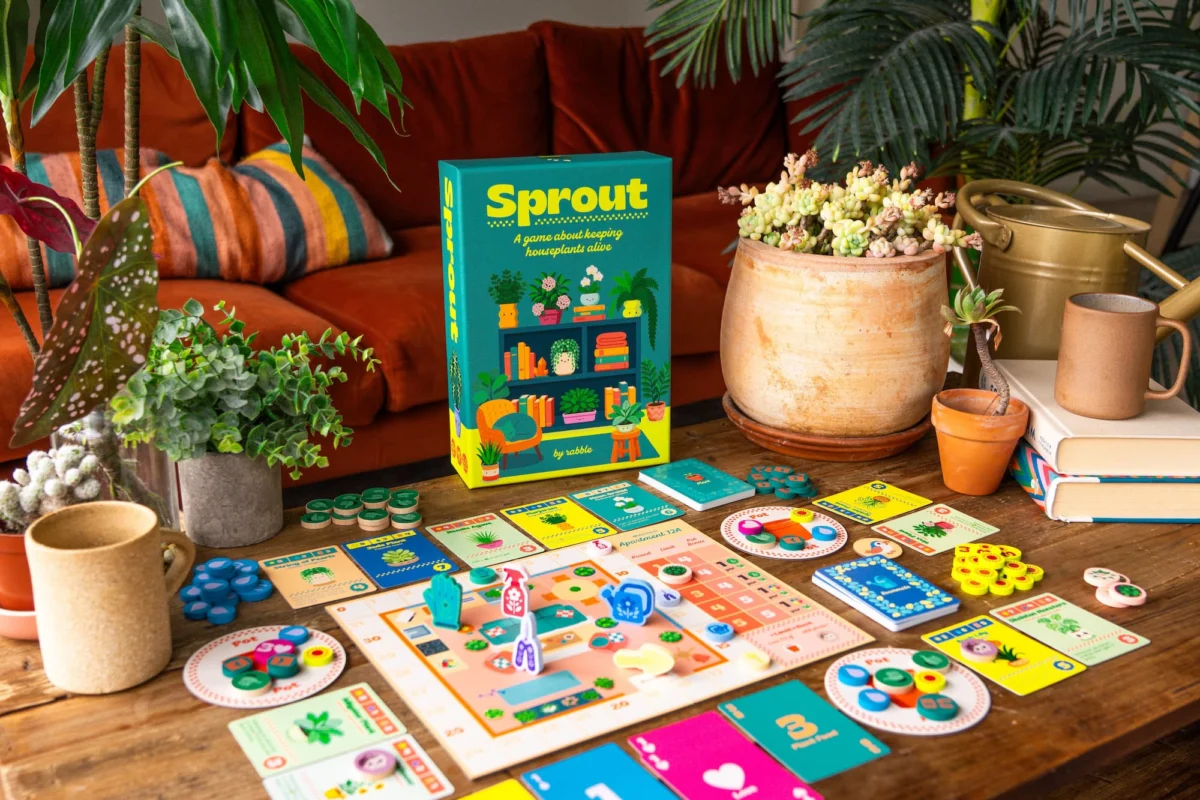
In the flourishing world of modern tabletop gaming, where themes range from interstellar trade to complex economic simulations, Rabble Games has chosen a more grounded, albeit equally cutthroat, path. The publisher has officially pulled back the curtain on Sprout, a new strategy board game that tasks two to five players with the delicate, high-stakes responsibility of curating a thriving indoor garden. Combining the tension of push-your-luck mechanics with the strategic depth of tableau building, Sprout promises to turn the relaxing hobby of plant care into a competitive battle of wits, resources, and, occasionally, roommate-fueled chaos.
Scheduled to debut on Kickstarter later this month, Sprout aims to carve out a unique niche in the hobbyist market by blending accessible, relatable themes with deep mechanical layers.
The Core Concept: Nurturing Your Botanical Empire
At its heart, Sprout casts players as ambitious plant enthusiasts. The objective is simple in theory: maintain a healthy, vibrant collection of houseplants. However, as any real-world gardener knows, the path to a thriving collection is paved with the threat of nutrient deficiencies and environmental mishaps.
Designed for ages 10 and up, Sprout is balanced to provide a brisk, engaging experience, with sessions typically lasting between 45 and 75 minutes. This timeframe suggests a game that fits perfectly into a mid-week game night, offering enough depth to satisfy strategy veterans while remaining accessible enough for family play. The gameplay loop is structured across five rounds, each divided into two distinct, high-tension phases: the Nutrient Phase and the Sprout Phase.
The Nutrient Phase: A Test of Nerve
The Nutrient Phase serves as the game’s primary "push-your-luck" engine. Players must reveal cards to acquire essential nutrients required to sustain their burgeoning collection. While the urge to continue drawing cards to maximize resource intake is powerful, the risk is equally significant. Over-collecting a specific type of nutrient can lead to a "bust" scenario, forcing the player to cull plants from their tableau—a devastating blow to any carefully laid plans. This dynamic forces players to constantly weigh their ambition against their current tolerance for risk, creating a palpable tension at the table.

The Sprout Phase: Strategic Development
Once the nutrient dust has settled, players move into the Sprout Phase. Here, they spend their hard-earned resources to grow new plants and activate specialized abilities. With over 100 unique plant cards included in the base game, Rabble Games promises a high degree of replayability. Players are encouraged to experiment with diverse botanical combinations, as each plant not only contributes to the player’s final score but also offers unique effects that can provide immediate bonuses or long-term, engine-building advantages.
Chronology: From Concept to Crowdfunding
The journey of Sprout to the tabletop has been one of careful curation and artistic focus. Rabble Games, a studio known for its commitment to thematic immersion, has spent the last year refining the mechanics to ensure that the tension of the nutrient management system feels balanced against the satisfaction of building a flourishing garden.
- Initial Development: Rabble Games focused on the core mechanics of the two-phase system, ensuring that the "bust" mechanic felt fair yet punitive enough to deter reckless play.
- Artistic Direction: Throughout the development cycle, the aesthetic identity of the game was forged by Rabble Games co-founder Jake, who serves as the lead illustrator. His hand-drawn approach to the plant cards and box art gives the game a warm, inviting visual style that contrasts sharply with the cutthroat nature of the gameplay.
- Final Playtesting: Recent months have seen the team refining the "Roommate Cards," a late-stage addition designed to introduce a semi-cooperative layer to the otherwise competitive environment.
- Upcoming Kickstarter: The project is slated to go live on Kickstarter in late June. The crowdfunding campaign will not only fund the mass production of the game but also offer premium component upgrades, including wooden nutrient tokens and high-quality player markers, catering to the demand for tactile, "deluxe" gaming experiences.
Supporting Data: The Anatomy of a Garden
The longevity of Sprout is anchored in its massive card pool. By featuring over 100 unique plants, Rabble Games has ensured that the "meta" of the game is fluid.
- Player Count: 2 to 5 players.
- Playtime: 45 to 75 minutes.
- Target Audience: Ages 10+.
- Mechanical Mix: Push-your-luck, tableau building, and semi-cooperative interaction.
One of the most intriguing aspects of the game’s design is the inclusion of "Roommate Cards." These cards serve as a social lubricant within the game, forcing players to interact in ways that aren’t strictly adversarial. By providing benefits that assist the active player while offering secondary advantages to others, the Roommate Cards foster table talk and negotiation. This element transforms Sprout from a solitary puzzle into a social exercise, where the player who best navigates the social dynamics—as well as the botanical ones—is most likely to emerge victorious.
Official Perspectives: The Vision Behind the Leaves
In conversations surrounding the game’s announcement, the team at Rabble Games has emphasized that Sprout is meant to be as much about the "vibe" as it is about the strategy.

"We wanted to capture that feeling of being a plant parent—the joy of seeing a new leaf unfurl, and the panic when you realize you’ve overwatered," says the development team. The choice to handle all artwork internally was a deliberate decision to maintain a cohesive artistic vision. By having co-founder Jake illustrate the entire project, the game maintains a consistent, cohesive aesthetic that makes the collection of plants feel like a unified, curated hobby rather than a random assortment of items.
Furthermore, the team has acknowledged the community’s desire for solo play. While the game shines with a group, the developers confirmed that a dedicated solo mode is currently in active development. While they have remained tight-lipped regarding the specific rules of the solo experience, it is expected to offer a rigorous challenge for those looking to hone their gardening skills without the interference of roommates.
Implications: The Future of Botanical Gaming
The announcement of Sprout comes at a time when the board game industry is seeing a surge in popularity for "cozy" yet mechanically dense games. Players are increasingly gravitating toward themes that offer a reprieve from the stresses of modern life, even when the gameplay itself is challenging.
A Competitive Market
Sprout will enter a crowded Kickstarter landscape, but its blend of familiar, trending themes (houseplants) and accessible, high-energy mechanics provides it with a distinct competitive advantage. By catering to both casual gamers who enjoy the theme and hobbyists who appreciate engine-building, Rabble Games is positioning Sprout to appeal to a broad demographic.
The Power of Component Quality
The move to include premium wooden tokens and markers in the Kickstarter campaign is a strategic play to attract "deluxe-edition" collectors. In recent years, crowdfunding backers have shown a strong preference for high-quality, tactile components, and Rabble Games’ decision to prioritize these in their launch strategy indicates a sophisticated understanding of their target audience’s preferences.

What Lies Ahead
As the Kickstarter launch approaches, the anticipation is building. If the game successfully delivers on its promise of balancing complex strategy with a charming, approachable aesthetic, it could very well become a staple of the "gateway game" category—the kind of title that introduces new players to the hobby while remaining a fixture on the shelves of seasoned veterans.
For now, the gardening community and the tabletop world alike await the launch. With the promise of 100+ plants, a clever push-your-luck system, and the chaotic unpredictability of roommates, Sprout looks to be a blossoming addition to the modern board game collection. Keep an eye on the Rabble Games social channels as the late-June launch date approaches; if the initial previews are any indication, the race to grow the most vibrant indoor jungle is about to get very competitive.


 Sagoh
Sagoh
 Ammar Sabilarrohman